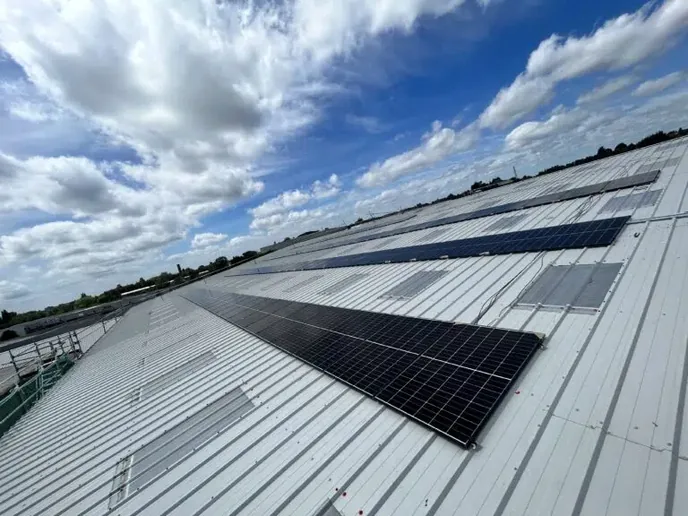
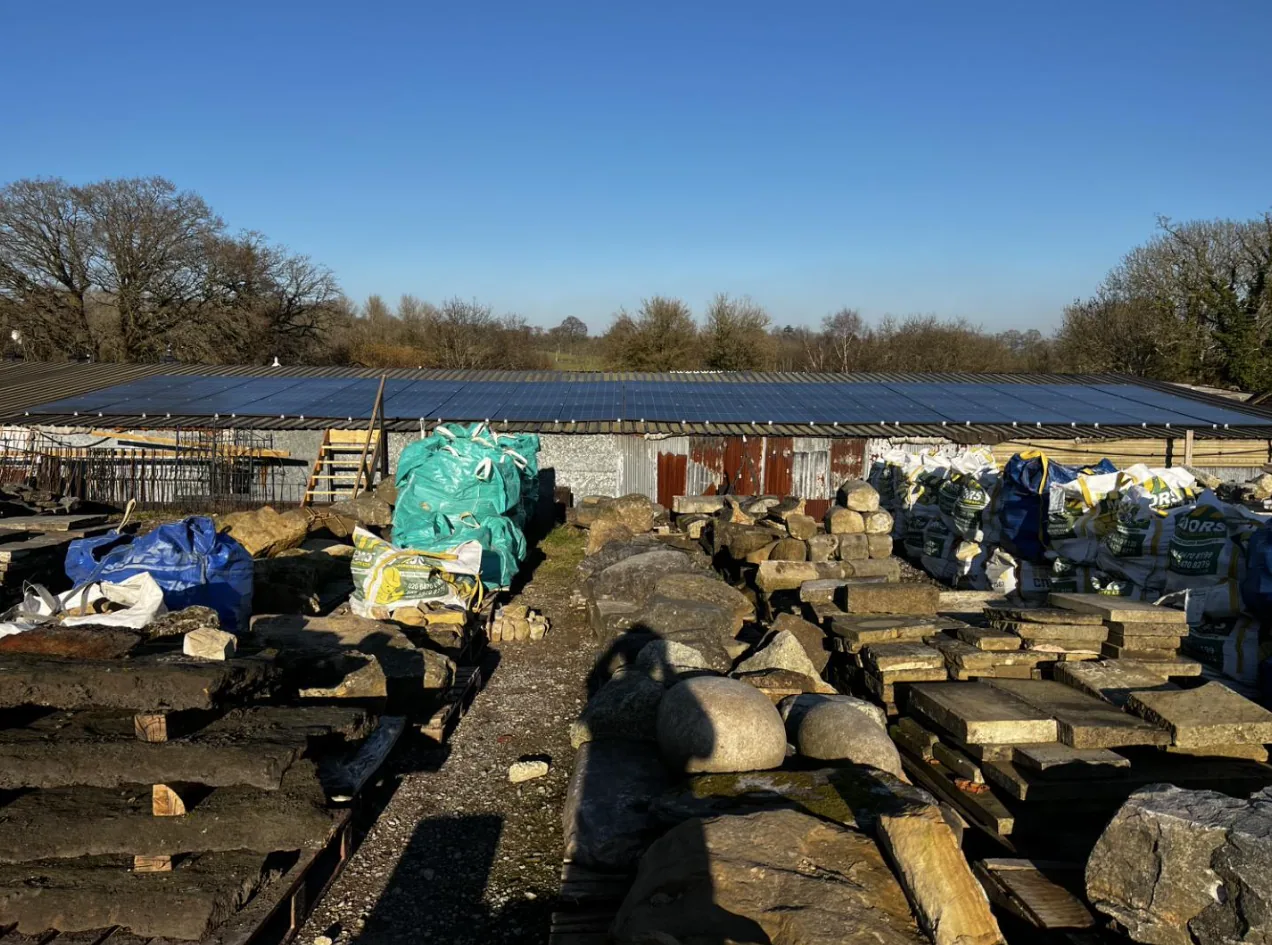
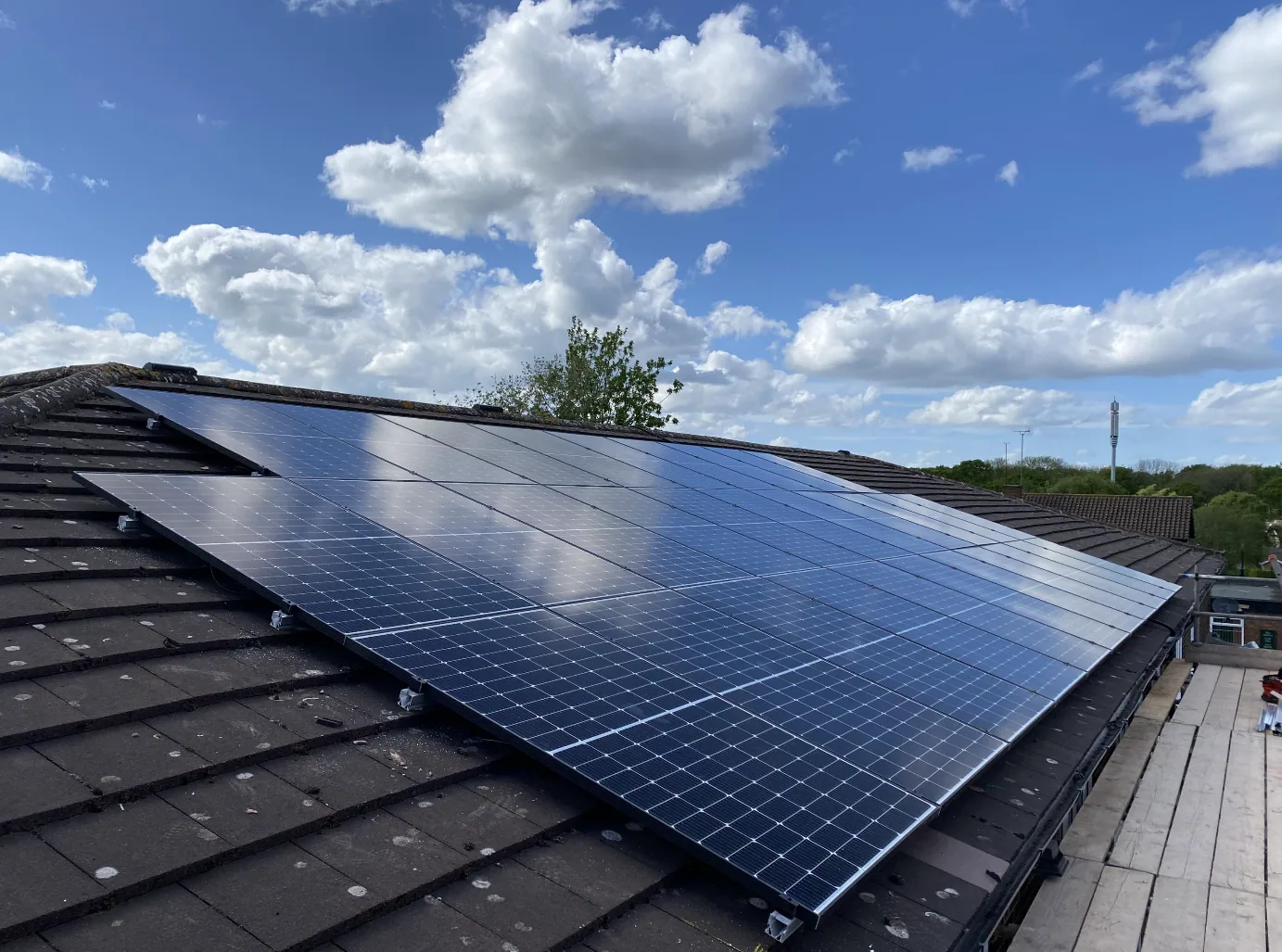
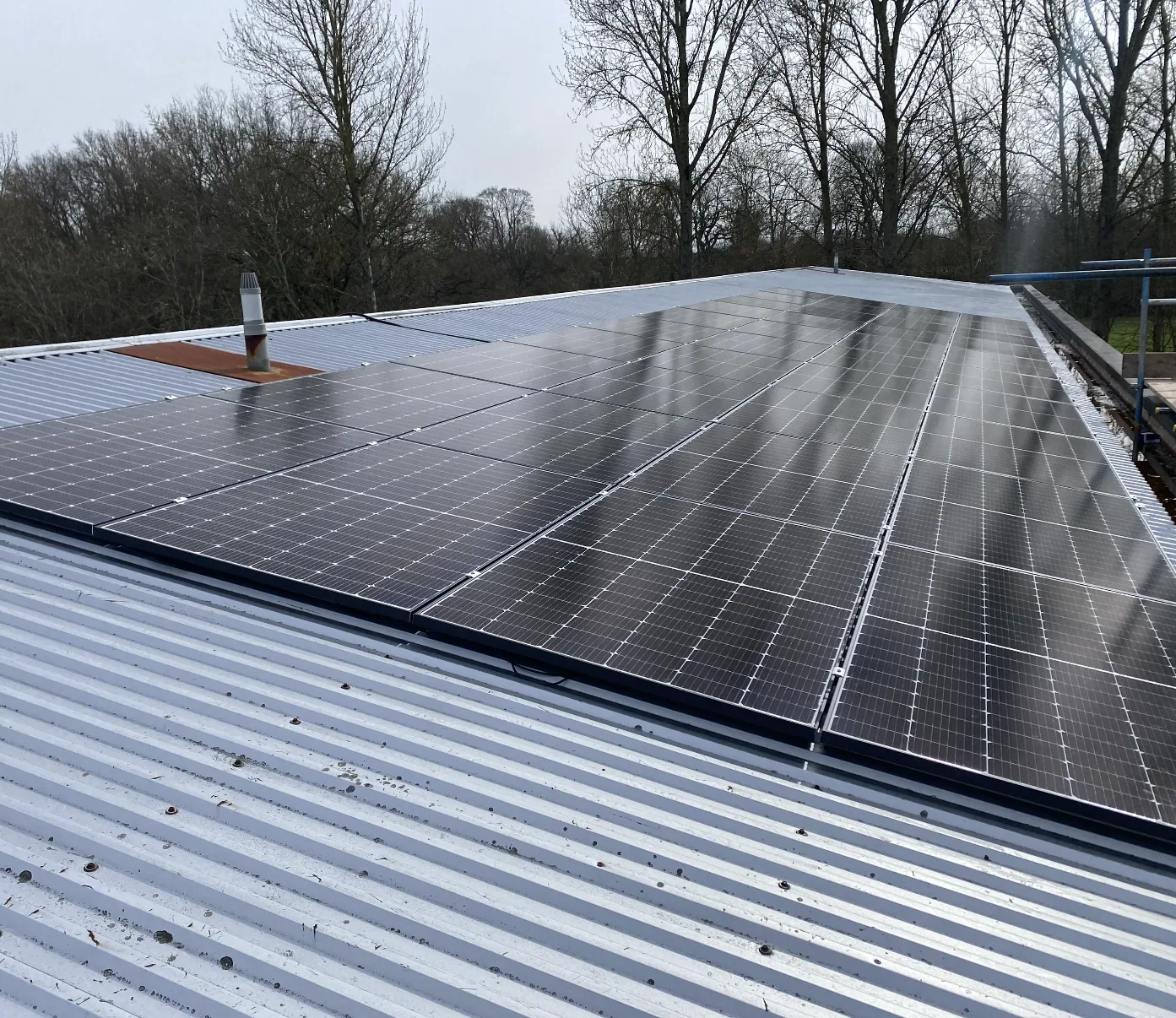
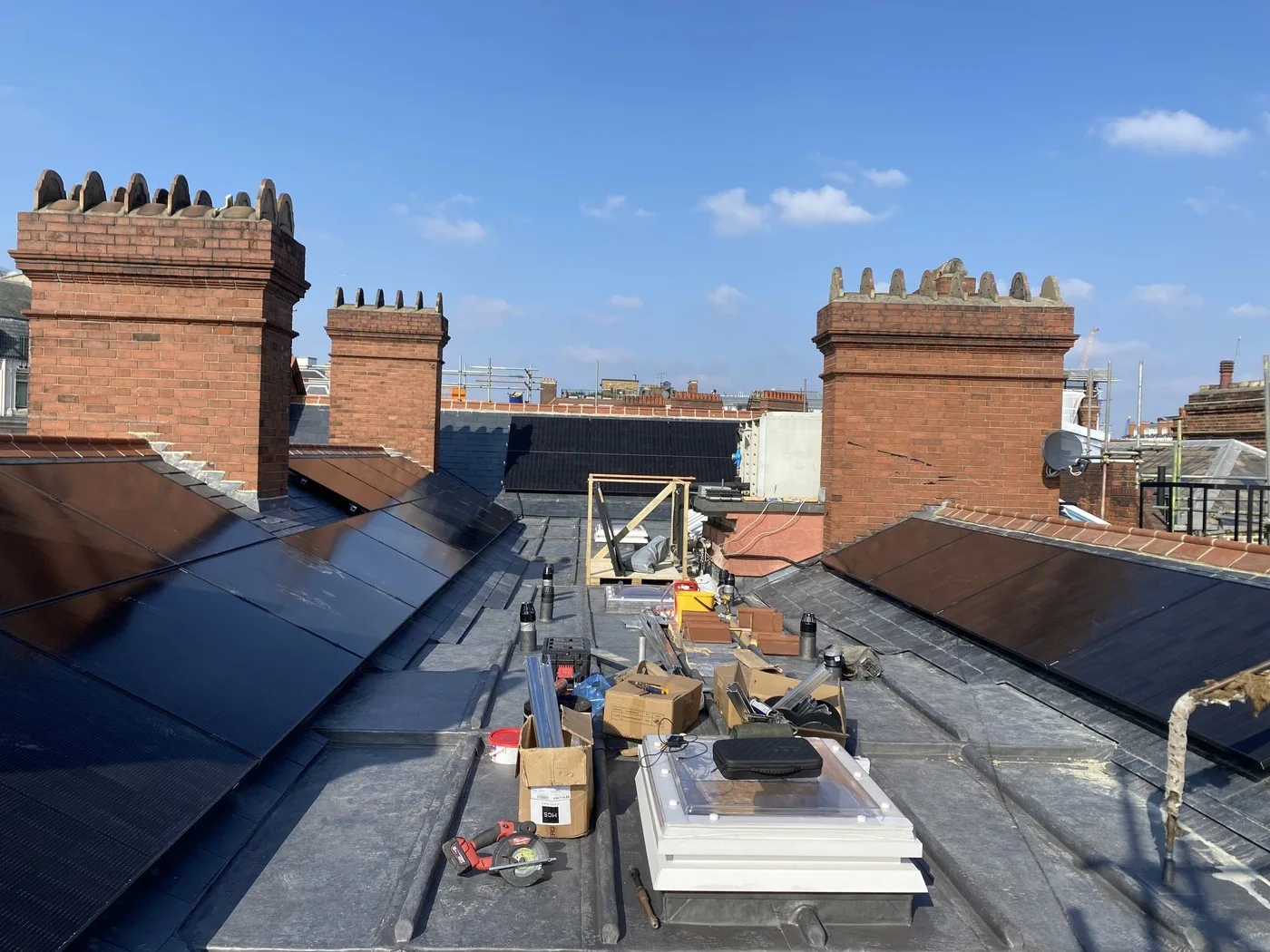
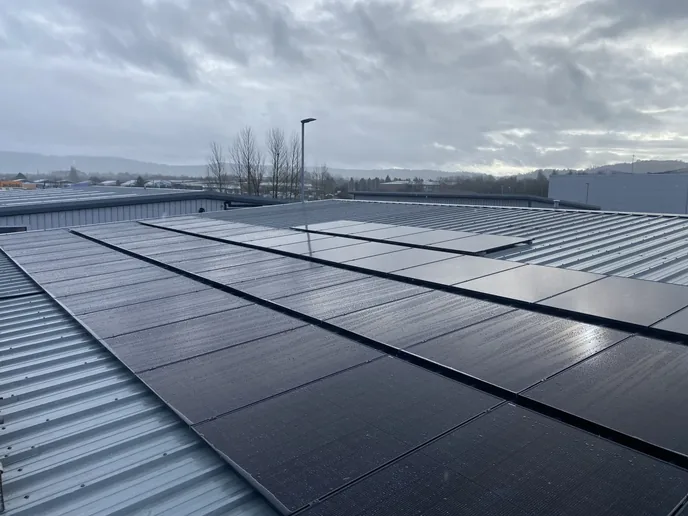
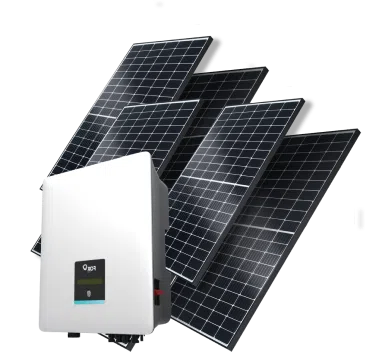
A working farm has acres of barn, shed and grain-store roof, and a load that runs all day: cold stores, milking parlours, ventilation, grain drying and irrigation. Point solar at those roofs and they become a generating asset. On a comparable large-roof site, solar now runs more than 40% of the building's power off its own roof, and is on track to save a quarter of a million pounds over the system's life.
Solar panels for farms make sense because British farms carry some of the largest roof areas in the country, across barns, sheds, grain stores and livestock buildings, and most of them sit empty. Meanwhile the farm draws power all day: cold stores and dairy refrigeration, milking parlours, ventilation and heat lamps, grain dryers, feed systems and irrigation pumps. That combination, a huge roof over a long, steady daytime load, is the single best case for solar there is. You generate on the roof and use it in the yard, so very little is ever wasted back to the grid.
Farms also face some of the most volatile energy bills in business, exposed to every spike in the wholesale market. Solar turns that rising, unpredictable cost into a fixed asset. And as farm machinery electrifies, your roof can feed the chargers directly, turning daytime sun into fuel for telehandlers, ATVs and vans instead of buying grid power at peak rates. It works whether you run an arable, dairy, livestock, poultry or mixed agribusiness.
Energy is one of the few farm costs you can actually control. Solar panels for farms convert a rising, volatile bill into a fixed asset with a payback you can plan a season around. On most farms the panels sit on a roof that was already there. Qualifying commercial solar can be written down against tax under current capital-allowance rules, which shortens payback, and grant support exists for some agricultural sites. It also lifts the holding: a self-powered farm is worth more, diversifies your income, and answers the sustainability questions now built into supermarket and supply-chain contracts. That renewable energy cuts your carbon footprint and running energy costs, powers EV charging for farm vehicles, improves the farm's energy efficiency, and gives it a genuinely sustainable, environmental story.
There is a resilience dividend too. A farm making its own power is less exposed when wholesale prices spike, and pairing panels with battery storage keeps critical load, refrigeration, ventilation and security, steadier through a grid event. On a farm, where a lost cold store or a stalled milking round costs real money, that reliability matters more than most.
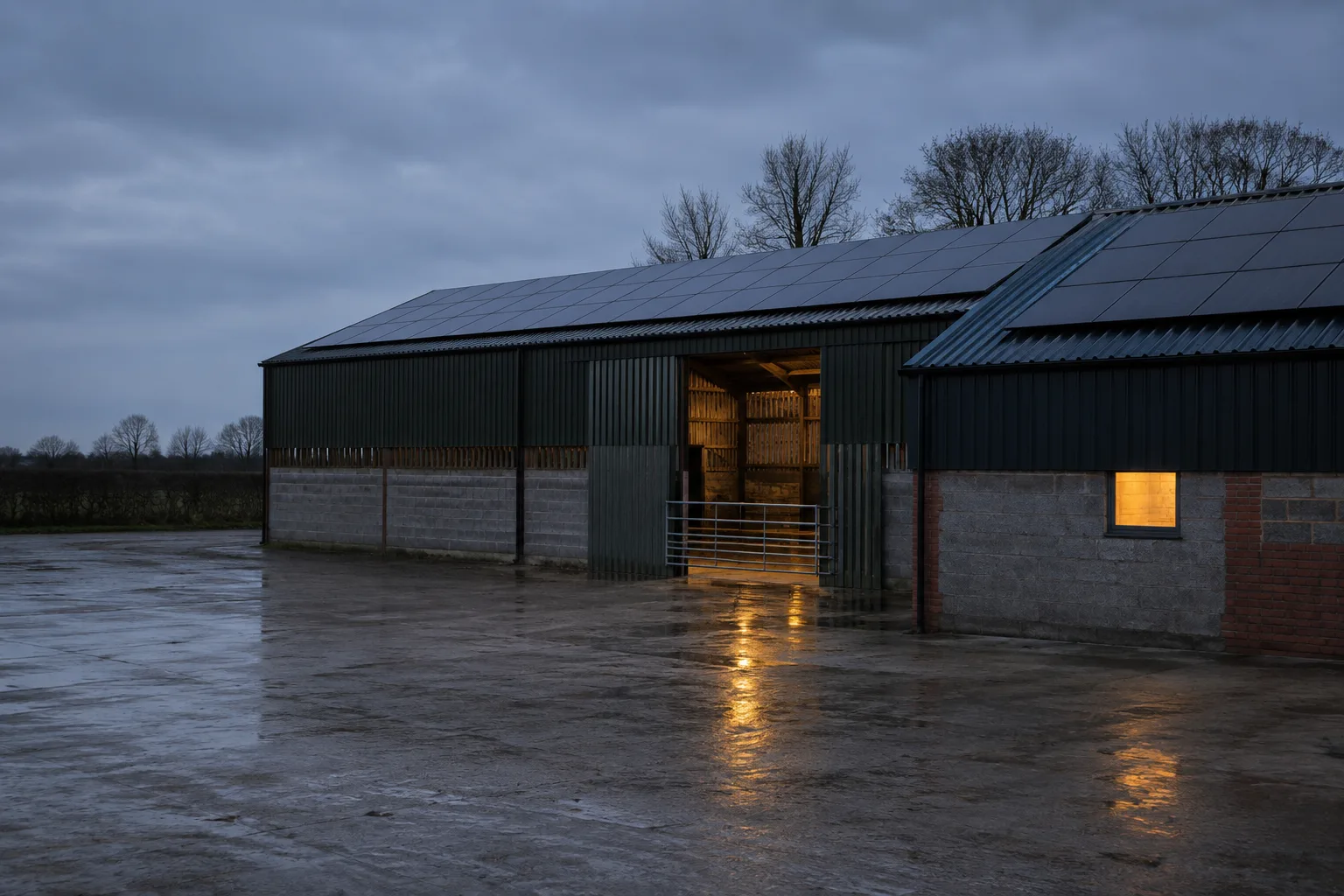
Farms and big distribution sheds share the same solar maths: a large roof over a long daytime load. We don't deal in vague promises. Here is exactly what solar did on a comparable large-roof site in Greenford, the kind of numbers we will model for your farm before you commit to anything.
A flat roof that used to sit empty now covers more than 40% of a Greenford distribution site's power, and is on track to pay back £240,000 to £260,000 over its life. We put those numbers in front of them before they signed, not after.
SDistribution51.6 kWp
AIndustrial70%bill cut
ORetail68%bill cut
RServices67%bill cut
JConstruction60%bill cut
FHealthcare67%bill cutA starting point, not a straitjacket. Every real system is sized to your roof, your load and your payback target after a proper site visit.


A commercial solar installation on a working farm is a different job from a home system. One team, in-house, from first site visit to switch-on, and we plan the work around your shifts so dispatch keeps running.
The questions farmers and agribusiness owners actually ask before committing to commercial solar.
Most modern agricultural buildings are built for it, but we never assume. Every job starts with a structural check as part of the site visit, and we design the mounting to suit your roof, whether it is trapezoidal steel, fibre cement, standing seam or an older purlin frame. If it needs strengthening, we tell you up front, before anything is ordered.
It doesn't have to. Almost all of the work happens on the roof, away from the yard, livestock and stores. We plan around milking, feeding and harvest, isolate only what we must and only when agreed, and keep the farm running. Zero operational downtime is the target we plan to hit.
Every roof and load is different, so we size and price it to your buildings and how you use power, then show you what it gives back. A comparable large-roof site's 51.6 kWp system cost £54,000 and is on track to save £240,000 to £260,000 over its life. You get the same honest projection for your farm first.
Because a farm pairs a huge roof with a long, steady daytime load, the return is usually strong, often five to six years, then decades of generation under a 25-year panel warranty. We model your exact figures so you can plan the investment around your farm.
Yes. A farm roof is ideal for feeding cold stores, dryers and on-site chargers directly, and pairing panels with battery storage lets you shift solar into the evening and hold critical load, refrigeration and ventilation, through a grid event. We design it around how your farm actually runs.
Yes. A larger farm system needs approval from your Distribution Network Operator, and we manage that application for you along with all certification, so you get a signed-off, compliant system without project-managing the grid paperwork yourself.
“George the sales chap was straightforward and honest, and the whole installation team were awesome, courteous and professional throughout.”
“From start to finish the whole job has been seamless. The install guys were polite, knowledgeable and efficient.”
“I wholeheartedly recommend this company for solar and battery storage installation.”
Solar for farms sits inside our wider commercial work. If you are comparing sectors, or your group runs more than one type of site, these are the closest neighbours.
Commercial solar, the full guide →The full guide: sizing, funding, planning and payback, designed and commissioned in-house.
WarehousesLarge roof areas turned into the single biggest saving on the site.
Manufacturing unitsHigh, steady daytime load is what makes production sites pay back fastest.
Commercial case studies →Real installations across care homes, surgeries, hotels, retailers and mills.Tell us about your site and we'll model it properly: the right system for your roof, how much of your load it covers, the cut to your bill and the payback. Real numbers, before you commit to anything.