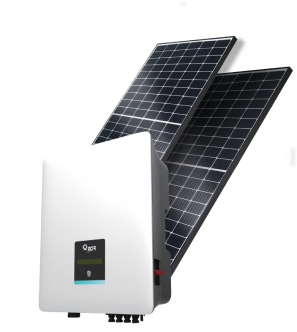
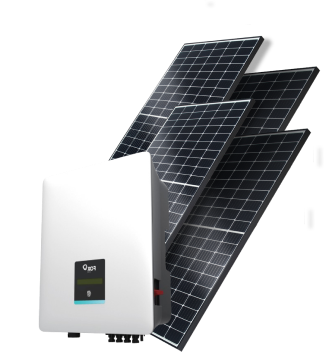
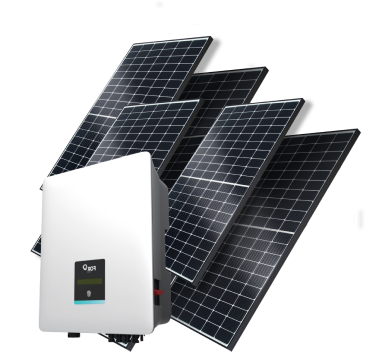
UK farmers are operating under the toughest conditions in decades, with rising electricity prices, the phase-out of BPS subsidies, pressure from supermarkets to cut supply-chain emissions, and constant uncertainty around weather and global markets. More agricultural businesses are turning to commercial solar panels for agriculture as a reliable, long-term energy source that stabilises costs and strengthens farm resilience.
Solar4Good designs and installs agricultural solar PV systems for dairy farms, poultry sheds, grain dryers, cold stores, glasshouses and general farm operations. Whether you’re looking to reduce running costs, improve sustainability or diversify income, solar gives UK farmers a dependable 25–30 year “energy crop.”
Why Are UK Farmers Investing in Commercial Solar Panels for Agriculture?
For many farms, electricity is as essential as land, water or labour. High-load equipment, from milking parlours to refrigeration and crop-drying, makes energy a major operating cost across the sector. Installing solar panels for farms in the UK helps farmers regain control, reduce input costs and improve long-term business stability.
What Benefits Does Solar Provide for UK Farms and Agribusinesses?
Cuts daytime electricity bills for barns, dairies and workshops
Protects against rising input costs (energy + fertiliser)
Supports farm diversification, solar strategies, creating stable new revenue
Provides renewable energy for farmers under retail & supermarket carbon pressure
Enables off-grid farm power systems where rural networks are weak
Reduces livestock risk by improving power security
Strengthens sustainability credentials in supply-chain agreements
Delivers predictable 25- to 30-year returns, a long-term energy “crop”
How Do Solar Systems Support Different Types of Farming Operations?
Every farming sector has its own energy profile, from the constant heating and ventilation of poultry sheds to the early-morning demand of dairy parlours and the seasonal spikes of grain drying. Well-designed agricultural solar PV systems allow each type of farm to cut costs, stabilise operations and reduce reliance on the grid. By pairing solar panels for farms in the UK with battery storage and 3-phase solutions, Solar4Good helps different agricultural businesses match renewable generation to their real-world daily workloads.
Solar for Dairy Farms
Solar for Poultry Sheds
Grain Drying Solar Solutions
Solar for Cold Storage, Horticulture & Glasshouses
Dairy farms use large amounts of power early in the morning and late afternoon, exactly when batteries can bridge the gap between solar production and milking demand.
Solar offsets major loads, including:
Poultry farms depend on stable heating and ventilation. Solar helps reduce:
Seasonal, high-energy grain drying can create major spikes in electricity bills.
Solar supports
Cold stores, glasshouses and vertical farming units run 24/7.
Solar can power:
Milking parlour machinery
Milk cooling and refrigeration
Water heating
Ventilation and lighting
Shed heating costs
Ventilation & airflow systems
Lighting for large sheds
Automated feeder systems
Fans and blowers
Drying equipment
Conveying systems
Cooling and refrigeration
Irrigation pumps
Lighting & hydroponic systems
Glasshouse ventilation
Combining solar for dairy farms with battery storage helps ensure consistent, low-cost energy throughout the day.
Lower energy costs = healthier livestock environments and stronger margins.
Farmers can use export-limited solar or 3-phase solar systems for farms where grid export is capped
This group achieves some of the strongest returns due to constant electricity usage.
How Do Solar + Batteries Solve Rurall Grid Constraints for Farms?
Many UK farms sit at the end of rural distribution lines, where weak grid connections, export caps and voltage fluctuations can limit productivity. As more dairies, poultry sheds, and cold stores adopt high-load equipment, these constraints become even more disruptive. Pairing agricultural solar PV systems with farm battery storage gives farmers the ability to generate, store and control their own power, even when the grid can’t keep up.
What Are the Best Energy Security Solutions for Farms?
Rural Challenge
Solar4Good Solution
Weak grid
Off-grid farm power systems & hybrid inverters
Limited export
Export limitation solar + battery storage
3-phase machinery loads
3-phase solar systems for farms
Livestock risk from outages
Battery backup & generator integration
Long-term resilience
Solar + battery + private wire distribution
These solutions give farms stable, predictable energy, independent of rural grid issues.
What Funding, Grants and Financial Options Are Available for UK Farms?
As the Basic Payment Scheme (BPS) continues to phase out, many UK farmers are looking for reliable ways to replace lost income and future-proof their operations. This shift has opened the door for a wide range of support options that make agricultural solar PV systems more accessible than ever. From AIA tax relief and Solar PPAs for landowners to FETF grants and regional farm energy schemes, there are multiple routes to finance solar panels for farms without putting pressure on cash flow.
Key Funding Routes for Agricultural Solar
Funding Route
Key Benefit
Ideal For
Capital purchase
100% first-year tax relief via the Annual Investment Allowance (AIA)
Owner-operators with available capital
Solar PPA for Landowners
No upfront cost, landowners rent the roof or land and buy cheaper renewable energy
Farms with large barns, acreage, or low spare capital
Lease Finance
Spread payments over time with full system ownership
Dairy farms, poultry sheds, horticulture and vertical-farming sites
Farm Battery Storage Add-Ons
IPeak shaving, backup power for livestock, and improved self-consumption
Dairies, grain drying, cold storage and high-load agribusiness
Private-Wire Supply
Sell electricity directly to neighbouring tenants or farm enterprises
Farms with multiple businesses on-site
Key Funding Routes for Agricultural Solar
Grant / Scheme
What It Covers
Why It Matters for Farmers
Farming Equipment and Technology Fund (FETF)
Energy-efficiency technology & upgrades
Helps fund supporting equipment for dairy, poultry and horticulture
Farm Energy Grants UK
Regional support for renewable energy systems
Ideal for early-stage funding and reducing the upfront installation cost
Smart Export Guarantee (SEG)
Payments for surplus power exported to the grid
Creates a new income stream for solar panels for farms
Solar PPA for Landowners
Funded solar with no capital outlay
Protects cash flow while delivering long-term energy savings
Export Limitation & DNO Support Schemes
Allows solar installations even on constrained rural grids
Critical for off-grid farm power systems and remote agricultural sites
These funding routes help UK farmers stabilise energy costs, replace declining subsidies, and secure long-term revenue from renewable energy for farms, even during volatile seasons.
Do Farms Need Planning Permission for Solar Installations??
Most solar panels for farms in the UK, especially rooftop systems on barns, grain stores and livestock buildings, fall under permitted development. However, planning rules can change depending on land use, system scale and visual impact, particularly for ground-mounted agricultural solar PV systems or agrivoltaics projects.
Scenario
Why Planning May Be Needed
Large ground-mounted solar for farms
Arrays over a certain size can trigger full planning and visual-impact assessments
Agrivoltaics or dual-use land projects
Requires land-use classification checks and biodiversity net-gain plans.
Installations affecting key landscape views
Common in National Parks, AONBs or scenic rural corridors.
Solar fields with fencing or new access tracks
Considered a new development on agricultural land.
Listed or heritage farm buildings
Restrictions apply to traditional barns and protected structures
Solar glazing / BIPV on modern farm buildings
Façade changes often fall outside permitted development.
Export-limited sites needing DNO upgrades
Large 3-phase systems may require reinforced grid connections.
Solar4Good handles the entire process, planning applications, biodiversity documentation, agrivoltaics impact assessments, DNO approvals, engineering drawings and structural reports, ensuring farmers stay compliant without the admin burden.
Why Choose Solar4Good for Agricultural Solar PV Systems?
Solar4Good specialises in large-scale solar PV systems for office buildings, retail estates, high-rise developments and mixed-use portfolios.
What we offer UK farmers
Bespoke designs for barns, sheds, dairies & cold stores
3-phase solar systems for farms & off-grid options
Planning, DNO, engineering & structural approvals
Smart monitoring for seasonal energy use
Decades-long aftercare & maintenance
Solar4Good systems are engineered for harsh UK farm environments, long-term reliability and maximum on-site efficiency.
Switching to commercial solar panels for agriculture gives farmers a dependable 25- to 30-year source of clean, predictable power, a “30-year crop” that protects margins and stabilises operations. Whether you run a dairy unit, poultry enterprise, grain store, horticulture business or mixed farm, Solar4Good can design a system that strengthens energy independence and reduces input costs.