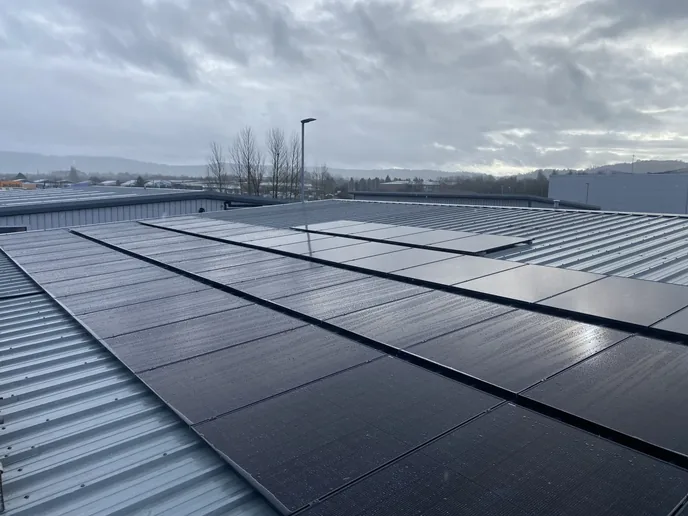
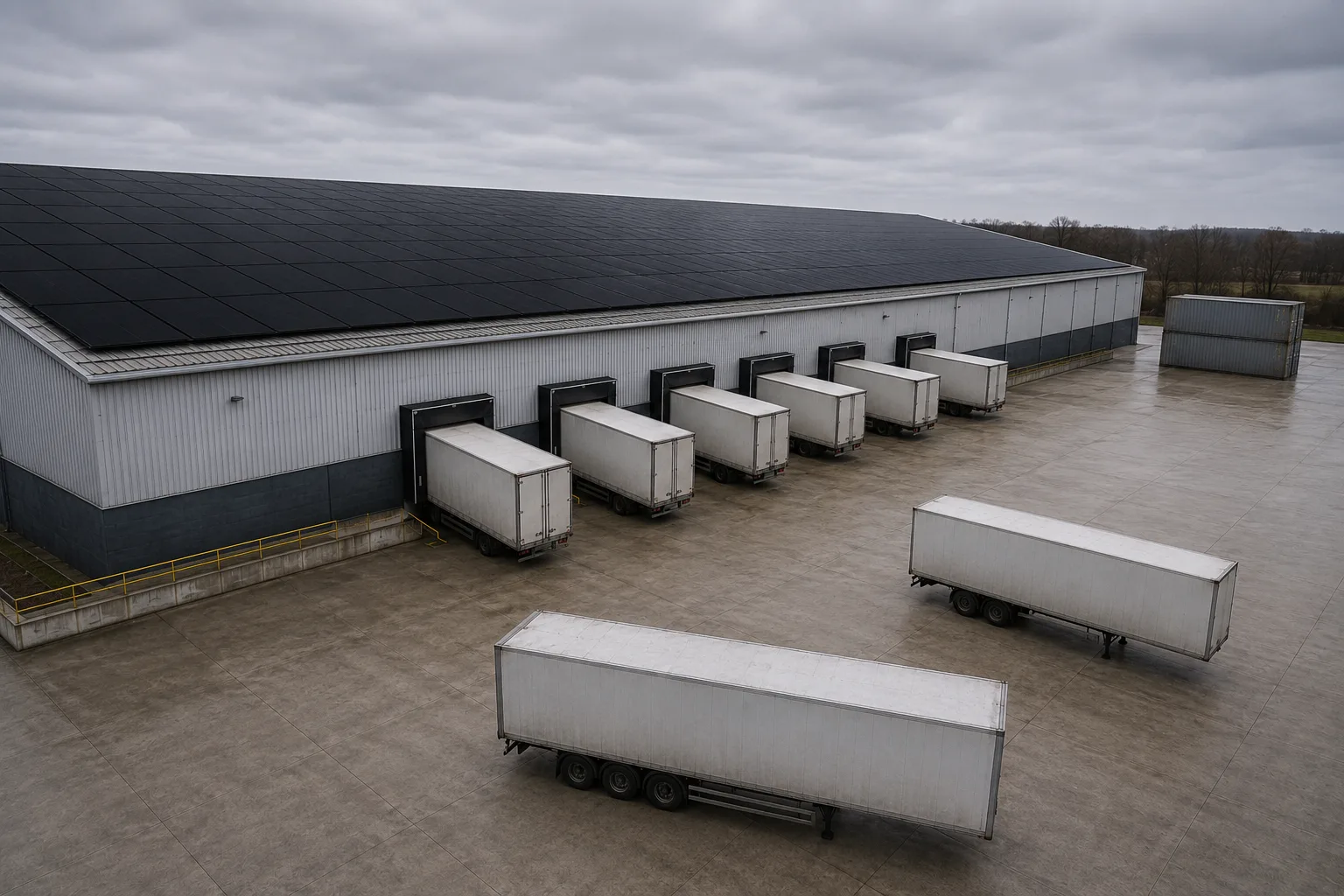
A British logistics distribution centre on a grey afternoon, black solar panels covering its full roof above trailers backed up to a long run of dock doors
MCS-certified · Commercial solar
The case for solar · Logistics & distribution

Cut your distribution centre’s power bill by up to 70% Commercial solar for logistics companies, built as a business case.

*Dependent on the customer’s consumption, generation and electricity cost at the time of install.

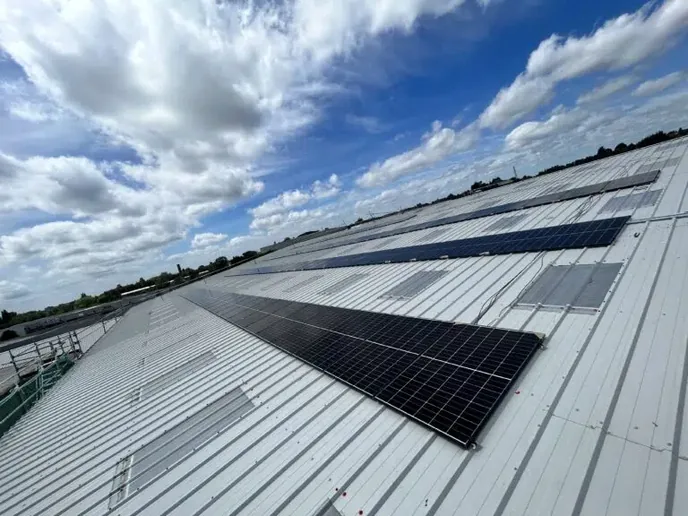
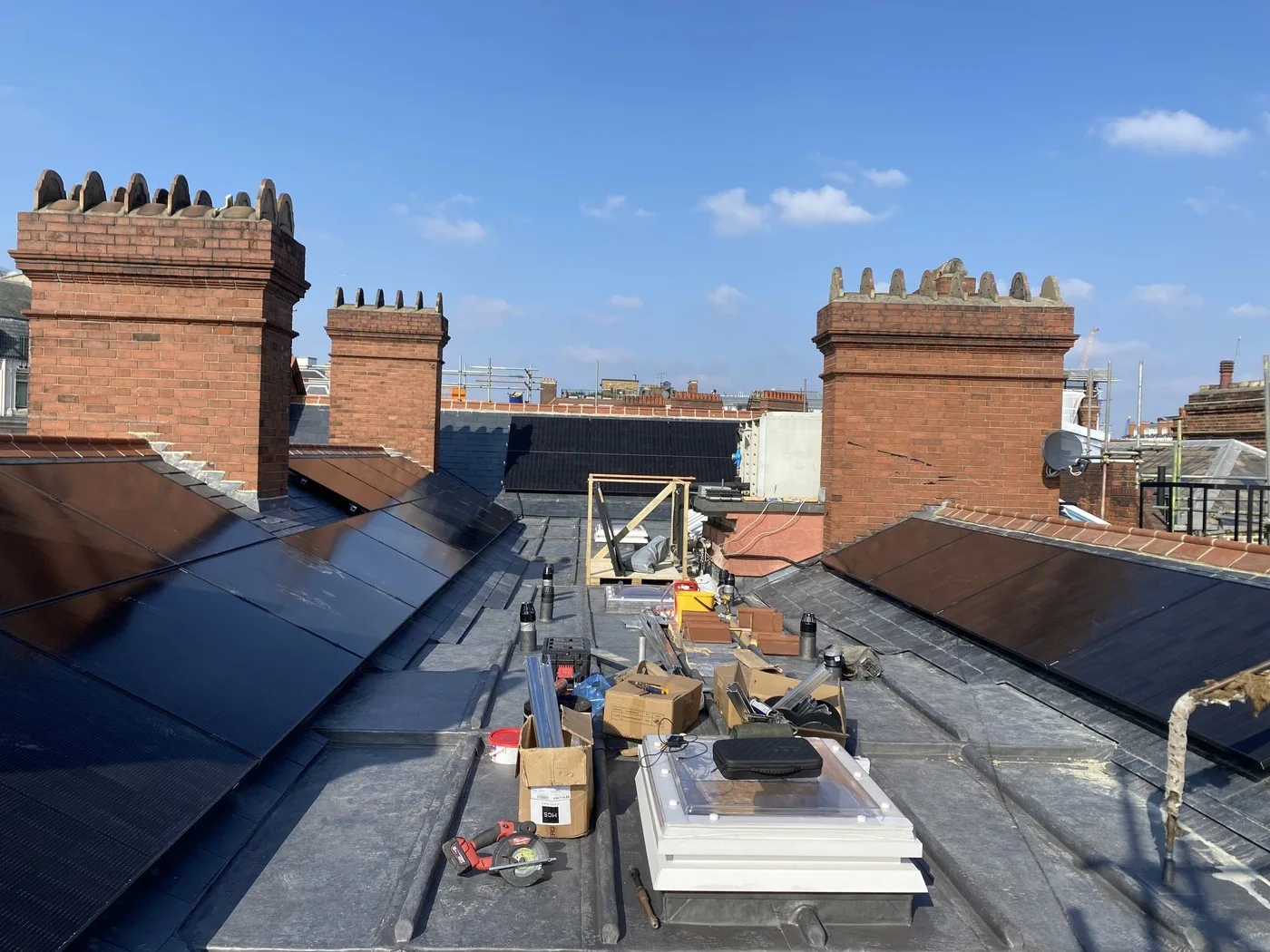
A logistics business runs on power around the clock: distribution centres, cross-dock depots, cold stores and, increasingly, electric delivery fleets. It also owns some of the largest roofs in the country, mostly doing nothing. Point solar at them and every site becomes a generating asset. Solar panels for logistics sites turn that idle roof space into generation. One Greenford distribution site now runs more than 40% of its power off its own roof, and is on track to save a quarter of a million pounds over the system's life.

40%+Self-powered
5-5.5 yrTypical payback
0Ops downtime
MCSCertified installer
Compliance & standards

You are in safe, certified hands

Accredited by MCS, NAPIT, HIES, TrustMark and ICO. Every badge links straight to the issuer's own register, so you can check us out, not just take our word for it.

01
The opportunity

Every roof in your network is a power station

Solar panels for logistics companies make sense because a logistics operation combines two things at scale: vast, unbroken roofs across distribution centres and depots, and a heavy load that runs long hours. High-bay lighting, conveyors and sortation, cold storage and refrigeration, battery charging and a fast-growing electric delivery fleet all draw power straight through the day, which is exactly when the roof is generating. That combination, a huge roof over a long, steady load, is the single best case for solar there is. You generate on the roof and use it on the floor, so very little is ever wasted back to the grid.

Logistics sites also carry a big slice of fixed grid charges tied to peak demand. Solar shaves that peak, so you save on the units and on the standing charges. And as delivery fleets electrify, a distribution roof can feed the chargers directly, turning daytime sun into fuel for your vans and HGVs instead of buying it at grid or forecourt rates. It works whether you call it a warehouse, a distribution centre, a logistics hub or an industrial unit.

02
The business case

It reads straight on a logistics P&L

Energy is one of the few logistics costs you can actually attack. Solar converts a rising, volatile bill into a fixed asset with a payback a finance director can sign off, and it does it at every site in the network. That is why logistics solar tends to pay back faster than for a single-site business: the same design repeats across the estate. On-site solar PV also powers EV charging, lifts your sustainability rating and cuts the environmental footprint of every depot. Qualifying commercial solar can be written down against tax under current capital-allowance rules, which shortens payback, and grant support exists for some sites. For 3PLs and landlords it also lifts the asset: a greener building lets, leases and sells better, and answers the carbon questions now built into most logistics tenders, from ISO 14001 and CHAS to a customer's own net-zero targets.

There is a resilience dividend too. A site making its own power is less exposed when wholesale prices spike, and pairing panels with battery storage keeps critical load, chillers, security and comms, steadier through a grid event. In a distribution operation, where a few hours of downtime can strand a whole day's dispatch, that matters more than most.

The key benefits of solar for logistics hubs and distribution centres

Power your whole network
Distribution centres, cross-dock depots and cold stores carry vast roofs sitting idle. Turn each one into its own power station.
Cut a round-the-clock bill
Sortation, conveyors, refrigeration and lighting run through the day and night, so solar cuts your energy bills, energy costs and reliance on grid electricity. Cover that steady load with power you make, not power you buy.
Electrify your fleet for less
As delivery fleets go electric, charge vans and HGVs off your own roofs, turning daytime sun into fleet fuel instead of grid or forecourt rates.
Win on the carbon question
Scope 3, carbon footprint and net zero clauses now decide logistics tenders. On-site renewable energy and solar energy cut carbon emissions, a hard, sustainable answer a customer can audit.
Cold-chain resilience
Pair panels with storage to keep refrigeration, security and comms steady through a grid event, protecting the stock a cold chain cannot afford to lose.
Strong, stable ROI at scale
Big roofs over a long, steady load: logistics sites see some of the best payback in commercial solar, often five to six years, and it repeats across every site you roll out.

The numbers, from a real distribution site

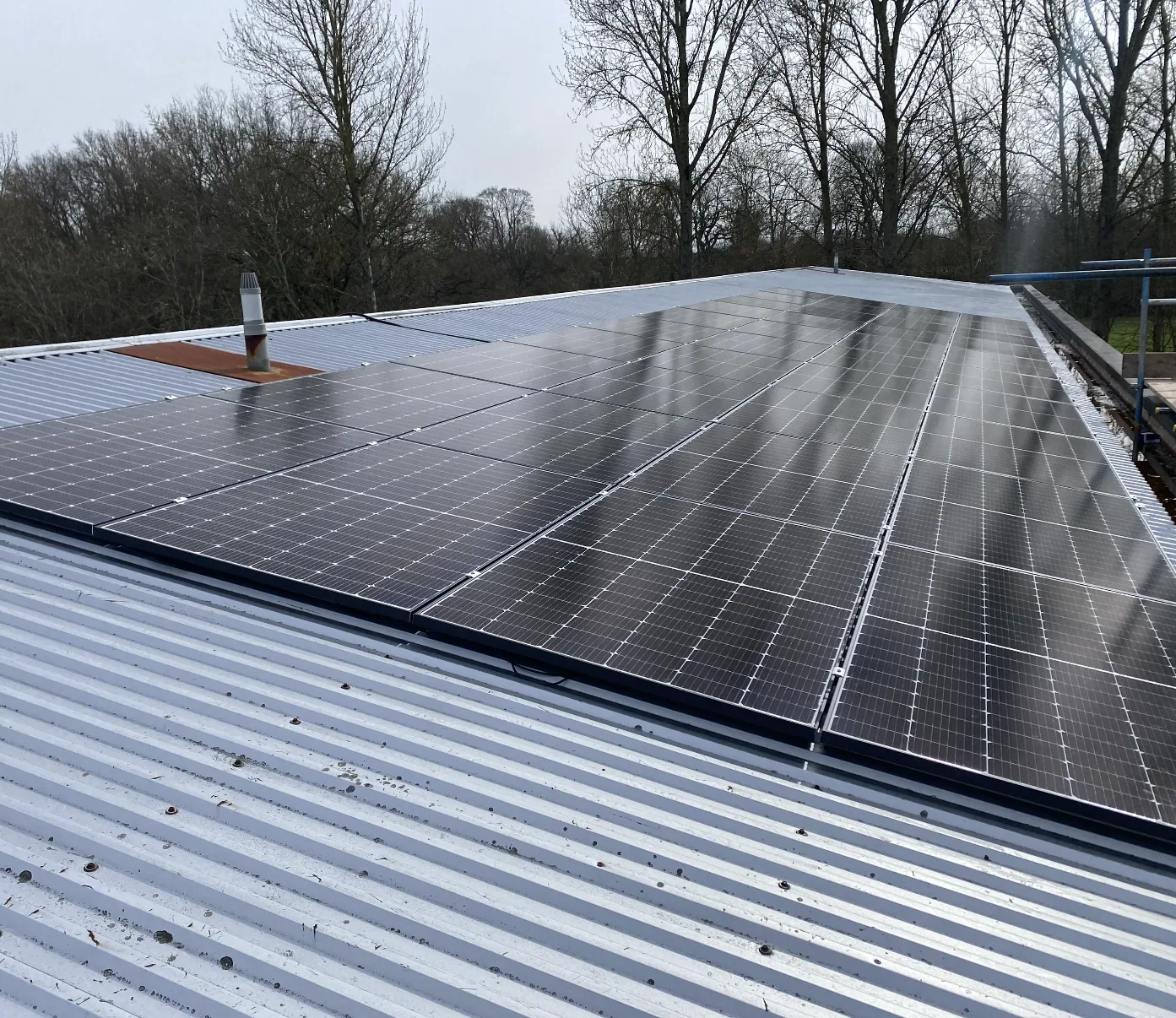
We don't deal in vague promises. Here is exactly what solar did on a Greenford distribution site, the kind of numbers we will model for your logistics sites before you commit to anything.

The system
System size51.6kWp
Panels120
Self-powered40%+
The return
Lifetime saving£240-260k
Saving / year£9.6-10.4k
Typical payback5-5.5yrs
The build
System cost£54,000
Generated / year55-58kkWh
Ops downtime0
The bottom line

A flat roof that used to sit empty now covers more than 40% of a Greenford distribution site's power, and is on track to pay back £240,000 to £260,000 over its life. We put those numbers in front of them before they signed, not after.

Proof, not promises

Real UK logistics sites, real bills cut

More success stories

View all case studies →
Pick your scale

Three ways to power your logistics sites

A starting point, not a straitjacket. Every real system is sized to each site, its load and your payback target after a proper site visit, and it scales as you roll solar out across the network.

 
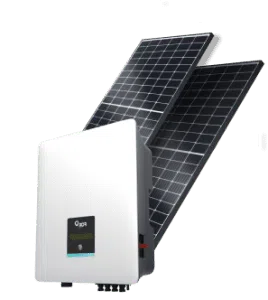
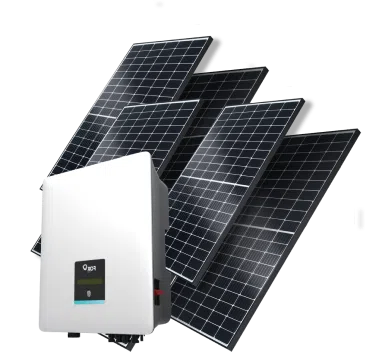
Solar4Good 30 kW commercial solar package: inverter and solar panels for a warehouse
Basic
30 kW
75 solar panels
  • Fully designed and installed
  • Roof assessment and structural check
  • DNO application handled for you
  • 25-year panel warranty
Get my numbers
Most popular
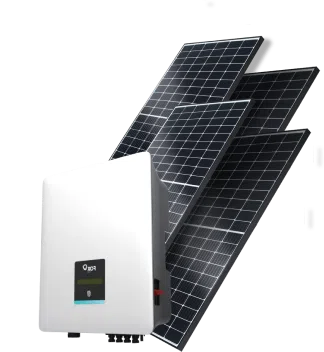
Solar4Good 50 kW commercial solar package: inverter and solar panels for a warehouse
Premium
50 kW
120 solar panels
  • Fully designed and installed
  • Roof assessment and structural check
  • DNO application handled for you
  • 25-year panel warranty
Get my numbers
 
Solar4Good 100 kW commercial solar package: inverter and solar panels for a warehouse
Professional
100 kW
240 solar panels
  • Fully designed and installed
  • Roof assessment and structural check
  • DNO application handled for you
  • 25-year panel warranty
Get my numbers
How it works

Installed around your operation, not through it

A commercial solar installation on a working logistics site is a different job from a home system. One team, in-house, from first site visit to switch-on, and we plan the work around your shifts so dispatch keeps running.

STEP 01
Site visit
We assess your roof, structure, load profile and half-hourly usage on site.
STEP 02
Design and projection
You get a system sized to your roof and a real projection of cost, savings and payback.
STEP 03
Grid and paperwork
We handle the DNO application and every certificate, so you don't have to chase it.
STEP 04
Install, zero downtime
our MCS-registered installers fit it around your shifts. Production keeps running.
STEP 05
Switch-on and aftercare
Commissioning, monitoring and a team you can call. We don't disappear after handover.
Funding

Funding options for logistics solar projects

ModelBenefitsBest for
Solar PPA for Logistics ParksNo upfront cost; reduced energy rates from day oneOperators leasing warehouses or managing multi-tenant sites
Capital PurchaseHighest lifetime ROI; full ownership and export paymentsOwner-occupied sites and distribution centres
Lease / FinanceSpread costs over time; immediate bill reductionMedium-sized logistics firms expanding facilities

We also support tenants and landlords in navigating green lease clauses, helping both parties benefit from on-site generation.

Planning

Key planning requirements for logistics solar arrays

  • Rooftop arrays must meet height and roof-edge clearance rules
  • Ground-mounted installations may require an environmental assessment
  • Lightweight solar solutions may be required for thin-gauge warehouse roofs
  • Solar placement should minimise visual impact for road-facing units
  • Sites in restricted areas may require additional permissions

When planning permission is required

You may need planning approval if:

  • Installing large ground-mount solar farms near logistics hubs
  • Upgrading older warehouse roofs with structural limitations
  • Operating in protected zones or alongside major highways
  • Adding solar carports or large canopy structures for fleet charging

Solar4Good manages planning documents, drawings, site assessments and DNO applications on your behalf.

Calculate your savings
Technology partners

Only the best, installed properly

Tesla Powerwall, SigEnergy and Fox ESS. We fit trusted, tier-one panels and batteries built to perform in British weather.

TeslaSigEnergyFox ESSAlpha ESSAIKODMEGCTeslaSigEnergyFox ESSAlpha ESSAIKODMEGC

Good to know

The questions logistics and distribution operators actually ask before committing to commercial solar.

Will our distribution roofs take the weight?

Most large-span distribution and depot roofs are built for it, but we never assume. Every job starts with a structural check as part of the site visit, and we design the mounting to suit your roof, whether it is trapezoidal steel, standing seam, built-up felt or a flat membrane. If it needs strengthening, we tell you up front, before anything is ordered.

Will the installation disrupt operations or dispatch?

It doesn't have to. Almost all of the work happens on the roof, away from the floor, racking and loading bays. We plan around your shifts, deliveries and dispatch windows, isolate only what we must and only when agreed, and keep the site running. Zero operational downtime is the target we plan to hit.

How much does solar for a logistics site cost?

Every roof and load is different, so we size and price it to your site and how you use power, then show you what it gives back. A Greenford distribution site's 51.6 kWp system cost £54,000 and is on track to save £240,000 to £260,000 over its life. You get the same honest projection first.

What payback can a logistics site expect?

Because a logistics site pairs a huge roof with a long, steady daytime load, the return is usually strong, often five to six years, then decades of generation under a 25-year panel warranty. We model your exact figures so you can take a real number to your board.

Can it charge our EV fleet and protect the cold chain?

Yes. A distribution roof is ideal for feeding on-site chargers, turning daytime generation into fleet fuel. Pairing panels with battery storage lets you shift solar into the evening and hold refrigeration, security and comms through a grid event, which matters when a cold chain cannot go dark. We design it around how your fleet and shifts actually run.

Do you handle the DNO and grid application?

Yes. A larger logistics system needs approval from your Distribution Network Operator, and we manage that application for you along with all certification, so you get a signed-off, compliant system without project-managing the grid paperwork yourself.

Do logistics sites need planning permission for solar?

Many distribution and warehouse rooftops fall under permitted development and need no application, but the rules vary with the type of installation, the roof, and whether the site is listed or in a conservation area. Larger ground-mounted arrays and some canopy or carport systems can need consent. We check the position for each of your sites as part of the site visit and handle any application, so planning never stalls the rollout.

What funding, capital allowances and PPAs are available?

Ownership is not the only route, which matters when much of a logistics estate is leased. Buy outright and you take the full saving and the capital allowances. Alternatively a Solar Power Purchase Agreement (PPA) or funded-solar arrangement lets a third party fund and own the system while you buy the cleaner power at an agreed rate, often with no upfront cost, and green-lease clauses can share the benefit between landlord and tenant. We help structure whichever fits your sites and your balance sheet, and handle the capital-allowance and grant paperwork where you own the system.

Rated 4.9/5 from 1,000+ verified reviews on Trustpilot, TrustATrader and Google

“George the sales chap was straightforward and honest, and the whole installation team were awesome, courteous and professional throughout.”

Jamie Wilson · Verified Trustpilot review

“From start to finish the whole job has been seamless. The install guys were polite, knowledgeable and efficient.”

Timothy Clarke · Verified Trustpilot review

“I wholeheartedly recommend this company for solar and battery storage installation.”

Soham Acharya · Verified Trustpilot review
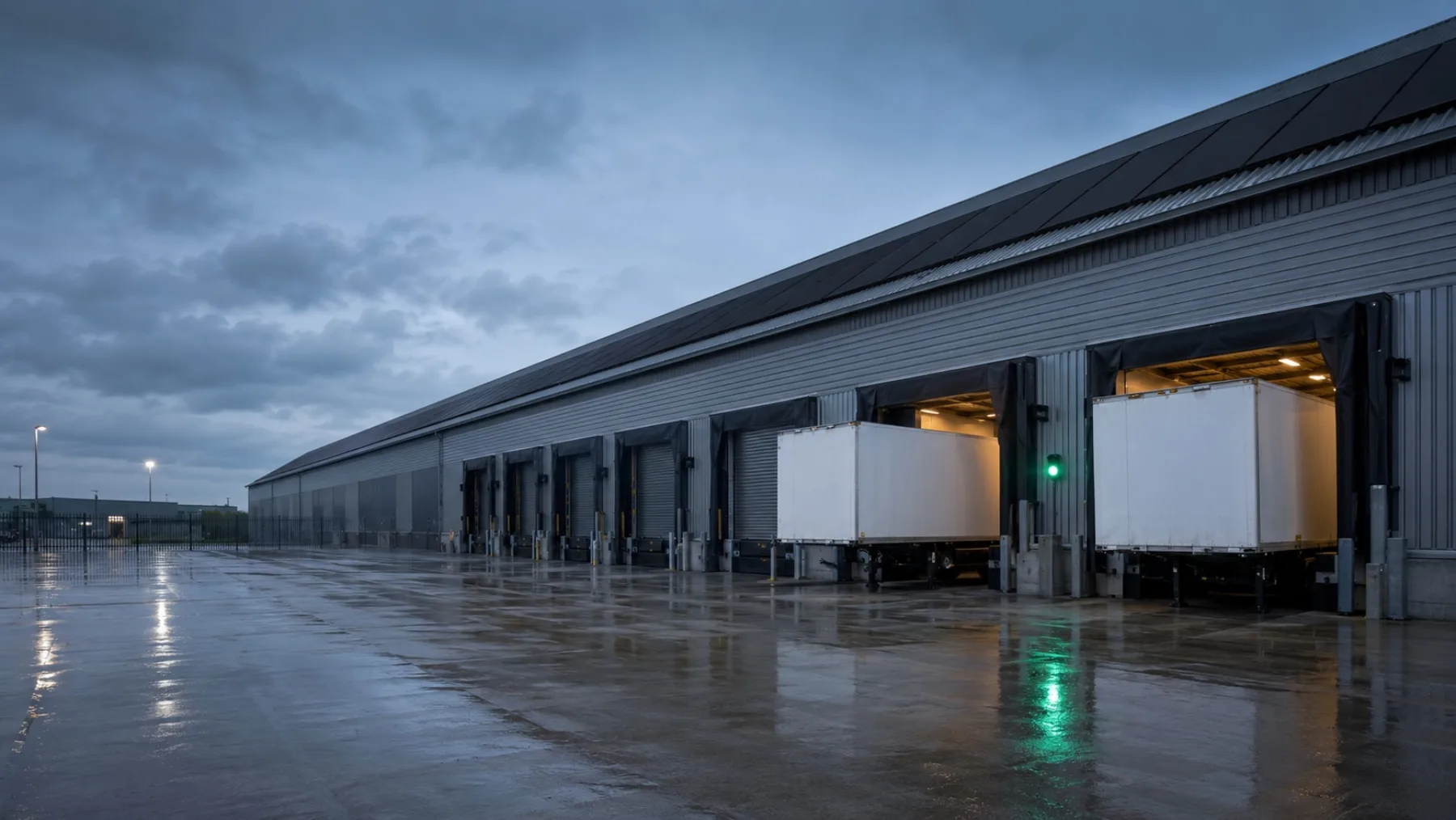
Loading dock of a UK distribution centre at dusk, warm light from open bays and solar panels along the roofline
Get your logistics site's numbers

See what solar does to your energy bill

Tell us about your site and we'll model it properly: the right system for your roof, how much of your load it covers, the cut to your bill and the payback. Real numbers, before you commit to anything.

Get a quote