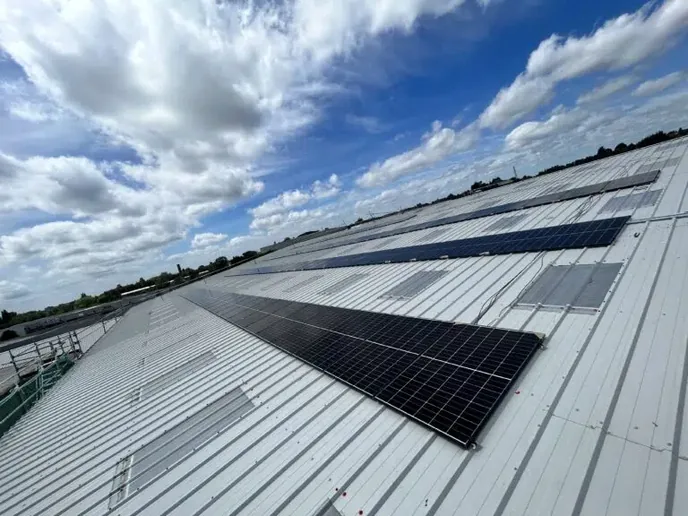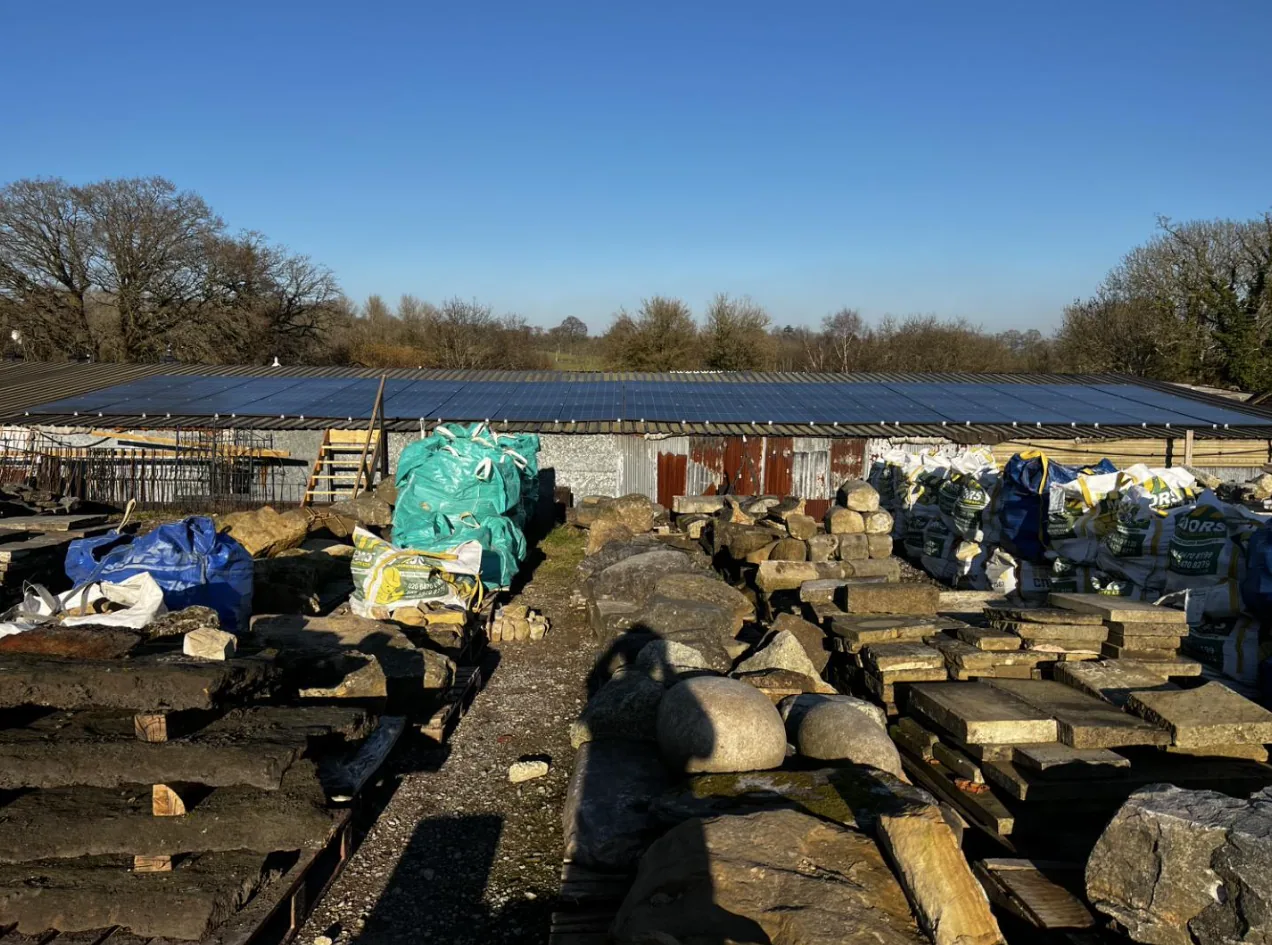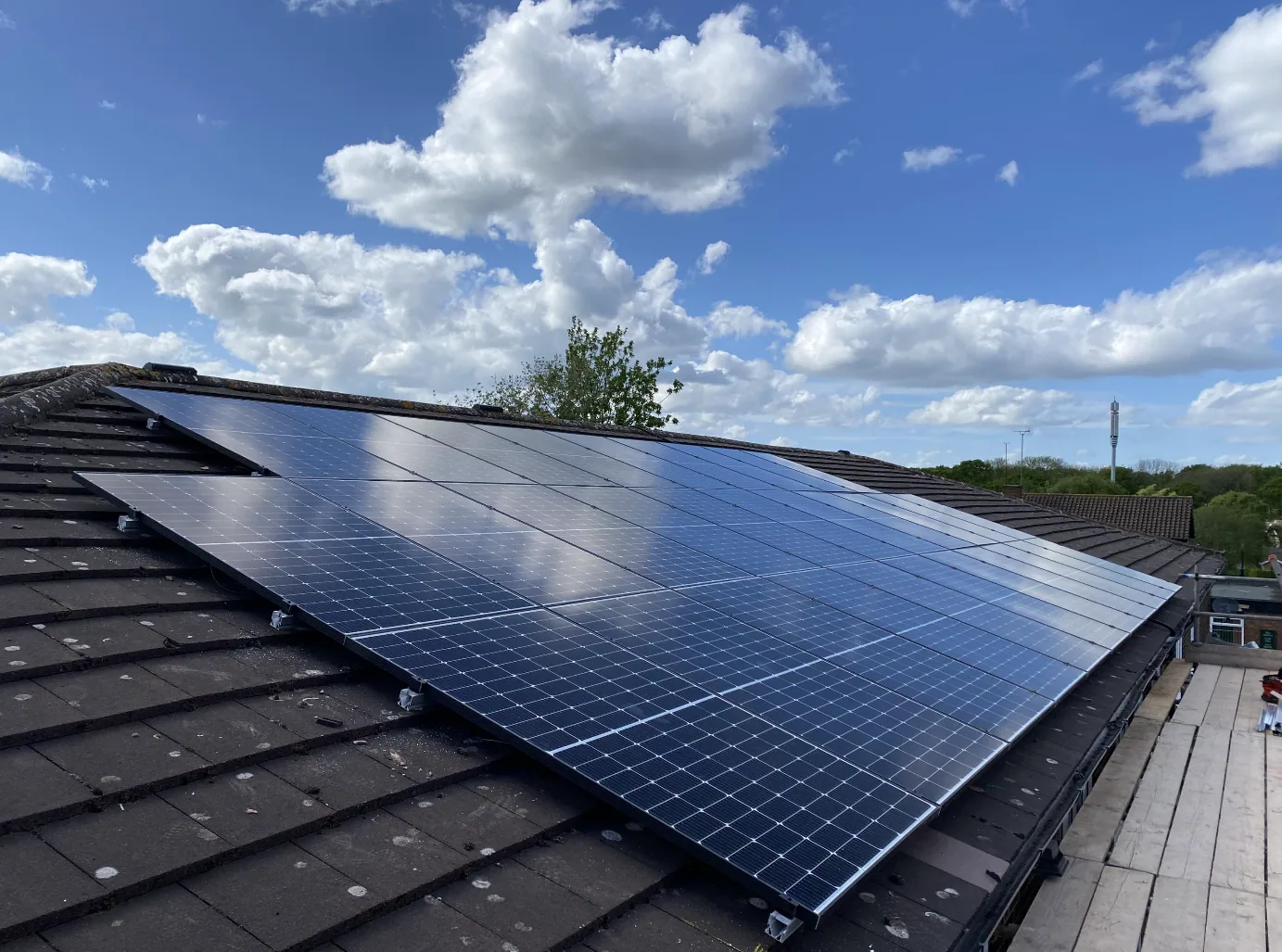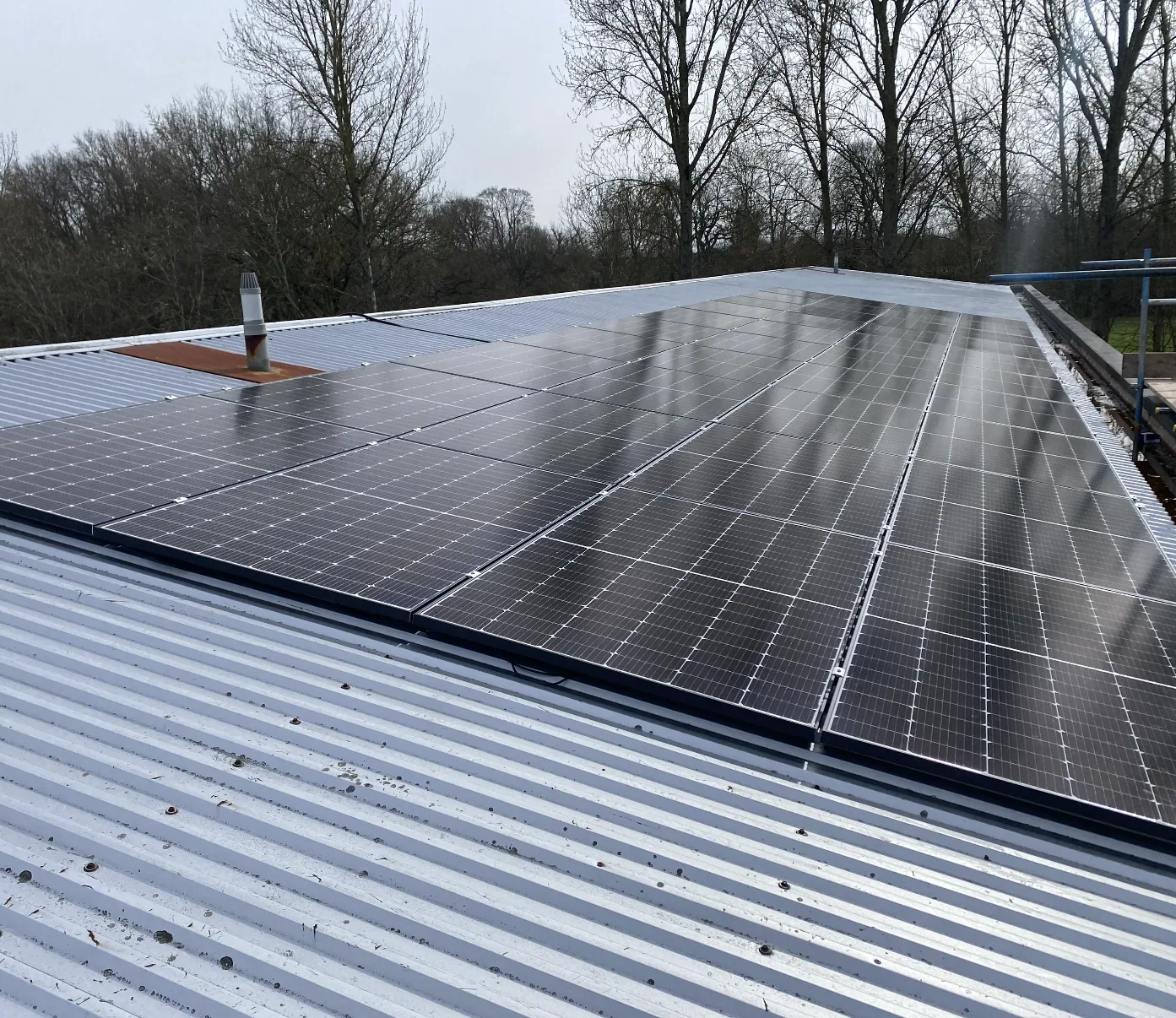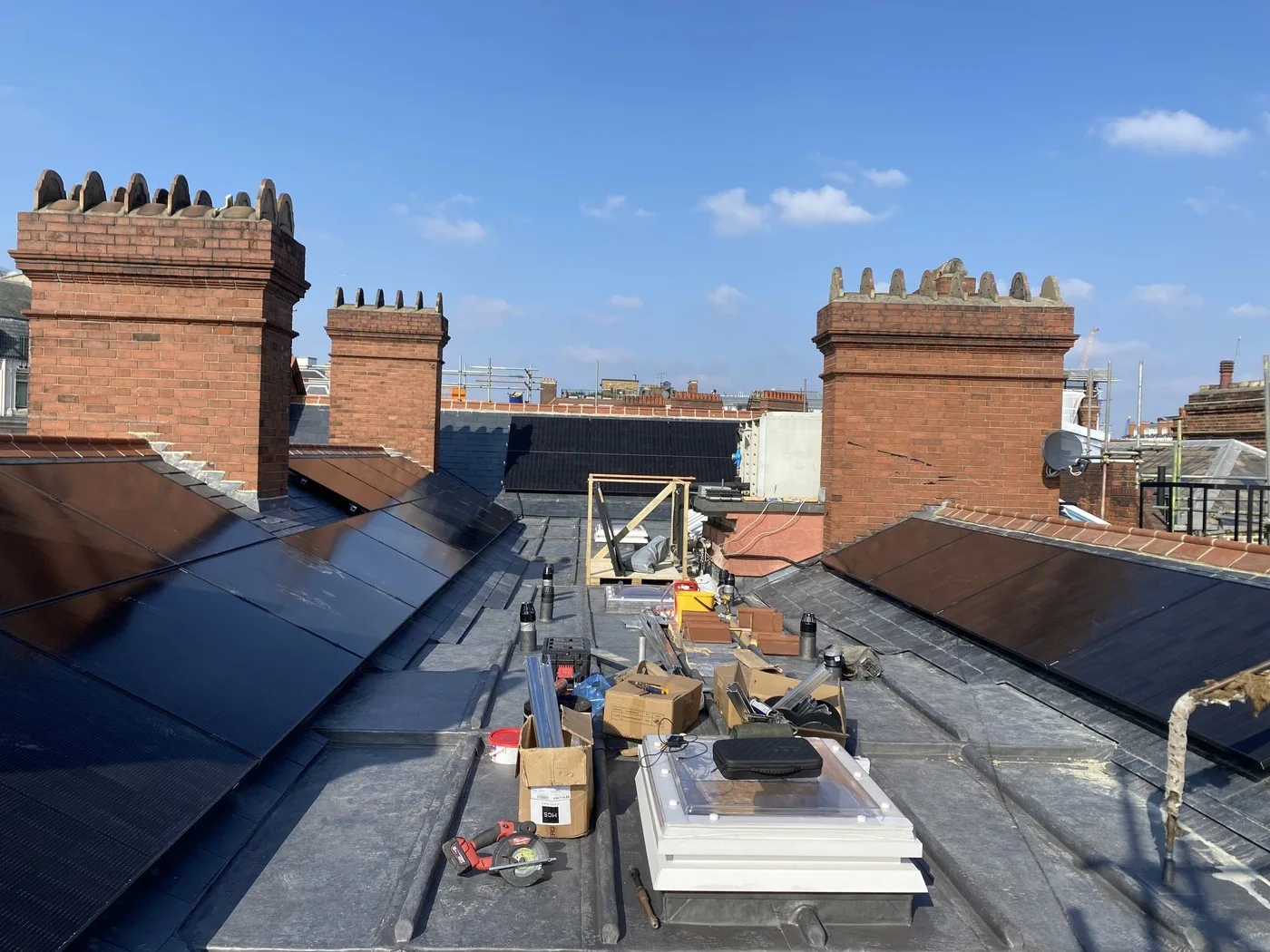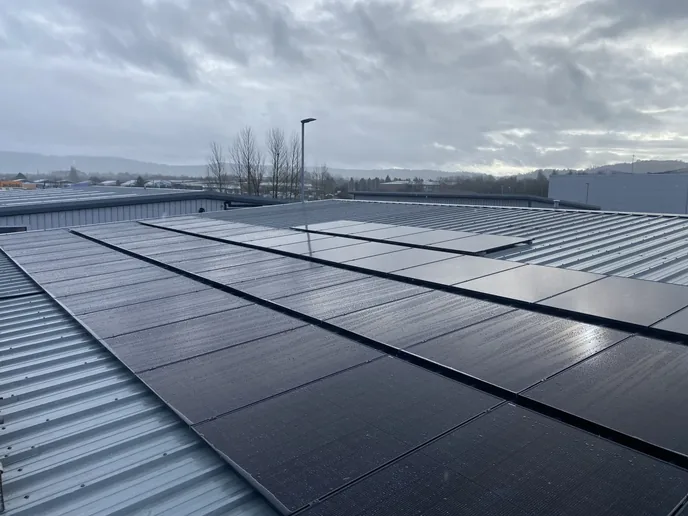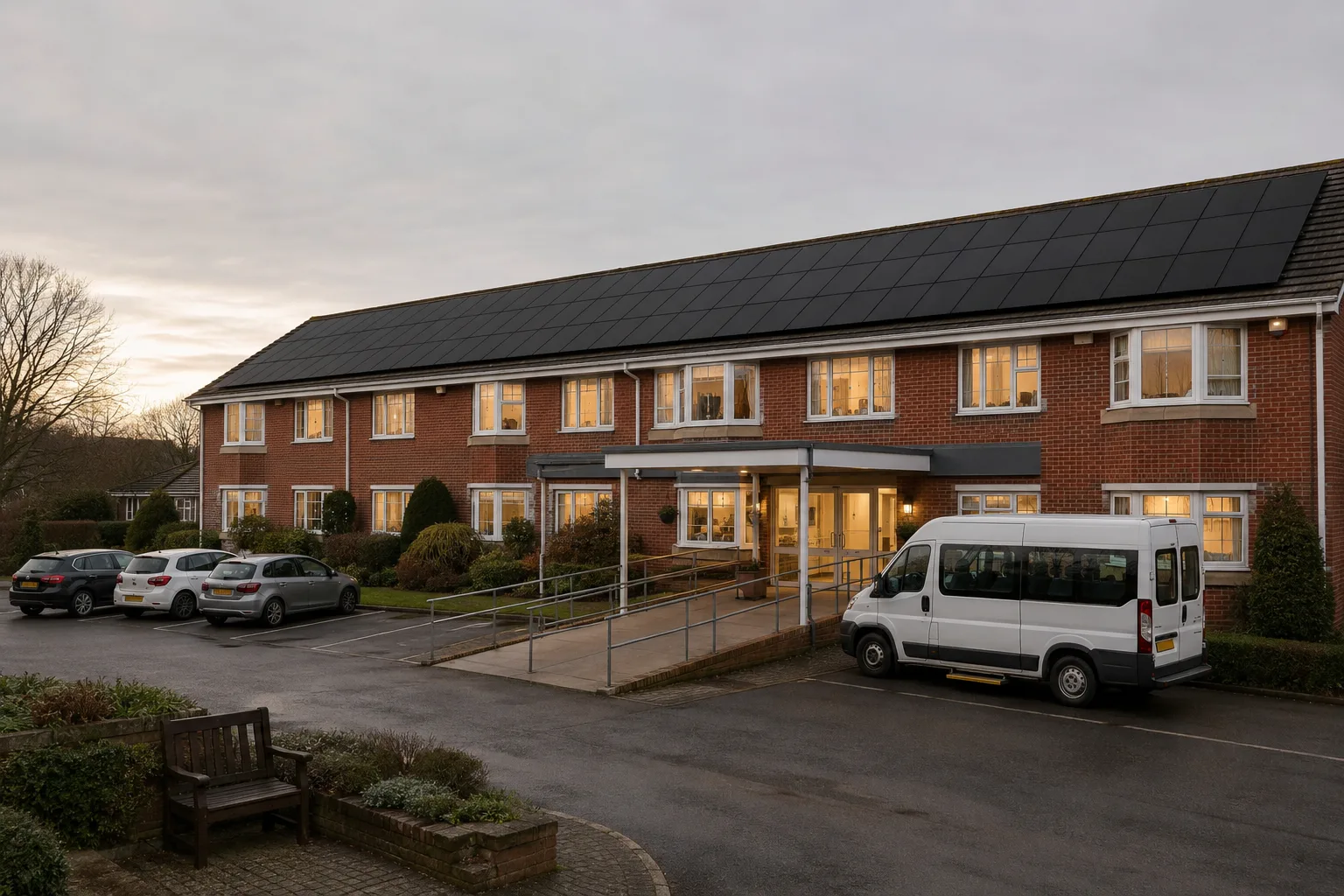
A care home never switches off: heating, hot water, laundry, kitchens, lighting and call systems, all day and all night. That constant load is exactly what solar is built to feed. A Birmingham care home now makes 40% or more of its own power and will be around £270,000 better off over the system's life, while a Colchester home puts up to £110,000 back into resident care.
Solar panels for care homes work because a care or nursing home carries a heavy, constant load that a factory only dreams of: heating and hot water, laundry, commercial kitchens, lighting, lifts, medical and call systems, all running through the day and the night. A large share of it is pulled in daylight, and it never really stops. That steady, round-the-clock demand is exactly what rooftop solar is best at feeding, so most of what you generate is used in the home rather than exported cheaply to the grid.
For an operator, energy is money that could be care. Every pound cut from the bill is a pound that can go back into residents, staff and comfort. A Colchester home now makes up to 40% of its own power and will be £100,000 to £110,000 better off over the life of the system, with the savings going straight back into resident care.
Solar turns a rising, unpredictable running cost into a fixed, low-carbon asset with a payback an operator or finance lead can sign off, typically around six years, then decades of savings. Solar panels for care homes tend to earn their keep faster than for most commercial buildings, because so little of what the roof generates is exported. It is the closest thing to a sure bet in commercial energy, and solar panels for care homes are among the fastest to pay back. Qualifying commercial solar can be written down against tax, and pairing panels with battery storage protects what a home cannot afford to lose: heating, lighting and call systems can ride through a grid event on stored solar.
There is a reputational dividend too. Families increasingly choose on values as well as care, and a greener, lower-cost home that is visibly investing in residents rather than energy bills is an easier home to choose, and an easier one to run.
We don't deal in vague promises. Here is exactly what solar did for a Birmingham care home that runs every hour of the day, the kind of numbers we will model for your home before you commit to anything.
A Birmingham care home that runs every hour of the day now makes close to 40% of its own power, and will be around £270,000 better off over the life of the system. We put those numbers in front of them before they signed, not after.
Not a stock render. Two of our own care-home installs, filmed on site.
SDistribution51.6 kWp
AIndustrial70%bill cut
ORetail68%bill cut
RServices67%bill cut
JConstruction60%bill cut
FHealthcare67%bill cutA starting point, not a straitjacket. Every real system is sized to your roof, your load and your payback target after a proper site visit.


There are very few direct cash grants for commercial solar in the UK. What exists instead is a stack of tax reliefs, and it adds up to more than most grants would. For a care home paying corporation tax, they change the true cost of the system materially. We handle the eligibility paperwork as part of every install.
Tax treatment depends on your circumstances and may change. Confirm the position with your accountant. We will give them everything they need.
Most operators assume solar is a capital decision. It does not have to be. We model every route side by side, with the real numbers for your home, before you choose.
You own the asset and every unit it makes. Fastest payback, and the route where the capital allowances above do the most work. Ask your accountant about Full Expensing.
Some homes spread the cost through their own funder or leasing partner. We do not provide the finance; we work to whichever route you choose. Useful where the capital budget is committed elsewhere but the energy line is still bleeding.
Through a vetted finance partner, a third party funds and owns the system while you simply buy the power it makes, often cheaper than the grid, with no capital outlay. We introduce you to the partner and model whether it is the right route for your home.
A commercial solar installation on a working care home is a different job from a domestic one. One team, in-house, from first site visit to switch-on, and we plan the work around your shifts so the care home keeps running.
An inspection asks whether a home is safe and well-led. A solar installation should never complicate either answer, so we plan the job around your residents and give you the full certification pack for the work we do.

Fifteen years in London finance, now applied to solar. Manan has spoken at The Care Show on the economics of powering a home that never switches off, and is quoted on the UK solar market by the Financial Times and The Times. He walks your board through payback, capital allowances and the VAT deadline, in the language your accountant speaks.

Designing and installing solar since 2011, through the feed-in tariff boom, the policy gaps and the battery revolution. His focus is payback period, not panel count. Customers who installed with him a few years ago are already back to add batteries and EV chargers. That is how good design holds up. Quoted on the UK solar market by the BBC.
The questions care and nursing home operators actually ask before committing to solar.
This depends on the roof space available and how much energy the building consumes. Most of our care home customers install between 50 and 150 panels, though your building may vary.
If enough roof space is available, it can be possible to produce all your building’s daytime power requirements for several months during spring and summer. Adding a battery can increase this, even up to 100% in those months. In autumn and winter, solar still provides a large part of your daytime demand.
Properly maintained and serviced, solar panels can last more than 25 years, well beyond the manufacturer’s product guarantee. Solar4Good also certifies the whole system for 10 years, including the inverter. The inverter typically needs replacing every 15–20 years, a small part of the overall system cost.
Yes. Solar can reduce your energy bills, cut emissions, and future-proof your care home’s power supply.
Yes. Solar can help power EV charge points, so EV charging lets staff and visitors travel to and from the home on clean, self-generated power.
“George the sales chap was straightforward and honest, and the whole installation team were awesome, courteous and professional throughout.”
“From start to finish the whole job has been seamless. The install guys were polite, knowledgeable and efficient.”
“I wholeheartedly recommend this company for solar and battery storage installation.”
Solar for care homes sits inside our wider commercial work. If you are comparing sectors, or your group runs more than one type of site, these are the closest neighbours.
Commercial solar, the full guide →The full guide: sizing, funding, planning and payback, designed and commissioned in-house.
Medical centresReliable, low-carbon power for surgeries, clinics and hospitals.
SchoolsCut energy costs and free up budget, with PSDS and Salix funding routes.
Commercial case studies →Real installations across care homes, surgeries, hotels, retailers and mills.Tell us about your site and we'll model it properly: the right system for your roof, how much of your load it covers, the cut to your bill and the payback. Real numbers, before you commit to anything.