Local councils are under increasing pressure to reduce carbon emissions, manage operating costs and improve resilience across public-sector estates, while supporting communities through rising energy costs. With budgets tightening and net zero targets approaching, many authorities are turning to solar solutions to generate clean, more predictable energy and reduce pressure on public services.
Councils face some of the UK’s highest property-related energy costs, particularly across leisure centres, office estates, social housing and community buildings. Installing solar solutions helps authorities stabilise budgets, reduce emissions and meet sustainability requirements.
Reduce your energy bills with efficient solar solutions.
Commercial solar for local councils helps authorities deliver low-carbon services without increasing financial pressure on residents or taxpayers.
What solar panels for local councils return depends on the asset: a leisure centre in constant use behaves very differently from an office block. The ranges below are a starting point, sized properly after a site assessment.
| Council asset type | System size | Annual savings | Payback (purchase model) |
|---|---|---|---|
| Social housing blocks | 100–300 kW | £20,000–£50,000 | 4–6 years |
| Leisure centres | 300 kW – 1 MW | £50,000–£200,000 | 5–7 years |
| Civic buildings | 100–500 kW | £25,000–£80,000 | 4–7 years |
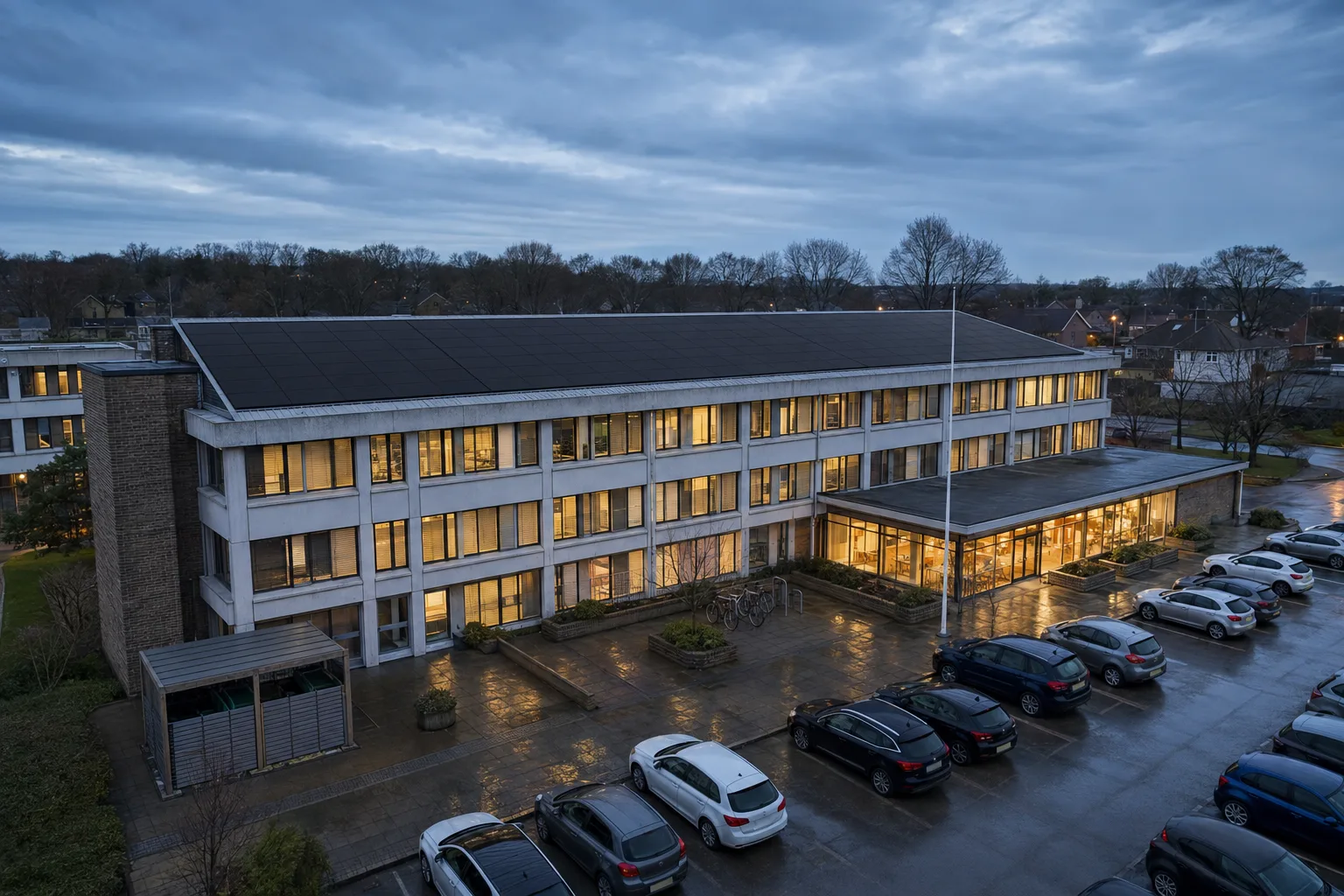
Local councils manage a wide mix of high-consumption buildings, each with its own energy profile. By installing solar solutions, authorities can reduce operating costs across social housing, leisure centres and civic buildings while supporting long-term net zero targets. Solar PV provides predictable daytime energy that can reduce reliance on the grid, lower carbon emissions and support public-sector resilience.
Most council-owned buildings have suitable roof space or surrounding land, making them ideal for rooftop or ground-mounted solar systems tailored to public-sector energy needs.
Public-sector organisations cannot typically use tax credits or capital allowances. Instead, councils can access funding routes such as:
Solar4Good prepares tender-ready documentation and supports public-sector procurement processes.
Most rooftop systems installed as part of commercial solar for local councils fall under permitted development. However, planning permission may be required for:
We help councils decarbonise their estates, reduce budgets, and deliver visible community benefit.
Solar4Good specialises in designing, funding, and delivering solar PV systems that meet UK public-sector procurement and compliance standards.
We help councils decarbonise their estates, reduce energy costs, and deliver visible community benefit.
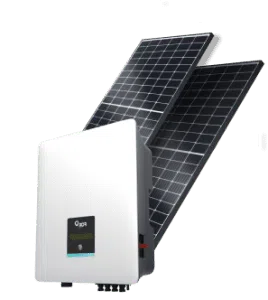
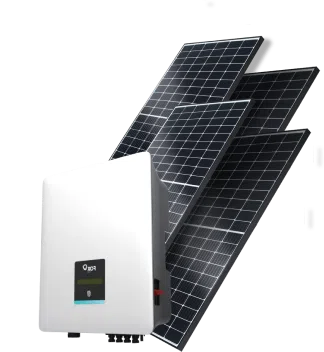
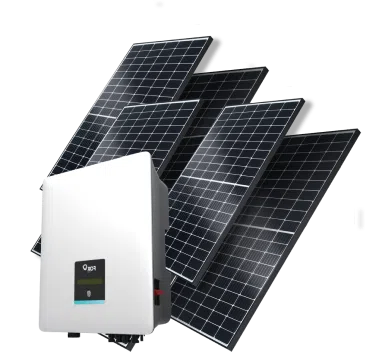
Choose the right package for your site. Every real system is sized to the roof, the load and the payback target after a proper site assessment.


Installing solar panels for your facility should not be complicated. Solar4Good manages everything from consultation to installation, ensuring your system is designed for reliable performance and long-term savings.
The questions commercial buyers ask before putting solar on the roof.
Across most estates, yes, but not evenly. Buildings in constant daytime use, such as leisure centres, offices and community facilities, use most of what they generate and pay back fastest. The savings ranges by asset type are set out above, and we model each site before committing to a number.
Public-sector organisations cannot typically use tax credits or capital allowances, so councils generally use PSDS grants, Salix interest-free finance, a Public Sector PPA, or a framework route such as RE:FIT or LASER. We prepare tender-ready documentation for whichever applies.
It varies with scale and access rather than with a fixed timetable. Work is planned around how the building is used, so schools, leisure centres and housing blocks are each scheduled differently, and the programme is agreed before anything starts.
The site assessment answers that. We check structural capacity, roof age and covering, access and shading across the estate, and where a roof is unsuitable we look at car ports or ground-mounted options instead.
Panels carry a 25-year warranty as standard on the packages above and are expected to keep producing beyond it. Inverters are usually replaced once in that period, which we build into the whole-life cost rather than leaving it out of the business case.
“George the sales chap was straightforward and honest, and the whole installation team were awesome, courteous and professional throughout.”
“From start to finish the whole job has been seamless. The install guys were polite, knowledgeable and efficient.”
“I wholeheartedly recommend this company for solar and battery storage installation.”
Council estates cover several of the sectors we work in. If you are scoping a whole estate, these are the closest neighbours.
Start hereCosts, funding routes, planning and payback for UK commercial solar, in one place.
Read the guide →
SectorPools and plant running around the clock, usually the biggest bill on the estate.
See the page →
SectorTerm-time daytime demand, and the same PSDS and Salix routes.
See the page →
SectorClubs, sports halls and floodlit pitches across the leisure estate.
See the page →Tell us about your estate and we will model it properly: the right system for each roof, how much of the load it covers, the cut to the bill and the payback, with tender-ready documentation.