
Solar Scams In The UK: What Homeowners Should Watch Out For
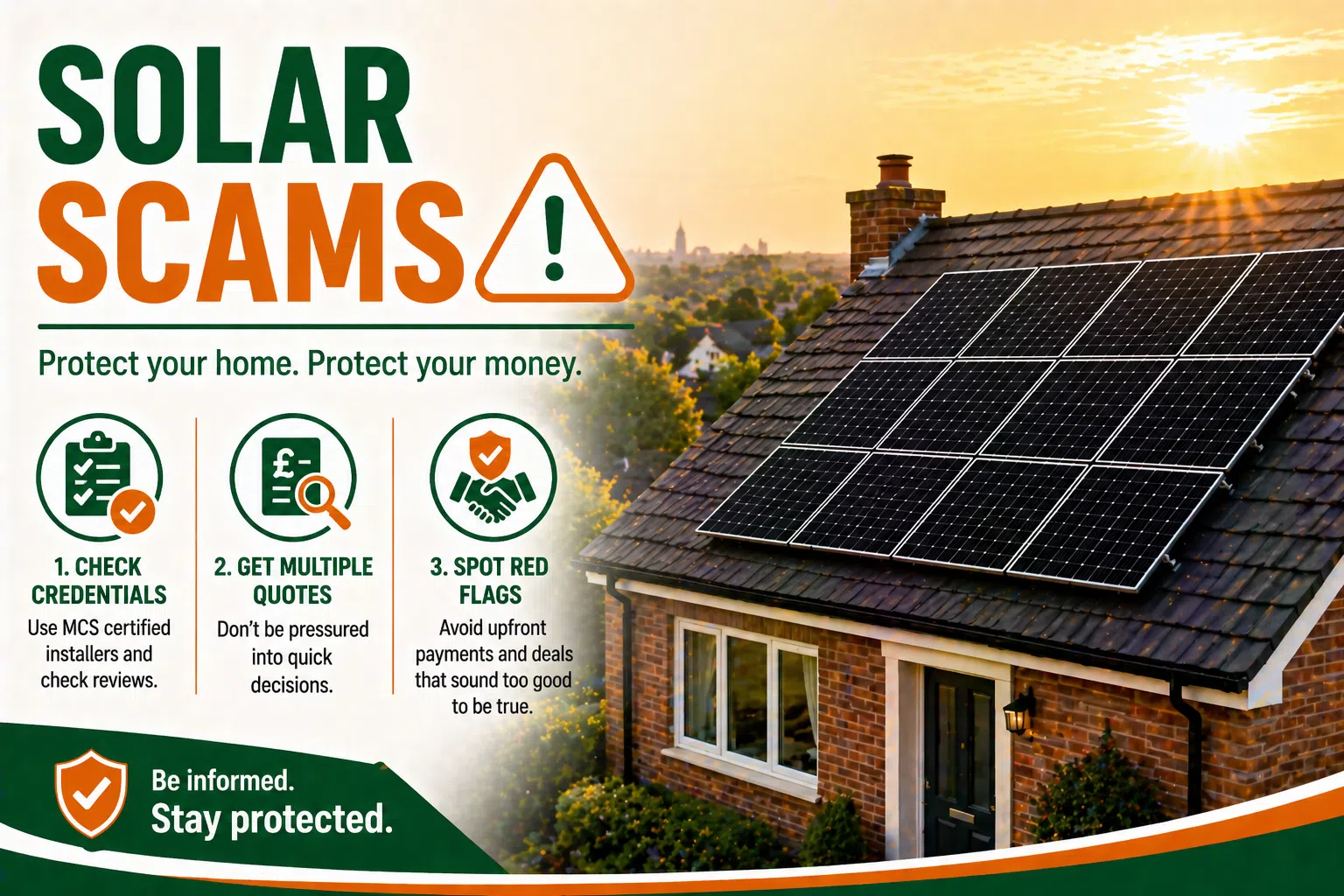

Are solar scams really a problem in the UK, and how can you tell a genuine installer from a risky offer? The reassuring answer: solar is a proven, well-regulated home upgrade, and once you know what a trustworthy installer looks like, buying with confidence is straightforward. This guide shows you exactly how to do that.
The Short Version (Read This First)
Key facts about buying solar safely in the UK:
- Solar is a legitimate, proven home energy upgrade — the technology is sound, and the vast majority of UK installers are professional and accredited
- Most solar scams are not about fake panels; they are about misleading sales tactics, exaggerated savings, or false authority
- The single most powerful protection is verifying MCS accreditation and getting everything in writing
- A genuine installer gives you time, clear written figures, and verifiable credentials — never pressure or urgency
- Solar4Good® is MCS certified (NAP/72775/25/4), HIES protected (S4G/A/1484), and rated Excellent on Trustpilot and Checkatrade — exactly the credentials worth checking for in any installer
Solar power has become far more popular across the UK in recent years. Rising energy costs, growing awareness of energy independence, and improved technology have encouraged more households to consider installing solar panels for the first time. As interest has grown, so has the number of companies offering installation and advice. The good news is that most of these installers operate professionally and to recognised standards.
However, any fast-growing market attracts a small number of less reputable operators, and solar is no exception. The reassuring part is that these bad actors are easy to spot once you know the signs, because genuine solar scams rarely involve fake panels or imaginary technology. Instead, they rely on exaggerated savings claims, pressure selling, or false authority. Because most homeowners only install solar once, knowing what a trustworthy installer does differently is the simplest way to buy with complete confidence.
This guide focuses on the positive: what good looks like, how to verify it, and how to move forward with peace of mind.
What Does a Trustworthy Solar Company Look Like?
A trustworthy solar company makes the whole process clear, unhurried, and verifiable. Rather than relying on urgency or confusion, a genuine installer gives you the information and time you need to make a confident decision. The hallmarks are consistent and easy to check.
- Recognised accreditation: they are certified under the Microgeneration Certification Scheme (MCS), and often hold additional consumer protection such as HIES, which you can confirm on the official registers.
- Clear written quotes: they show the panel, inverter, and battery models, plus the assumptions behind any savings or payback figures.
- No pressure: they give you time to compare options and never use “today only” urgency.
- Verifiable reputation: they have independent reviews on platforms like Trustpilot and Checkatrade that you can read for yourself.
- Honest advice: a good installer will tell you plainly if solar is not the right fit for your roof, rather than selling regardless.
When a company behaves this way, you can proceed with confidence. These are the same standards Solar4Good is built around, and the same ones worth expecting from any installer you consider.
★★★★★ Trustpilot
“From initial survey to flawless installation, Solar4Good delivered an exceptional solar experience. Clear explanations, transparent pricing with no hidden fees, and no pressure at any stage.”
— Verified customer
How to Recognise the Few Bad Actors
Knowing the warning signs turns caution into confidence. Each tactic below has a simple tell, and each one is the opposite of how a genuine installer behaves. Spot these, and you can sidestep a poor decision easily.
Exaggerated or manipulated savings claims
Some companies inflate savings by quietly adjusting the assumptions behind their figures, such as import rates, export earnings, or energy inflation. A trustworthy installer instead shows clear, written assumptions you can check. If the numbers look too good to be true and the source data is missing, that is your cue to ask for it.
High-pressure or doorstep selling
Genuine installers never need to trap you into signing on the spot. Anyone posing as a surveyor while actually pushing a “sign today” discount is using urgency rather than information. A reputable company will happily give you time to compare quotes.
Fake “official” inspection letters
Be cautious of letters or emails claiming your system needs a paid “MCS inspection” or that your export payments are at risk. Official bodies do not demand payment for compliance checks, so you can safely verify any such contact directly through official channels.
Ready to go Solar?
Feed-in Tariff (FIT) buy-out offers
Some companies offer a lump sum to “buy” your remaining FIT payments. Because FIT is a guaranteed income stream, these offers are usually worth far less than the true value. A reputable adviser will always check your FIT status and explain the risks before recommending any change.
Cold calls about grants or schemes
Genuine government schemes, such as the Warm Homes Plan, are applied for through official channels, never via unsolicited cold calls or doorstep visits. If someone contacts you out of the blue offering grants, refunds, or enhanced payments, you can simply verify it independently through gov.uk before engaging.
Impersonation of regulators or manufacturers
Occasionally, people pose as MCS representatives, inverter brand agents, or regulators to gain trust. MCS has issued warnings about impersonation scams. Because genuine bodies can be reached through their official websites, a quick independent check confirms whether contact is real before you act.
Why a Little Extra Care Pays Off Right Now
A small amount of due diligence has never been more worthwhile, simply because solar has moved firmly into the mainstream. As energy prices rose and interest in energy independence grew, far more UK households began researching solar, often for the first time.
That enthusiasm is positive, but it does mean many homeowners do not yet have a reference point for realistic pricing, savings, or installation timelines. A few factors make a quick sense-check especially valuable right now:
- Rapid growth in demand, particularly during periods of high electricity prices
- Complex projections, which can be selectively presented or oversimplified
- One-off buying, meaning most homeowners have no prior experience to compare against
Understanding this context makes the whole decision easier. When you recognise that urgency and authority are sometimes used to rush a decision rather than inform it, you naturally slow down, verify, and choose well.
★★★★★ Trustpilot
“I got three quotes. Solar4Good was not the cheapest, but they were the only installer who talked me through the actual process and aftercare in plain terms. This is a company that tells you the truth.”
— Verified customer
Your Confidence Checklist for Buying Solar Safely
Buying solar safely comes down to verification, patience, and a few informed questions. Work through this checklist and you can move forward with complete peace of mind.
- Verify who you are dealing with: check that the installer is accredited on the official MCS register before engaging.
- Get everything in writing: ask for written quotes showing clear assumptions about savings, payback, tariffs, and the exact equipment models. If a figure looks too good to be true, ask for the source data.
- Take your time: reputable installers give you space to review your options and never use limited-time urgency.
- Validate official contact: if someone claims to represent a regulator, scheme, or warranty provider, check their details via official websites such as gov.uk or mcscertified.com, rather than numbers in an unsolicited message.
- Sense-check standout offers: promises of free panels, inflated savings, or exclusive grants are always worth checking against official government information.
- Report anything suspicious: you can report suspected scams to Action Fraud in England and Wales, or Police Scotland, and forward scam texts to 7726.
Each step is quick, and together they give you everything you need to choose an installer with confidence.
Bottom Line
Solar is a proven and valuable home energy upgrade, and buying it safely is well within reach. By recognising the simple signs of a trustworthy installer — accreditation, written figures, no pressure, and a verifiable reputation — you can protect your investment and enjoy the benefits with total peace of mind.
Conclusion
Solar panels can be a valuable long-term investment, and choosing the right installer matters just as much as the equipment itself. The reassuring truth is that good installers make this easy: they are transparent, accredited, and never rely on urgency or confusion. If you are considering solar and want a clear, pressure-free view of your options, contact us for an obligation-free consultation. We help you understand realistic savings, assess suitability, and make an informed decision in your own time.
★★★★★ TrustATrader
“Professional from start to finish. Everything was explained clearly and put in writing, and there was never any pressure to commit. Exactly how buying solar should feel.”
— Verified customer
Frequently Asked Questions
How can I be sure I am dealing with a reputable solar installer?
Check the installer’s MCS accreditation on the official register, read independent reviews on platforms like Trustpilot and Checkatrade, and get multiple quotes with clear, written breakdowns before signing. A genuine installer is happy to be verified and gives you time to decide, which makes confidence easy to build.
Are cold calls offering solar grants or refunds genuine?
Generally no. Legitimate government schemes, such as the Warm Homes Plan, are applied for through official channels, not promoted via unsolicited calls or doorstep visits. If you receive one, you can simply verify the offer independently through gov.uk before taking any action.
What should I do if I suspect a solar scam?
Pause and verify before doing anything else. Stop further contact, check any claims independently through official websites, and report suspicious behaviour to Action Fraud or your local police authority. Taking a moment to verify is always the right move, and a genuine company will never object to being checked.
Could a scammer affect my existing solar system?
Occasionally, through fake maintenance or upgrade offers that lead to unnecessary spending or non-accredited work that can invalidate warranties. The simple safeguard is to only use MCS-accredited installers for any work, and to verify any “urgent upgrade” claim directly with your original installer or the manufacturer first.
Is solar itself a safe investment?
Yes. Solar is a mature, well-regulated technology that reliably generates electricity for decades. The technology is not the risk; the only thing to check is the installer behind it. Choose an accredited, transparent company and solar becomes one of the most dependable upgrades you can make to your home.
About the Author
Manan Shah
Co-Founder of Solar4Good UK. Leads Solar4Good's commercial strategy and customer relationships, and is quoted as a clean-energy authority by some of the UK's most trusted news publications. Quoted in the Financial Times and The Times on UK solar.
📞 Book a free solar consultation
Call us on 0800 999 1454 or visit solar4good.co.uk
Read over 800+ verified five-star reviews on Trustpilot and Checkatrade
Solar4Good Ltd · 79 College Road, Harrow, HA1 1BD · MCS: NAP/72775/25/4 · HIES: S4G/A/1484