
Best Portable EV Chargers in the UK (2026 Guide)
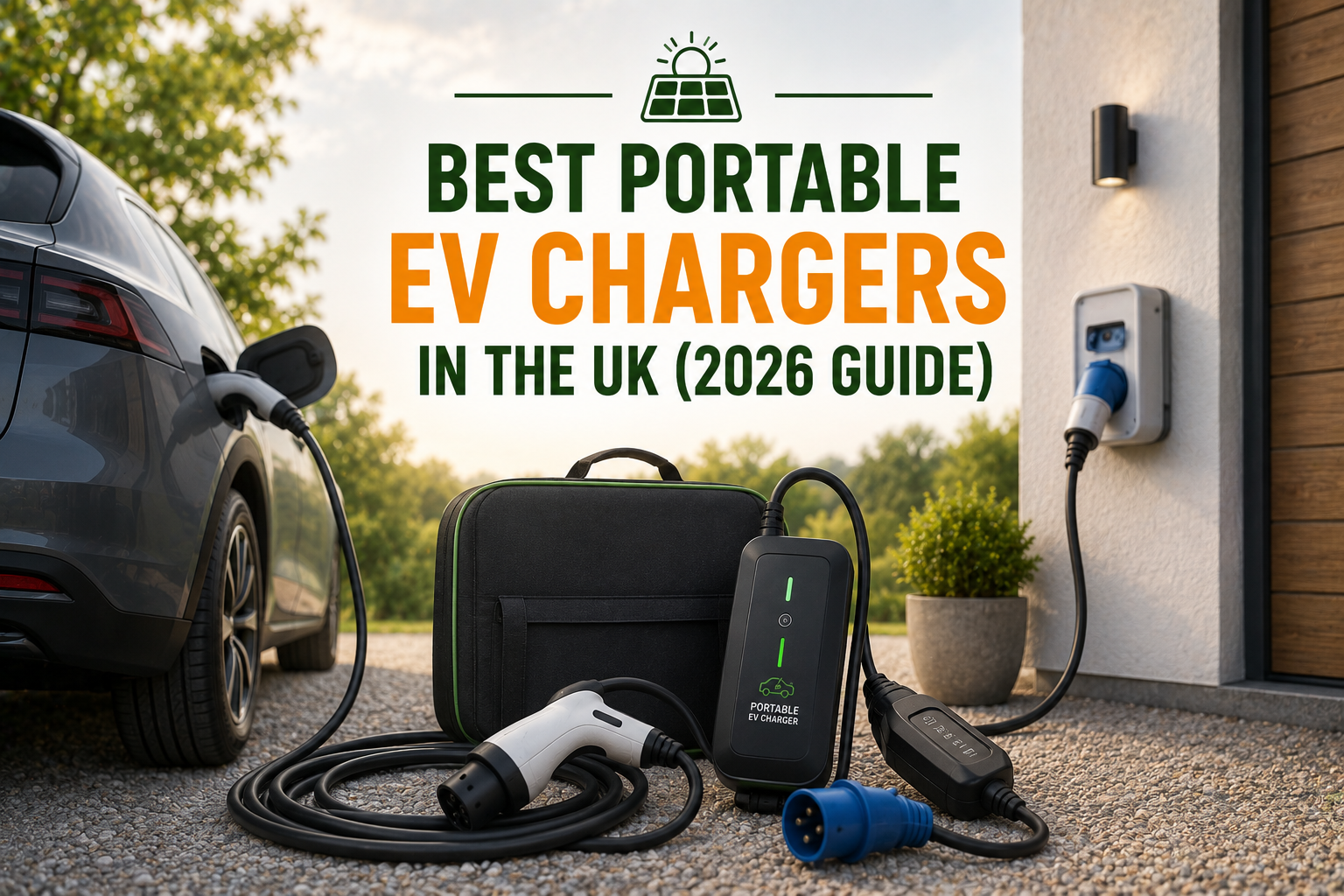

Portable EV chargers still have a clear role to play in 2026, even though most UK homeowners now rely on fixed wall chargers for everyday use.
Short Summary
What UK drivers need to know about portable EV chargers:
- Portable EV chargers are not meant to replace a dedicated wallbox — they’re most useful for travel, untethered public charging points, and as a backup if your main charger is offline
- Most portable chargers operate between 2.3 kW and 7.4 kW on a single-phase supply — slower than a typical home wallbox but functional for top-ups and emergency use
- Look for strong safety features: overcurrent protection, temperature monitoring, earth-fault protection and a suitable IP weather rating for outdoor use
- The best option depends on how often you travel, where you charge, and whether you want a backup solution or occasional charging flexibility
- Avoid using portable chargers with damaged sockets, thin extension leads or un-earthed outlets — the socket quality matters as much as the charger
- Solar4Good® can advise on how a portable charger fits alongside your home wallbox, solar and battery setup — call 0800 999 1454 or visit solar4good.co.uk
They aren’t intended to replace a permanent home installation, but they can be genuinely useful in specific situations — travelling longer distances, visiting family or friends, using untethered public charge points, or simply having a backup if your main charger is temporarily offline. For many drivers, the appeal of a portable charger isn’t about speed; it’s about flexibility and peace of mind. Not every portable charger offers the same level of safety or practicality, though — some models prioritise compact design and convenience, while others focus on durability, weather protection or higher power output. This guide breaks down what actually makes a portable EV charger worth owning in real UK conditions.
Why Portable EV Chargers Still Matter in 2026
Home wall chargers are now the standard for daily charging, but portable chargers still solve real-world problems. They’re especially useful when travelling to locations without installed chargers, using untethered public charge points, needing a temporary backup if your wallbox stops working, or charging a second vehicle occasionally. Many drivers keep one in the boot for peace of mind rather than regular use.
As EV ownership grows, portable charging has shifted from being a primary charging method to a practical accessory — something that fills gaps when permanent infrastructure isn’t available. If you’re planning an integrated setup that combines your home EV charger with solar panels and battery storage, see our step-by-step guide to solar panels and EV chargers for how to make everything work together.
What to Look for in a Portable EV Charger
Choosing a portable EV charger isn’t just about power rating or price. Because these units are often used in different locations — from driveways to unfamiliar sockets while travelling — practicality and safety matter just as much as charging speed. A good portable charger should feel reliable, easy to handle and suited to how you actually drive.
- Power rating: most portable chargers operate between 2.3 kW and 7.4 kW on a single-phase supply. Faster charging is helpful, but only if your vehicle and electrical setup support it
- Safety protection: look for models with integrated protection such as overcurrent detection, temperature monitoring and earth-fault protection. These features reduce risk when charging from standard sockets
- Weather resistance: UK conditions make durability important. Chargers with a strong IP rating handle outdoor use better and last longer
- Cable length: consider how you park at home and at public charging points. A slightly longer cable often makes charging easier in unfamiliar spaces
- Compatibility: most UK EVs use Type 2 connectors, but always confirm compatibility with your vehicle and power supply before buying
- Portability: a portable charger should actually be easy to carry and store. Bulky units quickly become inconvenient and rarely get used
Top Portable EV Charger Types for UK Drivers
Rather than focusing on specific brands, it’s usually more useful to think about how you’ll actually use a portable charger. Different designs suit different routines.
Ready to go Solar ?
| Charger type | Best for | Why it works |
|---|---|---|
| 3.6 kW travel charger | Everyday backup and slow charging | Compact, reliable, easy to store |
| 7.4 kW portable unit | Faster home top-ups where supported | Uses full single-phase supply for quicker charging |
| Weather-resistant travel charger | Outdoor or driveway charging | Durable casing and stronger safety features |
| Lightweight dual-plug kit | Frequent travellers | Flexible use across different charging setups |
The right choice depends less on brand and more on how you expect to use it. A driver who primarily wants a travel backup has different needs from someone who charges a second vehicle a few times a week.
How Safe Are Portable EV Chargers?
Portable chargers are designed to be safe when used correctly, but they don’t offer the same level of protection as a professionally installed wallbox. High-quality portable chargers usually include temperature monitoring, automatic shutdown protection, built-in RCD safety systems and sealed connectors for outdoor use. However, they still rely on the quality of the socket they’re plugged into.
For that reason, installers generally recommend using portable chargers as occasional tools rather than permanent charging solutions. Safe usage means: avoiding damaged or untested sockets; never relying on thin extension leads; and storing the charger properly when not in use. When treated as a flexible accessory rather than a daily charger, portable units can be very safe and useful.
Honest note
The socket quality matters as much as the charger. A high-quality portable charger connected to a poorly rated or damaged outlet can still be unsafe. If you’re using a portable charger regularly at home, a properly installed dedicated wallbox will always be the safer, more reliable long-term solution.
Tips for Using a Portable Charger at Home and on the Road
Portable chargers are straightforward to use, but a few small habits can make charging safer and far less frustrating over time.
- Charge during off-peak hours: if you’re on a smart tariff, charging at quieter times can significantly reduce running costs
- Park with cable reach in mind: planning how you park can make charging easier than relying on long cables
- Store the charger properly: keep it dry and protected to avoid damage over time
- Avoid unsuitable extension cables: portable chargers draw sustained current, so poor-quality extensions can overheat
- Check unfamiliar sockets: if you’re charging somewhere new, make sure the outlet is safe and properly rated
Conclusion
Portable EV chargers offer flexibility rather than speed. They’re ideal for travel, occasional charging or as a backup when your main charger isn’t available. While they shouldn’t replace a fixed home installation, they add reassurance and convenience when chosen carefully.
A portable EV charger isn’t there to replace your main home charging setup — it’s there to fill the gaps when plans change. For some drivers, it becomes a travel essential. For others, it’s simply reassurance sitting in the boot. If you’re considering portable charging alongside a home wallbox, or wondering how it could work with solar panels and battery storage, Solar4Good offers obligation-free consultations to help you plan with confidence.
Frequently Asked Questions
Can a portable EV charger replace a home wallbox?
No. Portable chargers are designed for occasional use, travel or backup situations rather than daily high-power charging. A dedicated wallbox is always the better primary charging solution.
Are portable chargers safe to use outdoors?
They can be, provided the model has a suitable IP rating and is used according to manufacturer guidance.
How fast do portable EV chargers charge?
Most operate between 3.6 kW and 7.4 kW on a typical UK single-phase supply, which is slower than many wall-mounted chargers.
Do portable chargers need additional electrical protection?
Many include built-in safety systems, but using them with properly protected outlets adds an extra layer of safety.
Will a portable charger work with any EV?
Most UK EVs use Type 2 connectors, but always confirm compatibility with your vehicle and charging setup before buying.
About the Author
Manan Shah
Co-Founder of Solar4Good UK. Leads Solar4Good's commercial strategy and customer relationships, and is quoted as a clean-energy authority by some of the UK's most trusted news publications. Quoted in the Financial Times and The Times on UK solar.
📞 Book a free solar consultation
Call us on 0800 999 1454 or visit solar4good.co.uk
Read over 800+ verified five-star reviews on Trustpilot and Checkatrade
Solar4Good Ltd · 79 College Road, Harrow, HA1 1BD · MCS: NAP/72775/25/4 · HIES: S4G/A/1484