Companies across industries, from logistics and retail to manufacturing and property, are moving past “should we invest in solar?” and into “how fast can we make it pay for itself?” As we head into 2026, the UK’s solar finance landscape is entering a new phase with smarter capital structures and evolving funding options tailored to both SMEs and large-scale operators.
Summary (TL;DR)
Key facts about solar project finance and incentives in the UK 2026:
- AIA & Tax Relief: Businesses can claim up to £1 million for solar installations through the Annual Investment Allowance (AIA), offering 100% upfront deductions and instantly reducing tax liabilities
- Smart Export Guarantee (SEG): SMEs can earn by selling surplus electricity to the grid at competitive rates, with up to 30p/kWh during peak hours from top suppliers
- Power Purchase Agreements (PPA): Zero upfront costs with PPAs, developers install and maintain systems while businesses pay for electricity at fixed, discounted rates
- Payback Periods: Commercial solar typically has a payback period of 5–7 years, which can be significantly reduced through proper system sizing and tax incentives
01Understanding the UK Solar Landscape in 2026
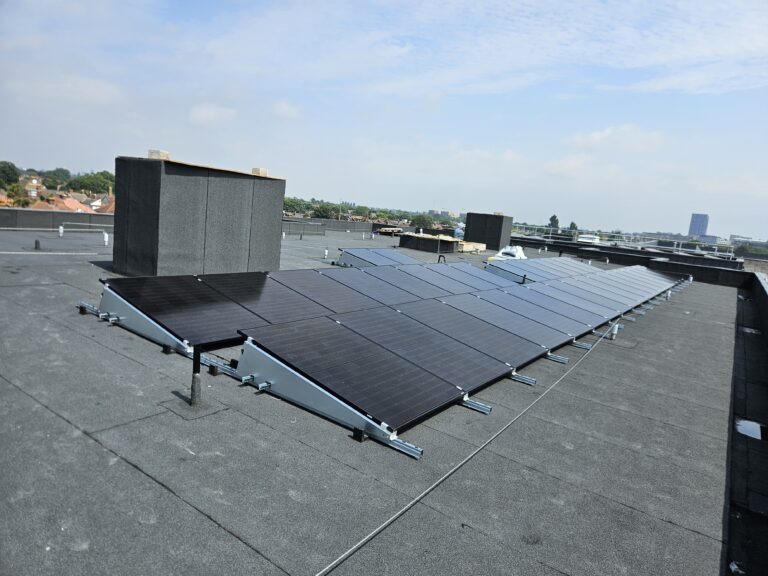
The UK solar industry is experiencing unprecedented growth. More solar was installed in 2023 than in the previous six years combined, and 2026 is set to break records, with industry experts predicting 50% growth.
But what’s driving this solar surge? Three key factors:
- Rising Energy Costs: UK businesses face the challenge of rising energy costs and the uncertainty of price volatility. With electricity prices remaining elevated and volatile, businesses are seeking energy independence, making business solar panel grants a key strategy to mitigate these rising costs.
- Enhanced Incentives: The government has strengthened support for commercial renewable energy through tax reliefs, export payments, and regional grants. These incentives have made solar finance more accessible, offering businesses more options to fund their solar installations
- Improved Economics: The cost of panel technology has decreased by 85% over the past decade, while efficiency has increased significantly, making solar more financially attractive than ever.
02Why 2026 Is the Year to Act: What’s new (and still relevant) in 2026
If you’ve been waiting for the right time to invest in solar, 2026 is it. The UK’s policy landscape has evolved in favour of clean energy, with stronger tax incentives, faster grid connections, and solar panel financing mechanisms designed to support both SMEs and large-scale commercial projects. In other words, the conditions for growth are finally aligned.
Here’s what’s shaping solar project finance and incentives in 2026:
- AIA still packs a punch: Most businesses can deduct up to £1 million of qualifying spend, including solar installations, from taxable profits in the first year. While solar PV is classed as a special rate asset, the Annual Investment Allowance (AIA) still allows for a 100% upfront deduction within the limit. Anything above that can claim the 50% first-year allowance.
- 0% VAT remains for residential installs: This incentive runs until 31 March 2027 but doesn’t extend to standard business premises, which still incur the 20% VAT rate. Mixed-use developments, however, may benefit where the residential portion qualifies.
- Business rates relief continues: Since April 2023, England’s rates relief for on-site renewable generation and energy storage has remained in force. This measure improves the financial case for rooftop PV and behind-the-meter systems, particularly when combined with solar finance packages.
- SEG export payments hold steady: Small generators (up to 5 MW) can continue earning through the Smart Export Guarantee. Rates vary by supplier; for instance, British Gas currently offers around 15.1p/kWh to existing customers exporting energy back to the grid.
- CfDs offer long-term stability: The AR6 (2024) auction cleared solar at £50.07/MWh (2012£), and the government has now extended Contracts for Difference from 15 to 20 years. That longer contract period reduces financing risk and boosts investor confidence heading into AR7 (2026).
- Grid connection reforms are live: The TMO4+ reforms, introduced in 2026, apply a new “first ready and needed, first connected” approach, designed to clear the backlog of inactive projects (“zombie queues”) and fast-track viable developments.
03Smart Export Guarantee (SEG): Earning from Excess Energy
The Smart Export Guarantee is a government-backed scheme that allows businesses to sell surplus electricity generated by their solar panels back to the National Grid. Unlike the previous Feed-in Tariff, the SEG does not offer fixed payments but instead allows businesses to negotiate better deals based on market rates.
Current SEG Rates in 2026
SEG rates vary significantly between suppliers, making it crucial to compare offers:
Top SEG Rates (2026):
- Octopus Intelligent Octopus Flux: Up to 30.31p per kWh during peak hours (4-7pm)
- Good Energy Premium: 40p per kWh for first 12 months (solar + battery customers)
- E.ON Next Export Premium v2: 21p per kWh (fixed 24-month rate)
- Good Energy Solar Savings: 15p per kWh (standard rate)
- Octopus Outgoing: 15p per kWh (for Octopus customers)
- Basic SEG Tariffs: 4-6p per kWh (minimum rates)
Energy companies offer the best export rates to their own customers, with the highest export rate paying 25p per kWh if you meet the qualifying conditions.
SEG Eligibility Requirements
To qualify for SEG payments, your business must:
- Have a renewable electricity-generating system located in Great Britain with a total installed capacity of no more than 5 MW.
- Install through an MCS-certified installer
- Have a smart meter capable of providing half-hourly export readings
- Obtain DNO (Distribution Network Operator) approval
04Tax Incentives That Transform Your ROI
Let’s be honest, solar’s upfront costs can make even the most forward-thinking business owner hesitate. But here’s the good news: the UK’s tax system actually rewards companies that invest in renewable energy. From accelerated allowances to VAT relief, these incentives don’t just make solar affordable; they can transform your project’s ROI from “someday” to “smart business move right now.”
Annual Investment Allowance (AIA):
The Annual Investment Allowance (AIA) remains the biggest win for businesses investing in solar. It lets you deduct up to £1 million of qualifying spend, including solar panels, from taxable profits in the same year.
Because solar PV systems are treated as plant and machinery, they qualify for a 100% capital allowance. In plain terms, that means you can write off the entire installation cost immediately, reducing your corporation tax bill and effectively making your commercial solar investment around 25% cheaper.
First-Year Allowances
Already hit your AIA limit? The First-Year Allowance (FYA) steps in to keep the savings rolling. It allows businesses to deduct 50% of the investment in qualifying energy-efficient technologies, like commercial solar, from taxable profits right away.
Quick note: The 50% special rate allowance applies to solar assets purchased between 1 April 2021 and 31 March 2026.
VAT Relief on Solar Installations
VAT can be a hidden sting in the tail, but not always. While most commercial projects face the standard 20% VAT, some qualify for partial or full relief. Mixed-use developments, charities, and residential components of larger projects may benefit from reduced or 0% VAT, which can shave thousands off upfront costs.
05Zero-Capital Financing: Power Purchase Agreements (PPAs)
A Solar Power Purchase Agreement is a financial agreement where a developer arranges for the design, permitting, financing, and installation of a solar energy system on a customer’s property at little to no cost.
Think of it as leasing solar power rather than buying the panels. You provide the roof space, the developer installs and maintains the system, and you purchase the electricity generated at a fixed, discounted rate.
How Do Solar PPAs Work?
They work through the following process:
- Agreement: The PPA provider assesses the potential of your roof and provides a proposal demonstrating the financial savings and carbon footprint predictions. You agree to enter into a Power Purchase Agreement for 25 years and lease the airspace above your roof.
- Installation: The developer covers all design, financing, installation, and commissioning costs, typically £0 upfront from your business.
- Operation: You purchase the solar electricity at a pre-agreed rate (usually 10-20% below grid prices), with rates typically inflating at RPI or a fixed percentage.
- Maintenance: The developer is responsible for the operation and maintenance of the system for the duration of the agreement.
- End of Term: At the end of the PPA contract term (typically 25 years), a customer may be able to extend the PPA, have the developer remove the system, or choose to buy the system from the developer.
What Are The Benefits of Solar PPAs?
- Zero Capital Outlay: All of the development and construction capital is provided by external funds, with these being paid over the life of the solar asset via the long-term PPA.
- Immediate Savings: Start reducing energy costs from day one, with no waiting for payback periods.
- Off-Balance Sheet: A PPA offers the advantage of being off-balance sheet, allowing businesses to enjoy the benefits of solar energy without the associated financial liabilities on their balance sheet.
- Price Certainty: Under the PPA you will know the price you will pay for your electricity for the duration of the PPA. This reduces P&L volatility and helps your business with its long-term planning.
- Risk-Free Maintenance: There are no maintenance costs or operational worries, the developer handles everything.
PPAs work best for businesses that:
- Have electricity demand that is sufficiently large, consistent, and time-matched for solar PV-generated electricity to be well-suited to meeting it, for example, a cold storage facility with stable round-the-clock demand, or a manufacturing plant with its highest demand during daylight hours
- Want immediate savings without capital expenditure
- Prefer to preserve cash for core business activities
- Don’t want to manage or maintain solar infrastructure
- Have suitable roof space or land (minimum 1 square metre per kW for rooftop)
06Traditional Routes for Solar Panel Finance
For many businesses, the biggest hurdle to going solar isn’t motivation, it’s money. Upfront costs can feel steep, even when the long-term returns are clear. That’s where smart financing steps in. From traditional asset loans to modern green funding schemes, UK businesses now have more ways than ever to finance solar installations without draining cash reserves.
The right finance route depends on your goals, whether you want full ownership, low monthly repayments, or maximum tax efficiency. Below are the most common (and reliable) paths to funding solar projects in 2026.
Asset Finance & Equipment Loans
Many UK banks and specialist lenders offer asset finance specifically for renewable energy installations. Typical terms offered are as follows:
- Loan amounts: £25,000 to £5 million+
- Repayment periods: 5-15 years
- Interest rates: 4-8% (depending on creditworthiness and market conditions)
| Advantages | Disadvantages |
|---|---|
| You own the system outright from day one | Requires upfront capital or loan approval |
| Can claim full capital allowances | You’re responsible for maintenance |
| Benefit from all energy savings and SEG income | Initial cash flow impact before payback period |
| No restrictions on how you use the electricity |
Leasing & Hire Purchase
Solar leasing allows you to spread costs over time whilst still benefiting from immediate energy savings. It follows the structure given below:
- Monthly lease payments over 5-10 years
- Option to purchase at end of term
- Maintenance often included
- Lease payments may be tax-deductible as operating expenses
07Calculating Your Solar Investment: ROI & Payback Periods
Payback period simply states how long it takes for your installed energy system to recoup its cost through energy price savings. The basic calculation is to take the net cost of a system (after applying any incentives and export income) and divide it by your annual projected electricity savings.
Commercial Solar Payback Periods
The typical payback period for a commercial solar array is 5 to 7 years, which is pretty good when you consider that a well-maintained commercial solar array has an effective lifetime of at least 25 years.
Solar payback periods by business type
| Business Type | Payback Period |
|---|---|
| Large industrial facilities (energy-intensive) | 3-6 years |
| Small to medium businesses | 5-8 years |
| Office/retail spaces | 7-10 years |
By considering renewable energy for small commercial property businesses and the suitable business grants for solar panels, you can maximise your return on investment and take full advantage of the available incentives.
08Common Pitfalls to Avoid
Even the smartest solar projects can stumble over avoidable mistakes. The technology is mature, but the planning, financing, and execution still require precision. From system sizing to tariff selection, a few missteps can eat into your ROI and delay your payback timeline.
Here are the most common pitfalls that trip up UK businesses and how to steer clear of them:
| Pitfall | How to Avoid |
|---|---|
| Oversizing Your System | Installing more capacity than you can use reduces self-consumption and extends payback periods. To qualify for a PPA, your electricity demand profile must be sufficiently large, consistent, and time-matched for solar PV-generated electricity to be well-suited to meeting it |
| Ignoring Roof Condition | If your roof requires replacement in the near future, it would be advisable to prioritise this, as removing and reinstalling panels can be costly. |
| Not Shopping Around for SEG | SEG tariffs vary greatly between providers. It’s important to compare rates, as the difference between 4p and 15p per kWh can mean thousands in lost revenue. |
| Underestimating Ongoing Costs | You should allocate a budget for inverter replacement (typically £1,500-£3,000 at years 10 and 20) and annual maintenance (£500-£1,500 depending on system size). |
| Waiting Too Long | The AIA of £1 million is available until at least March 2026. Delaying could mean missing valuable tax relief opportunities. |
Bottom Line:
With 2026’s range of business solar grants, tax reliefs, and PPAs, going solar has never been more cost-effective. These incentives help cut upfront costs, speed up paybacks, and make clean energy a smart move for any business ready to save and grow sustainably.
The UK’s solar finance landscape in 2026 is designed for action, not hesitation. Between generous tax reliefs, smart export payments, and flexible funding options like PPAs, there’s never been a better moment for businesses to turn rising energy costs into long-term savings. Whether you want full ownership through AIA-backed investment or a no-capital PPA arrangement, solar now works for companies of every size and sector.
Ready to take the next step? Get in touch with Solar4Good to explore tailored finance solutions and find out how soon your business could start saving with solar.
Frequently Asked Questions
Can my business qualify for the 0% VAT on solar panels?
No, 0% VAT applies to residential installations. Commercial properties generally face the standard 20% VAT rate on solar panels.
What is the Smart Export Guarantee (SEG), and how do I benefit?
The SEG allows businesses to sell surplus solar power back to the grid. You must have a smart meter and MCS certification to qualify.
How does the Annual Investment Allowance (AIA) work for solar investments?
You can deduct 100% of the solar installation costs from your taxable profits in the first year, up to £1 million.
What are the benefits of a Power Purchase Agreement (PPA)?
A PPA involves no upfront costs. A developer installs and maintains the system on your premises, and you purchase the generated electricity at a fixed, discounted rate for 25 years.

Matthew has over a decade of UK solar experience, helping homeowners and businesses make clear, confident renewable-energy decisions, from first visit to switch-on.