
Cut Your Energy Bills in the UK in 2026: Here’s How!
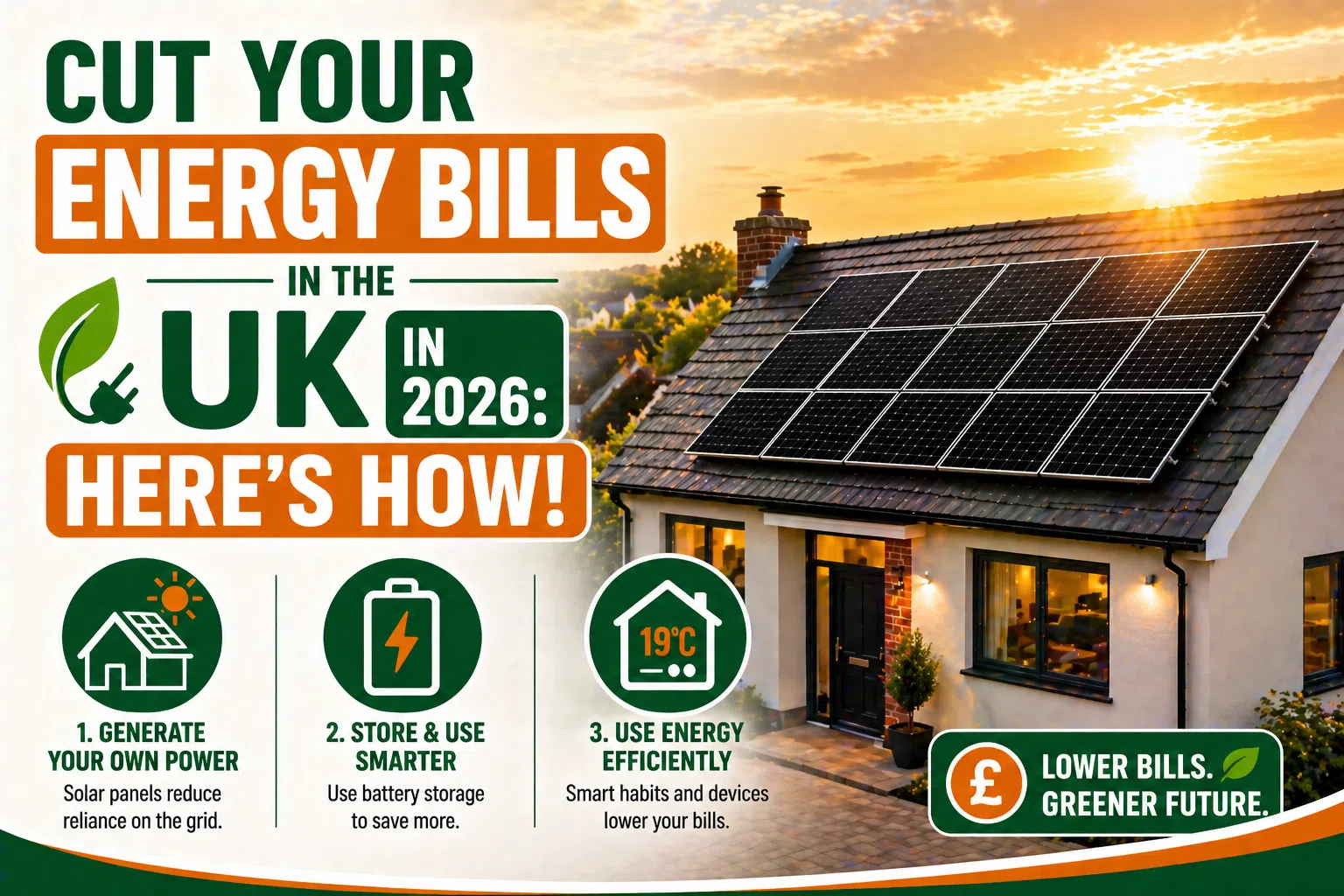

You can reduce energy bills in a UK home by combining everyday habits — like cutting standby power and running appliances efficiently — with longer-term upgrades such as insulation, solar panels, and battery storage. But which changes actually make a difference, and which energy upgrades pay back the most over time? This guide separates the two.
- 1. What daily changes can quickly reduce your electricity use?
- 2. Which appliance habits make the biggest difference?
- 3. What home energy upgrades pay back over time?
- 4. How can solar, batteries and smart tariffs reduce costs?
- 5. Why does saving energy matter more than ever?
- 6. Conclusion
- 7. Frequently Asked Questions
The Short Version (Read This First)
Key facts about reducing your energy bills:
- Lower energy bills usually come from a mix of everyday habits and smarter upgrades, not one dramatic switch
- Cutting wasted electricity through lighting and appliance use creates immediate savings at little or no cost
- Heating is the single biggest part of most UK energy bills, so insulation and heating efficiency deliver the largest ongoing impact
- Solar panels, battery storage, and smart tariffs change when and how you buy electricity, which is where the deepest long-term savings come from
- The right mix depends on your home’s layout, habits, and future plans — a quick assessment shows what will move the needle most
Energy bills are still one of the biggest pressures facing UK households, and most homeowners are not looking for drastic lifestyle changes to bring costs down. What people really want are practical steps that make a difference without turning everyday life upside down. The reality is that meaningful savings rarely come from one dramatic switch; instead, they usually come from a mix of small habits and smarter long-term decisions about how a home uses and manages energy.
Some changes start reducing costs almost immediately, such as using appliances more efficiently, avoiding unnecessary standby power, or adjusting heating routines slightly. Others take a bit more planning but have a deeper and more lasting impact, such as improving insulation, fine-tuning heating systems, or generating electricity with solar panels and battery storage. For many homeowners, the challenge is not a lack of advice; rather, it is knowing which changes actually work in real UK homes.
This guide brings together realistic ways to reduce energy bills in 2026, starting with everyday adjustments that cost little or nothing, then moving to upgrades that give you more control over how your home generates and uses energy.
What Daily Changes Can Quickly Reduce Your Electricity Use?
Daily energy use often feels too small to matter, but small habits repeated every day can noticeably reduce electricity demand over the course of a year. The goal is not to change how you live; it is to remove waste that happens without you noticing.
Use lighting more intentionally
Modern homes do not rely on lighting as heavily as they once did, but unnecessary usage still adds up. Turning lights off when leaving rooms, and making better use of daylight, reduces electricity use without changing comfort levels.
Upgrade to LED bulbs where possible
LED lighting uses far less electricity than older bulbs and lasts significantly longer. Replacing your most frequently used lights first usually delivers the fastest savings.
Reduce standby power
Televisions, chargers, and entertainment devices often keep drawing power even when not in use. Switching them off fully at the plug eliminates energy waste that builds up quietly over time.
Make natural light part of your routine
Opening curtains and blinds during the day reduces reliance on artificial lighting and makes living spaces feel brighter without increasing energy use.
★★★★★ Trustpilot
“Solar4Good® provided excellent service from beginning to end within 2 weeks. Their advice and professionalism guiding me through the best suitable system for now and the future were excellent.”
— Verified customer
Which Appliance Habits Make the Biggest Difference?
Appliances account for a large share of household electricity consumption, so small changes to how you use them can have a bigger impact than many homeowners expect.
Run washing machines and dishwashers efficiently
Using eco settings, lower temperatures, and full loads reduces electricity demand without sacrificing results. These adjustments often go unnoticed day to day, yet they create steady long-term savings.
Be mindful of tumble dryer use
Tumble dryers are convenient but energy-intensive. Air-drying when possible, even just part of the time, can noticeably reduce annual electricity costs.
Keep fridge-freezers working efficiently
Maintaining recommended temperatures and avoiding over-empty shelves helps appliances run more smoothly. Small adjustments to storage and airflow reduce how hard the compressor has to work.
Think about timing as well as usage
Running appliances during off-peak hours, especially on flexible tariffs, can reduce the cost of the electricity you use even when consumption stays the same.
What Home Energy Upgrades Pay Back Over Time?
Once you have tackled the everyday habits, the next step is improving how your home holds onto energy in the first place. Because heating is the single biggest part of most UK energy bills, upgrades that reduce heat loss usually deliver the strongest long-term value. The right upgrades do not just reduce bills for a few months; they lower ongoing energy demand while making the home feel more comfortable and consistent to live in. Most homeowners do not need to do everything at once.
Improving draught-proofing and insulation
Sealing gaps around doors, windows, and floors helps keep warm air inside for longer. Even small changes can reduce how often your heating system needs to switch on.
Adjusting and maintaining your heating system
Setting the thermostat to a steady, comfortable level — the recommended range is around 18–21°C — and making sure radiators heat evenly can improve efficiency without making the house feel colder.
Insulating hot water cylinders and pipework
Adding insulation around hot water systems reduces wasted heat, so less energy is needed to keep water at the right temperature.
Prioritising lasting improvements over quick fixes
Upgrades that permanently reduce heat loss or improve efficiency tend to deliver better results than short-term gadgets promising instant savings. The Energy Saving Trust offers independent guidance worth reviewing before you invest.
Ready to go Solar?
How Can Solar, Batteries and Smart Tariffs Reduce Costs?
Once you have reduced obvious energy waste, the biggest savings usually come from changing how your home sources and uses electricity, not just how much you use. This is where solar panels, battery storage, and smarter tariffs start to make a real difference. Instead of reacting to energy prices, these tools help you shift when you buy electricity, how much you generate yourself, and how efficiently your home runs day to day.
Smart meters and energy monitoring
Understanding your usage patterns makes it easier to see where electricity is being used and when it is most expensive. That insight is often the first step towards meaningful change.
Solar panels for self-generation
Producing electricity from your roof reduces reliance on the grid and helps protect against future price rises. Many UK households find solar becomes one of the biggest long-term contributors to bill reduction. For more on storing that energy, see our solar battery cost guide.
Battery storage for flexibility
Batteries let you store excess solar energy, or cheaper off-peak electricity, and use it later when prices are higher. As a result, they help balance energy costs across the day.
Smart tariffs and scheduling
Pairing batteries or appliances with flexible tariffs lets you shift energy use to cheaper periods without changing how you live.
★★★★★ Trustpilot
“From initial survey to flawless installation, Solar4Good delivered an exceptional solar experience. The team worked meticulously and left the site spotless. Clear explanations, transparent pricing with no hidden fees.”
— Verified customer
Why Does Saving Energy Matter More Than Ever?
For many UK homeowners, energy costs have stopped feeling predictable. Prices can shift quickly, and even small changes in tariffs or seasonal demand can have a noticeable impact on monthly bills. That is why reducing energy use today is not only about saving money this winter; it is also about making your home less exposed to future price swings.
Homes that use energy more efficiently tend to feel the effect of rising costs less sharply. Simple changes like improving insulation, managing appliance use, or generating some of your own electricity reduce how much you rely on the grid when prices are highest. Over time, that creates more stability and fewer surprises when energy bills arrive.
Saving energy also tends to improve comfort rather than reduce it. Better heat retention, smarter controls, and more efficient systems often mean warmer rooms, more consistent temperatures, and less wasted energy overall. The goal is not to use less for the sake of it; rather, it is to use energy more intelligently so your home works better year-round.
Conclusion
Every home uses energy differently, which means the best way to reduce bills will always depend on your layout, habits, and future plans. For most UK households, the biggest impact comes from combining small behaviour changes with smarter upgrades that improve efficiency over time.
If you are considering solar panels or battery storage as part of a longer-term strategy to reduce electricity costs and gain more independence from rising energy prices, reach out for an obligation-free consultation. We will look at how your home actually uses energy and help you understand which changes would make the biggest difference, without overcomplicating the process.
★★★★★ TrustATrader
“The team explained exactly how to get the most from our system and tariff. Our reliance on the grid has dropped noticeably, and the advice was clear and honest throughout.”
— Verified customer
Frequently Asked Questions
Do small daily changes really reduce energy bills?
Yes. While each change may seem minor, consistent habits like reducing standby power and using appliances efficiently add up to noticeable savings over a year. They cost little or nothing to adopt, which makes them the best place to start before considering bigger upgrades.
Is solar the biggest way to reduce electricity costs?
For many UK homes, yes. Solar panels can significantly reduce grid electricity use, especially when combined with battery storage so you use more of what you generate. It tends to be one of the largest long-term contributors to lower bills, though the exact benefit depends on your home and usage.
Are smart meters necessary for saving energy?
No, they are not essential, but they help. A smart meter makes it easier to understand your usage patterns and unlocks access to flexible time-of-use tariffs that can lower costs. Seeing where and when you use electricity is often the first step towards reducing it.
What should homeowners focus on first?
Start with simple efficiency improvements and daily habits, since they cost little and deliver quick results. Then move on to upgrades that reduce heat loss, such as insulation, before exploring renewable options like solar and battery storage once you understand your usage.
Can energy upgrades improve comfort as well as savings?
Yes. Many improvements, especially insulation and smarter heating controls, make homes feel more comfortable while reducing energy demand. Better heat retention means warmer rooms and more consistent temperatures, so you save money without sacrificing comfort.
About the Author
Matthew
Solar Consultant with over a decade of UK solar experience, helping homeowners and businesses make clear, confident renewable energy decisions.
📞 Book a free solar consultation
Call us on 0800 999 1454 or visit solar4good.co.uk
Read over 750+ verified five-star reviews on Trustpilot and Checkatrade
Solar4Good Ltd · 79 College Road, Harrow, HA1 1BD · MCS: NAP/72775/25/4 · HIES: S4G/A/1484