
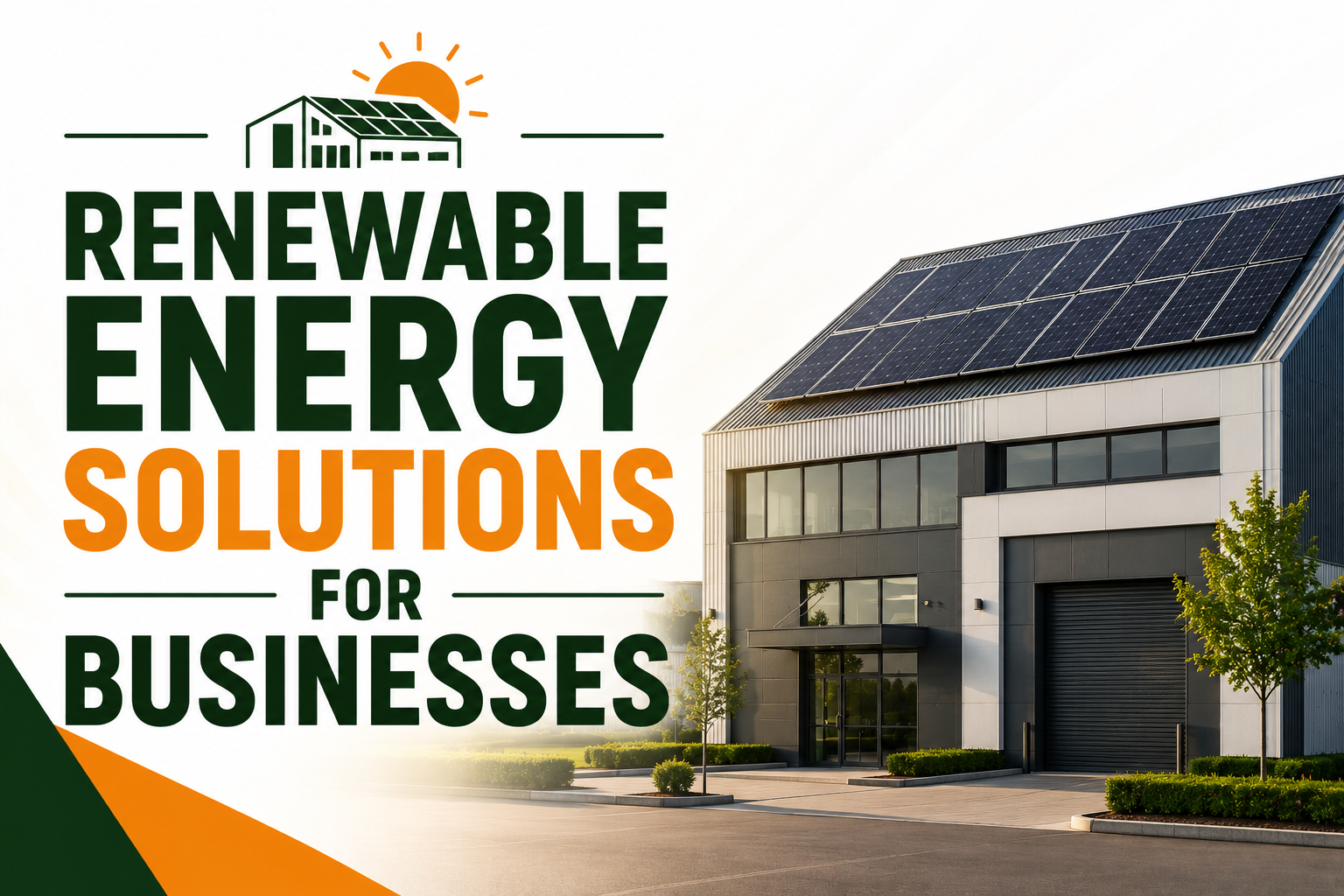
Renewable Energy Solutions For Businesses

“Renewable energy has moved from a niche idea to something many UK homeowners now weigh up seriously when planning future energy costs. Solar panels, battery storage, heat pumps and electric vehicles are no longer just ‘green upgrades’. Increasingly, they are part of how households manage rising electricity prices and long-term energy stability.
- 1. What are the main advantages of renewable energy?
- 2. What are the downsides of renewable energy?
- 3. Is renewable energy reliable enough for UK homes?
- 4. Does renewable energy really reduce carbon emissions?
- 5. What does renewable energy mean for energy independence?
- 6. How should homeowners think about it in practice?
- 7. Conclusion
- 8. FAQs
The Short Version (Read This First)
What UK homeowners need to know about renewable energy before making decisions:
- Solar panels, battery storage, heat pumps and electric vehicles are now a practical way to manage rising electricity prices, not just ‘green upgrades’
- The main advantages are lower long-term running costs, reduced carbon emissions during operation, and greater independence from volatile grid pricing
- The main limitations are variable generation, upfront investment, and the need for careful system design to perform well in practice
- Reliability is not a binary issue — most modern systems are designed to reduce grid dependence, not replace the grid entirely, and battery storage fills the gaps
- Most UK homes benefit most from combining technologies rather than relying on a single renewable source
- Solar4Good® offers obligation-free consultations — call 0800 999 1454 or visit solar4good.co.uk
Renewable energy often gets positioned as a simple solution, but the reality is more balanced. There are clear advantages, from lower running costs to reduced carbon emissions once a system is installed. At the same time, there are practical limitations — variable generation, upfront investment, and the need for careful design. Understanding both sides helps homeowners make informed decisions, rather than relying on headlines. This guide covers where renewables genuinely shine, where expectations need to stay realistic, and how technologies like solar panels and battery storage fit into everyday homes.
What Are the Main Advantages of Renewable Energy?
Renewable energy appeals to homeowners for several reasons. The biggest benefits, though, tend to come down to cost stability, sustainability and long-term reliability.
Lower long-term running costs
Renewable technologies like solar panels generate electricity without ongoing fuel costs. Over time, this reduces reliance on grid electricity and helps protect households from future price rises. Falling technology costs have also made renewables increasingly accessible. Our solar panels worth it guide covers the financial case in detail.
Energy that doesn’t run out
Unlike fossil fuels, renewable sources such as sunlight, wind and water are naturally replenished. As a result, generation doesn’t depend on limited resources or global fuel markets.
Reduced emissions during use
Once installed, most renewable systems produce little to no carbon emissions during operation. This makes them an important part of reducing a household’s overall carbon impact.
Greater energy independence
Generating energy at home reduces reliance on imported fuels. For homeowners, this means less exposure to price volatility and more control over energy costs over time.
★★★★★ Trustpilot
“”From initial survey to flawless installation, Solar4Good delivered an exceptional experience. The team installed 12 premium panels with a Fox 6kW hybrid battery system in a single day, working meticulously and leaving the site spotless. Clear explanations and no hidden fees.””
— Verified customer
What Are the Downsides of Renewable Energy?
Renewables bring clear benefits, but they aren’t without challenges — especially from a practical homeowner perspective.
Energy generation can vary
Solar produces less energy during darker months, and wind output depends on the weather. Consequently, most homes still rely on the grid or battery storage to balance supply and demand. This isn’t a flaw in the technology, though. It’s simply a characteristic that good system design accounts for.
Manufacturing has an environmental footprint
Although renewable systems run cleanly once installed, energy and materials are needed to produce and transport them. Over time, however, most systems offset this footprint through clean generation.
Installation takes planning
Renewable projects require careful design, approvals and sometimes planning permission, especially in conservation areas or listed buildings. The planning involved is manageable, but it does mean renewable energy isn’t a simple plug-in solution.
Upfront investment is required
Unlike a tariff change, solar panels and batteries require upfront capital. The long-term returns are well established for most UK homes, but the initial cost is a real consideration that should be planned properly.
⚠️ Honest note
Renewable energy isn’t a one-size-fits-all solution. A system that delivers excellent returns on one property can underperform on another, depending on roof orientation, shading, household usage and design. Getting the design right is as important as choosing the technology.
★★★★★ Trustpilot
“”Solar4Good provided excellent service from beginning to end within two weeks. Their advice in guiding me through the best suitable panels and battery for now and the future was excellent.””
— Verified customer
Is Renewable Energy Reliable Enough for UK Homes?
Reliability is one of the most common questions homeowners ask. The honest answer is that renewable energy works best as part of a broader system. Solar panels still generate electricity on cloudy days, but output changes with the seasons. Wind and hydro also fluctuate with the weather. That variability doesn’t make renewables unreliable, though — it simply means homes benefit from combining technologies or adding storage.
Battery storage plays a growing role here. By storing excess electricity when generation is strong and releasing it later, batteries smooth out natural fluctuations and reduce reliance on peak-price electricity. In practice, most modern systems aren’t designed to replace the grid entirely. Instead, they reduce dependence on it, giving homeowners more flexibility without expecting constant self-sufficiency. See our solar battery cost guide for a full breakdown of storage options.
Ready to go Solar?
Does Renewable Energy Really Reduce Carbon Emissions?
One of the biggest advantages of renewable energy is its ability to generate electricity with minimal emissions during operation. Systems like solar panels do have a carbon footprint during manufacturing. However, they typically ‘pay back’ that footprint over their lifetime through clean energy production. Independent guidance on this is available from the Energy Saving Trust.
Compared to fossil fuel generation, which releases carbon continuously, renewables shift emissions toward the beginning of the lifecycle rather than throughout decades of use. This is why most energy strategies view renewables as essential to long-term decarbonisation. For homeowners, the idea is simple: every kilowatt-hour generated from renewables is electricity that doesn’t need to come from fossil fuels.
What Does Renewable Energy Mean for Energy Independence?
Renewable energy isn’t just an environmental topic — increasingly, it’s about control. When households generate electricity locally, they become less exposed to price volatility and supply disruptions. For homeowners, independence doesn’t necessarily mean going fully off-grid. More often, it means:
- Buying less electricity during expensive periods
- Using more of what your home generates
- Planning energy use around smarter tariffs
That shift changes the relationship between households and the energy system, moving from passive consumption to active participation. It also means that, as electricity prices rise, homes with solar panels and battery storage are better insulated than those fully dependent on the grid.
★★★★★ Trustpilot
“”We were considering solar via a local council scheme but a friend recommended Solar4Good — and we’re really glad we made the switch. Our system was live shortly after commissioning.””
— Verified customer
How Should Homeowners Think About It in Practice?
Instead of asking whether renewable energy is ‘good or bad’, it’s usually more helpful to think about how it fits your home. Questions worth asking include:
- Is roof space limited or generous?
- Will electricity use increase in future, through EVs, heat pumps or batteries?
- Is the goal bill reduction, carbon reduction, or energy independence?
Most homes benefit from a balanced approach. In practice, that means combining efficiency improvements, renewable generation and smart energy use rather than relying on a single solution. Renewable energy works best when it’s designed around real usage patterns, not theoretical maximum output.
💡 A practical starting point
For most UK homes, solar panels combined with battery storage are the most accessible entry point into renewable energy. They work with existing roofs, integrate with smart tariffs, and deliver measurable results within the first year.
Conclusion
Renewable energy brings clear advantages — lower long-term costs, reduced emissions, and greater independence — but it isn’t a one-size-fits-all solution. Variability, upfront investment and thoughtful design all play a role in whether it delivers. Ultimately, renewable energy isn’t about replacing everything overnight. It’s about gradually reshaping how homes generate and use electricity.
For many UK homeowners, the real value comes from balance. Solar panels, battery storage and efficient appliances don’t eliminate energy costs entirely, but they reduce exposure to rising prices and make homes more resilient. If you’re exploring renewable energy and want to understand what makes sense for your property, Solar4Good offers obligation-free consultations focused on realistic system design.
★★★★★ TrustATrader
“”The system’s performance has exceeded expectations, noticeably reducing our reliance on the grid from the first month. Clear advice and a tidy, professional installation throughout.””
— Verified customer
Frequently Asked Questions
Is renewable energy always cheaper than fossil fuels?
Costs vary, but renewable technologies have become increasingly competitive and often deliver long-term savings once installed. The upfront investment is real, yet for most UK homes the payback period sits well within the system’s lifespan.
Do renewable systems work in UK weather?
Yes. Output varies with conditions, but modern solar systems are designed around the UK climate and often paired with batteries or smart tariffs to compensate for lower-generation periods.
Are renewable systems completely carbon-free?
They have emissions during manufacturing, but produce little to none while operating. Over a typical lifespan, the carbon savings from operation significantly outweigh the manufacturing footprint.
Can renewable energy replace the grid entirely?
Most homes still stay connected to the grid. Renewables usually reduce reliance rather than replace it completely. This is by design, since it provides resilience without requiring constant self-sufficiency.
What renewable technology suits most UK homes?
Solar panels combined with battery storage are among the most common residential solutions, because they work well with existing roofs and usage patterns.
📞 Find out what solar looks like for your property
Call us on 0800 999 1454 or visit solar4good.co.uk
Read over 750+ verified five-star reviews on Trustpilot and Checkatrade
Solar4Good Ltd · 79 College Road, Harrow, HA1 1BD · MCS: NAP/72775/25/4 · HIES: S4G/A/1484
“
About the Author
Matthew
Solar Consultant with over a decade of UK solar experience, helping homeowners and businesses make clear, confident renewable energy decisions.
📞 Book a free solar consultation
Call us on 0800 999 1454 or visit solar4good.co.uk
Read over 750+ verified five-star reviews on Trustpilot and Checkatrade
Solar4Good Ltd · 79 College Road, Harrow, HA1 1BD · MCS: NAP/72775/25/4 · HIES: S4G/A/1484