Yes. Solar panels are made to come off and go back on, and on most jobs the same panels are refitted to the same roof. It is routine work: solar panel removal and reinstallation is a job we do every week. The reason is almost never the solar itself: something needs doing to the roof underneath, and the array is in the way.
The Short Version (Read This First)
What you need to know before you book anyone:
- Yes, panels can be removed and reinstalled, and in most cases the same panels go back on the same roof.
- You do not need the company that fitted them. Most of the removal work we do is on somebody else's installation.
- The skill is in the electrics, not the lifting. An array generates whenever there is daylight, so the wiring is treated as live throughout.
- Access is the biggest single variable in what it costs. Scaffolding is quoted separately, so you can see it rather than find it buried in one figure.
- If your system sits under a lease, a rent-a-roof deal or a feed-in tariff agreement, check that paperwork first. Those terms are tied to the property.
01What "Removed and Reinstalled" Actually Means
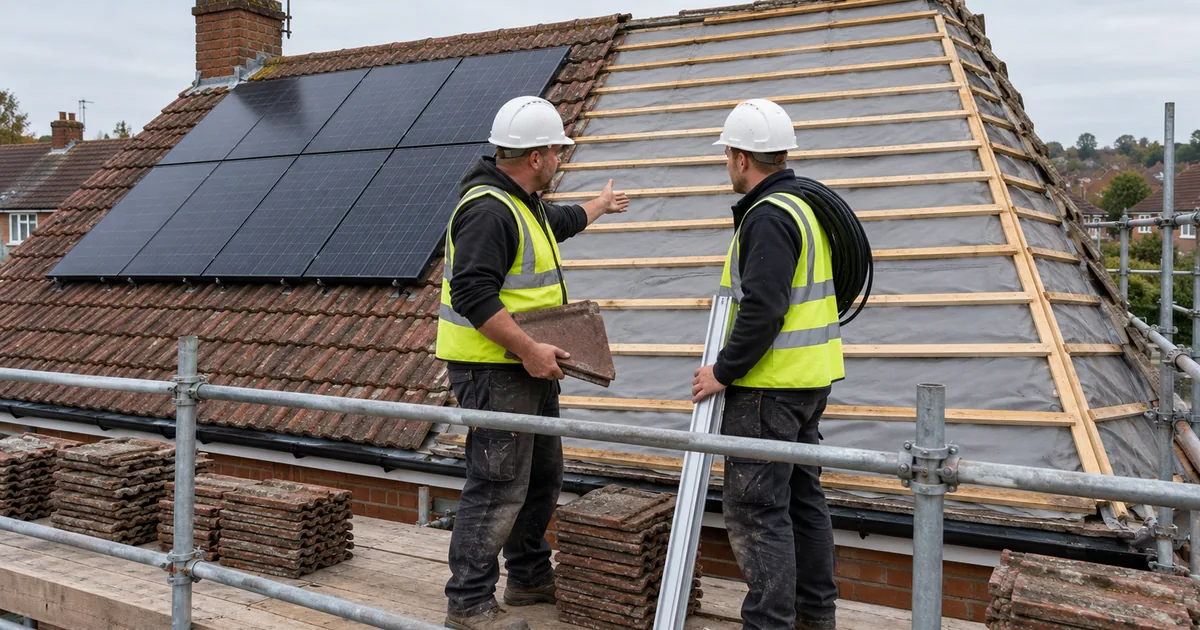
Nothing on a solar roof is glued down. The panels bolt to a set of aluminium rails, and those rails bolt to brackets or hooks that are fixed through the roof covering into the timbers below. It comes apart in the reverse order it went on.
On the day, the system is isolated and the panels are disconnected from the inverter before anything is unbolted. Each panel is numbered as it is lifted clear and stored flat and padded, so it goes back in the same position with the same wiring run. Then the rails come off, the fixings come out, and the roof is made good where they were.
Reinstallation is the same list backwards: fixings, rails, panels in their numbered positions, wiring reconnected, and the system recommissioned and tested before anyone leaves — including a check that it is generating as it was before it came down.
02Will the Panels Still Work Afterwards?
Normally, yes. A solar panel is glass, cells and an aluminium frame with no moving parts. What harms one is handling: flexing the frame, standing on the glass, or dropping it. That is the whole reason careful dismantling matters more than people expect, and the reason a cheap price on this job is worth questioning.
A cracked panel is still a live panel. Damage does not switch it off. It keeps generating, which makes a broken module more dangerous to handle than it looks. If you think anything on your roof has shifted or is hanging loose, keep people away from underneath and call someone rather than going up for a look.
Where a module is already damaged, it comes down with the rest of the array and is replaced instead of refitted. The same goes for tired mounting hooks and rails: while the roof is open and the scaffold is up is the sensible moment to renew them, not two years later.
03Does It Matter Who Installed Them?
No. You do not need the original company to take an array off a roof or to put it back, and most of the systems we remove were installed by somebody else, often years ago.
What is on the roof matters less than people expect. Older feed-in tariff systems running on a string inverter, newer arrays with optimisers on every panel, equipment from Fox ESS, AlphaESS, Enphase or Sigenergy — the modules still unclip from the rails the same way. The care goes into isolating the DC side properly, labelling everything as it comes down, and recommissioning it at the end.
If the company that installed your system has stopped trading, you are not stuck either. We pick the job up from wherever it has been left, survey what is actually on the roof, and say plainly what we find before quoting.
04What It Does to Your Warranty and Your FIT
Our workmanship warranty on a removal and reinstallation is 5 years, depending on the scope of the work. A full job — taking an array off so a new roof can go on, then refitting it — carries that cover on the work we do: the mounting, the fixings and the weatherproofing. It applies whether or not we installed the system in the first place.
Worth checking before you book anyone: your original installer's workmanship warranty may not survive the job. Once a different company has disturbed the roof fixings, the first installer is unlikely to stand behind them. Read your terms with them before the work starts, not after.
If you are paid a feed-in tariff, tell your supplier before the panels come off rather than after. Your agreement is with them, the rules on what counts as a change to the installation are theirs, and it costs nothing to have their answer in writing first. Take a meter reading on the day the system goes off and another when it comes back on. Taking the same system off and refitting it to the same roof is one thing; adding panels or changing the size of the array while the scaffold is up is a different question, and that one is worth asking before you commit to it.
05How the Job Runs
Four stages, in the same order every time.
Survey first. The system and the roof get looked at together: the age and condition of the array, the state of the fixings, how the wiring is run, and how we get safe access. This is usually when any existing problem comes to light, which is far better found now than halfway through. You get one clear fixed price before work starts.
Disconnection and dismantling. Isolate, disconnect, number every panel, store it flat and padded.
The work underneath. With the roof clear, your roofer or builder gets on and we work to their programme rather than the other way round. If you are upgrading the system, the new parts go on now rather than needing a second visit.
Reinstallation and testing. Back in the numbered positions, reconnected, recommissioned, tested, and checked against what it was producing before.
On a typical domestic system that is roughly half a day to take the array off and half a day to put it back. What sets the overall timetable is almost never the solar: it is the roof work in between, which is your roofer's programme rather than ours.
06What Decides the Cost
There is no single figure for this, and anyone who gives you one over the phone has not seen your roof. Six things move it: the size of the array, the type and condition of the roof, whether anything needs repairing or upgrading while it is off, how we get safe access, where you are, and when you want it done.
Access is the big one. An eaves-height bungalow and a three-storey townhouse are not the same job even with the same number of panels, so scaffolding is quoted separately from the removal and reinstallation itself. If the panels are coming off so a roofer can work, the scaffold is usually up for them already, and sharing it across both jobs is the simplest way to keep the cost down. Tell us what else is happening to the roof when you ask for a price.
Need a cost?
Tell us your postcode, your roof and what is on it, and we will come straight back with a quote.
Get your quote →07When It Is Not Straightforward
Two situations are worth flagging early, because they change the answer rather than the price.
The first is ownership. If the panels were fitted free under a lease or a rent-a-roof arrangement, they belong to the lease holder and not to you, and they cannot be removed without that company's agreement. The same caution applies to a feed-in tariff agreement: the terms sit with the property. If you are moving house and want to take the system with you, that is the first thing to check, and we will look at it with you before quoting anything.
The second is a roof that has reached the end of its life. If the covering is going to need replacing within a few years, taking the array off twice costs more than doing both jobs together once. It is worth asking your roofer how long the roof really has before you book the panels off and straight back on.
For the full picture on how we handle these jobs, see our solar panel removal and reinstallation service. If the array is coming off as part of an upgrade, our pages on solar panels for the home and battery storage cover what is worth adding while the system is already isolated.
Frequently Asked Questions
Can solar panels be removed and reinstalled?
Yes. Panels bolt to rails and the rails bolt to fixings in the roof, so an array comes apart in the reverse order it went on. In most jobs the same panels are refitted to the same roof afterwards, in the same positions, and the system is recommissioned and tested before the job is signed off.
Can I remove solar panels myself?
We would not advise it, for four separate reasons. The DC side of a solar array generates whenever there is daylight, so that wiring is live the whole time you are up there and cannot be switched off like a mains circuit. The work sits inside the MCS scope that certified installers work to. Doing it yourself, or letting a general builder do it, is the quickest way to lose whatever warranty cover still stands on the system. And it is working at height on a roof. The saving disappears the moment one module or one tile breaks.
Do I need the original installer to take my panels off?
No. Most of the removal work we do is on systems another company installed, and some of those companies are no longer trading. We survey what is actually on the roof, pick the job up from wherever it has been left, and tell you what we find before quoting.
Do the same panels go back on?
Usually, yes. Each panel is numbered as it comes off and stored flat and padded so it returns to its original position. The exceptions are modules that are already cracked or damaged, which are replaced rather than refitted, and tired mounting hooks or rails, which are worth renewing while the roof is open.
Will taking the panels off damage my roof?
It should not. The fixings come out and the roof is made good where they were. On a job where the roof is being repaired or re-covered anyway, this is academic — the covering is coming off regardless. On a roof that is staying as it is, the condition of the tiles and the fixings is one of the things the survey looks at before anyone goes up.
How long does the job take?
On a typical domestic system, roughly half a day to take the array off and half a day to put it back. Size and access move that, and the programme comes out of the survey rather than a phone call. On most jobs it is the work underneath, not the panels, that sets the timetable: we fit around your roofer or builder so the roof is clear when they need it and the system goes back on as soon as the new covering is down.
What if my panels were fitted free under a roof lease?
Then they are not yours to move. Under a lease or rent-a-roof arrangement the panels belong to the company that owns them, and they cannot be removed or refitted without that company's agreement. The same applies to a feed-in tariff agreement, where the terms are tied to the property. Check your paperwork first and we will look at it with you before quoting.

Matthew has over a decade of UK solar experience, helping homeowners and businesses make clear, confident renewable-energy decisions, from first visit to switch-on.