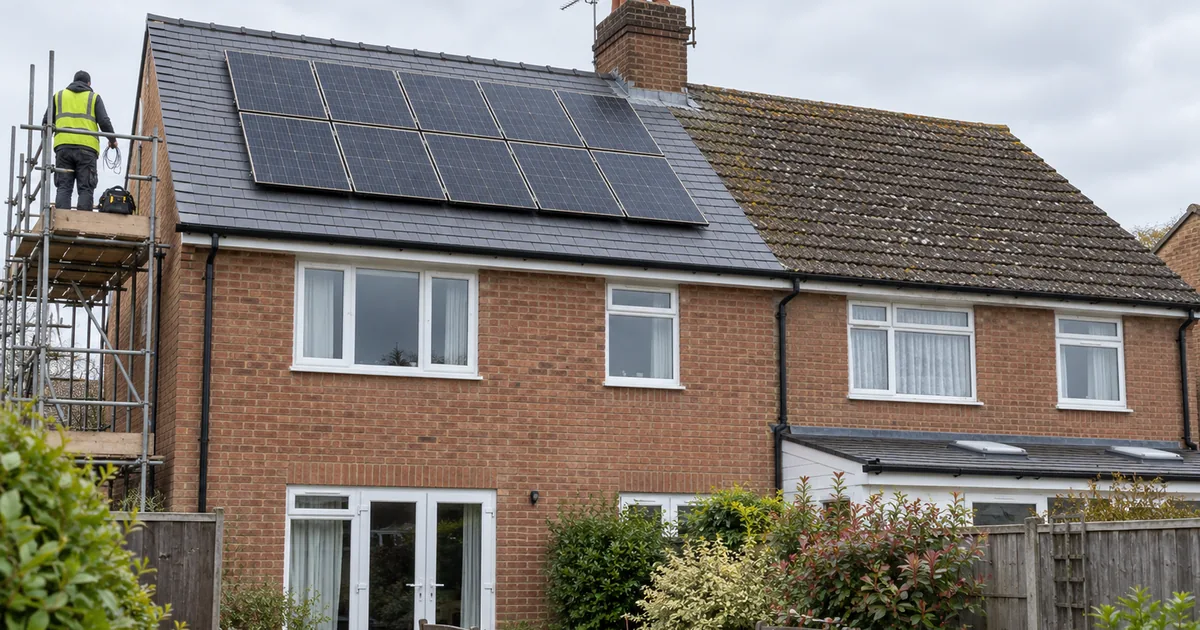
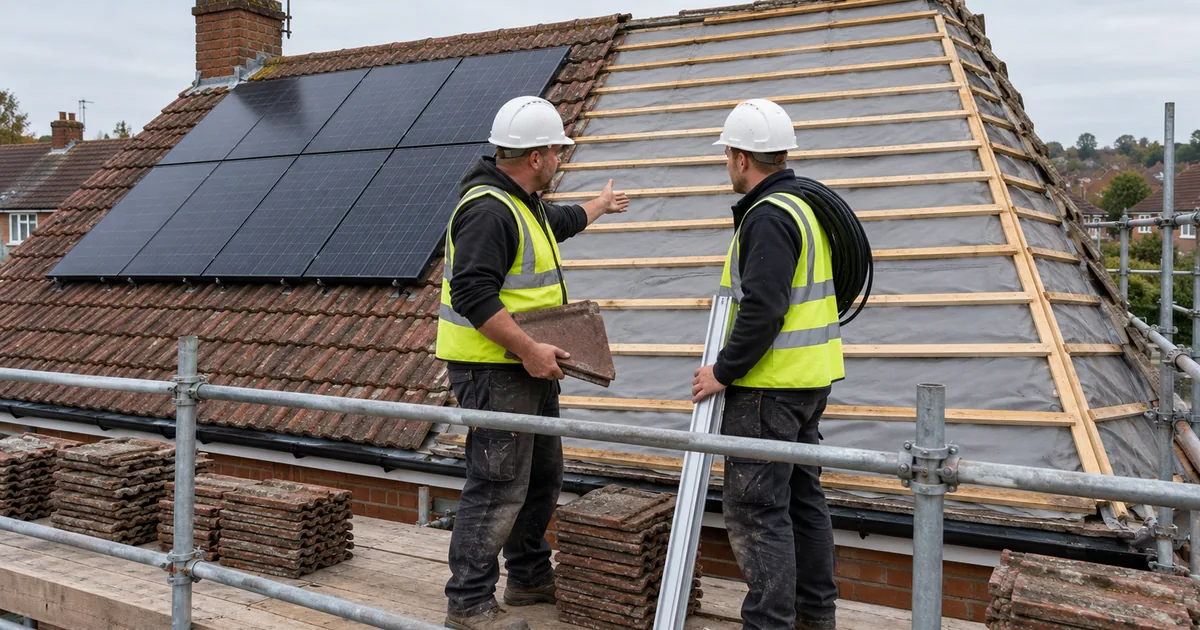
A loft conversion or an extension changes the roof your solar panels are sitting on, and it is one of the most common reasons we are called out for solar panel removal and reinstallation. Sometimes the array is directly in the way of a new dormer or a rooflight. More often it is not in the way at all, and it still has to come off, because scaffolding and building traffic across a live array is the part nobody wants to explain to an insurer.
The Short Version (Read This First)
If you are converting a loft or extending, here is what it means for the solar:
- The panels usually have to come off, even where the building work is not directly underneath them.
- Timing matters more than anything. We work to your builder's programme, not the other way round.
- The same layout does not always fit back. A dormer changes the roof, and sometimes the shading too — worth knowing before the panels come down, not after.
- Share the scaffold. If your builder's access is already up, that is the single biggest saving available on this job.
- While the system is isolated and the roof is open is the cheapest moment to renew tired fixings or add equipment.
01Why the Panels Have to Come Off
Three things drive it, and only the first is obvious.
The array is in the way. A dormer, a new rooflight or Velux window, or a raised ridge takes up roof that panels are currently occupying. Those panels have to move, and so do the rails they sit on.
The roof covering is coming off anyway. Where the work changes the structure, tiles and battens come up around it. You cannot re-lay a roof under a live array, and most roofers will not touch the panels themselves.
Access and traffic. Scaffolding goes up against the roof, materials get lifted over it, and people work above and around it for weeks. Taking the affected panels off and storing them usually costs less than replacing a cracked one afterwards — and a cracked panel is still a live panel, which makes it a safety problem rather than just a bill.
02All of Them, or Only Some?
It depends on where the work is. If a new rooflight goes into a roof plane the array does not occupy, and the scaffold can be set away from it, it is sometimes possible to take off only the panels at risk and leave the rest in place. On a full conversion with a dormer across the back, the whole array normally comes down.
We will tell you honestly which situation you are in at the survey, rather than quoting for the whole array because it is simpler. Part of that assessment is the state of the existing fixings: rails that have been up for a decade sometimes decide the answer for us.
03Timing: Where It Fits in the Build
This is where solar on a building project usually goes wrong, and it is almost always a sequencing problem rather than a technical one.
The panels need to be off before the roof opens up, and they cannot go back until the new covering is finished and the scaffold is still standing. Those two dates come from your builder, not from us, so we work to their programme: the roof is clear when they need it, and the system goes back on as soon as there is a roof to fix it to.
Tell us about the build, not just the panels. When you ask for a price, say what the project is, when the roof is due to open, and whether scaffolding is already going up for the builder. Those three answers change the job and the cost more than the number of panels does.
04What Happens to the Panels Meanwhile
Plan for weeks, not days. On a removal for roof repair the panels might be off for two or three days; on a loft conversion they are usually off for the length of the roof works, which is measured in weeks. That changes where they can sensibly live.
Each panel is numbered as it comes off the roof and stored flat and padded, so it goes back in the same position with the same wiring run. Flat matters: panels are strong face-on and vulnerable to being leaned, flexed or stacked badly, and a building site is not a careful place.
Agree where they are going to live before the day. If they are staying on site, they need somewhere dry, flat and out of the way of everyone else's work.
05Will the Same Array Fit Back?
Not always, and this is the question most people do not think to ask until the panels are already down.
A dormer, a raised ridge or a new rooflight takes roof area away. If the array filled the roof before, the same number of panels may not fit afterwards. The new structure can also cast shade it did not cast before, which matters on a string system where one shaded panel drags on the rest of its string.
So before anything comes off, we want to see what the roof is becoming, not just what it is: the builder's drawing is enough. Then we can say what will fit back, whether the layout needs to change, and whether the inverter or the string arrangement needs rethinking. Finding that out at the survey is a conversation. Finding it out on reinstallation day is a problem.
06The New Roof Is an Opportunity, Not Just a Problem
A dormer or an extension takes roof away in one place and creates it in another. A rear extension often adds a whole new roof plane, and it is usually a better one than the original: newer, in a known condition, and sometimes facing a better way.
Since the array is already down, the scaffold is already up and the system is already isolated, this is the one moment when adding panels costs a fraction of what it would as a separate job later. If your array was limited by roof space rather than by budget, the extension may have just solved that.
Two things decide whether it is worth doing, and both are worth asking at the survey rather than afterwards: whether your existing inverter has the headroom for more panels, and what adding generation does to your existing arrangement if you are on an older feed-in tariff. Neither is a reason not to do it. Both are reasons to ask first.
07The Cheap Moment for Anything Else
While the system is isolated, the roof is open and the scaffold is up, every other job on the array is at its cheapest, because the expensive parts — access and isolation — are already paid for.
That is the moment to renew tired mounting hooks and rails rather than refitting ten-year-old fixings into a brand-new roof. It is also the natural point to replace an ageing inverter, or to add battery storage if that was on the list anyway. Doing any of it as a separate visit later means paying for the scaffold twice.
Building work coming up?
Tell us your postcode, what the project is and when the roof opens, and we will come straight back with a quote.
Get your quote →08What Decides the Cost
The same things as any removal: the size of the array, the type and condition of the roof, whether anything is being repaired or upgraded while it is off, how we get safe access, where you are, and when you want it done.
On a building project, access is the one worth attention. Scaffolding is quoted separately from the removal and reinstallation itself, so you can see it rather than find it buried in one figure — and if your builder's scaffold is up and staying up, sharing it is the simplest saving on the whole job. Ask your builder whether the access can stay until the panels are back on. A week of overlap is usually cheaper than a second scaffold.
09Five Things to Ask Your Builder First
Ask these before you book anyone to touch the panels:
- When does the roof need to be clear, and how long will it be open?
- Is scaffolding going up, and can it stay until the array is back on?
- Does the new roof shape change where panels can sit? Can I have the drawing?
- Where can the panels be stored safely on site, if they are staying?
- Who is responsible for the array while it is down and the site is theirs?
The last one surprises people, and it is worth settling in writing rather than assuming.
If you are the builder or the architect rather than the homeowner, the same list works in reverse: tell us the roof dates early and we will work to your programme. We would rather be booked around your schedule than be the trade that holds up the roof.
For how we handle these jobs from survey to recommissioning, see our solar panel removal and reinstallation service, or read whether solar panels can be removed and reinstalled if you are starting from first principles.
Frequently Asked Questions
Do solar panels have to be removed for a loft conversion?
Usually, yes. Even where the new dormer or rooflight is not directly under the array, scaffolding goes up against the roof and materials and people move across it for weeks. Where the roof covering is being opened up, the panels have to come off regardless, because a roof cannot be re-laid underneath a live array.
Can you take off only the panels that are in the way?
Sometimes. If the work is on a roof plane the array does not occupy and the scaffold can be kept clear of it, a partial removal is possible. On a full conversion with a dormer across the roof, the whole array normally comes down. We tell you which situation you are in at the survey rather than quoting for everything because it is simpler.
Will my panels fit back after a dormer is built?
Not always in the same layout. A dormer, a raised ridge or a new rooflight takes roof area away, and it can cast shade that was not there before. That is why we ask for the builder's drawing before the panels come off, so we can say what will fit back and whether the layout or the string arrangement needs to change.
Who looks after the panels while the building work happens?
Each panel is numbered as it comes off and stored flat and padded so it returns to its original position. Where the panels stay on site, agree in advance where they will live: somewhere dry, flat and clear of everyone else's work. It is also worth settling in writing who is responsible for them while the site is the builder's.
Can the system be upgraded while the panels are off?
That is the cheapest moment to do it. The access and the isolation are already paid for, so renewing tired hooks and rails, replacing an ageing inverter or adding battery storage costs far less now than as a separate visit later. Refitting ten-year-old fixings into a brand-new roof is usually a false economy.
My builder's scaffolding is already up. Does that help?
Yes, and it is the single biggest saving on this job. Safe roof access is the largest variable in a removal, and we quote it separately rather than folding it into one figure. If your builder's access is up and can stay until the array is back on, say so when you ask for a price.
When in the build should the panels come off?
Before the roof opens up, and back on once the new covering is finished and the scaffold is still standing. Both dates come from your builder, so we work to their programme. Telling us the project, the date the roof opens and whether scaffolding is going up changes the job more than the number of panels does.

Matthew has over a decade of UK solar experience, helping homeowners and businesses make clear, confident renewable-energy decisions, from first visit to switch-on.