Roof not suitable for panels, but still want to cut your electricity bill? Here is the straight answer. Home battery storage without solar is worth it for many UK homes in 2026: you charge the battery on cheap overnight electricity, then run the house on that stored power during expensive peak hours. The saving comes from the price gap, not the sun. This guide covers how it works, what it costs, realistic payback and who it suits. Solar4Good installs battery-only systems across the UK.
The Short Version (Read This First)
- Yes, a battery works without solar. It charges from the grid on a cheap off-peak tariff instead of from panels
- The saving is arbitrage: buy electricity at a low overnight rate, use it when the standard rate is far higher
- Typical cost: around £2,500 upward for the battery portion, with most home systems roughly £3,000–£7,000 installed
- Payback is usually longer than a solar-plus-battery system, since there is no free generation and no export income
- You need a smart meter, a time-of-use tariff and a battery that charges reliably from the grid
- Best fit: homes with an unsuitable roof, listed buildings, or anyone planning to add panels later
- Solar4Good designs battery-only systems, call 0800 999 1454 or visit solar4good.co.uk
01Does a Battery Work Without Solar?
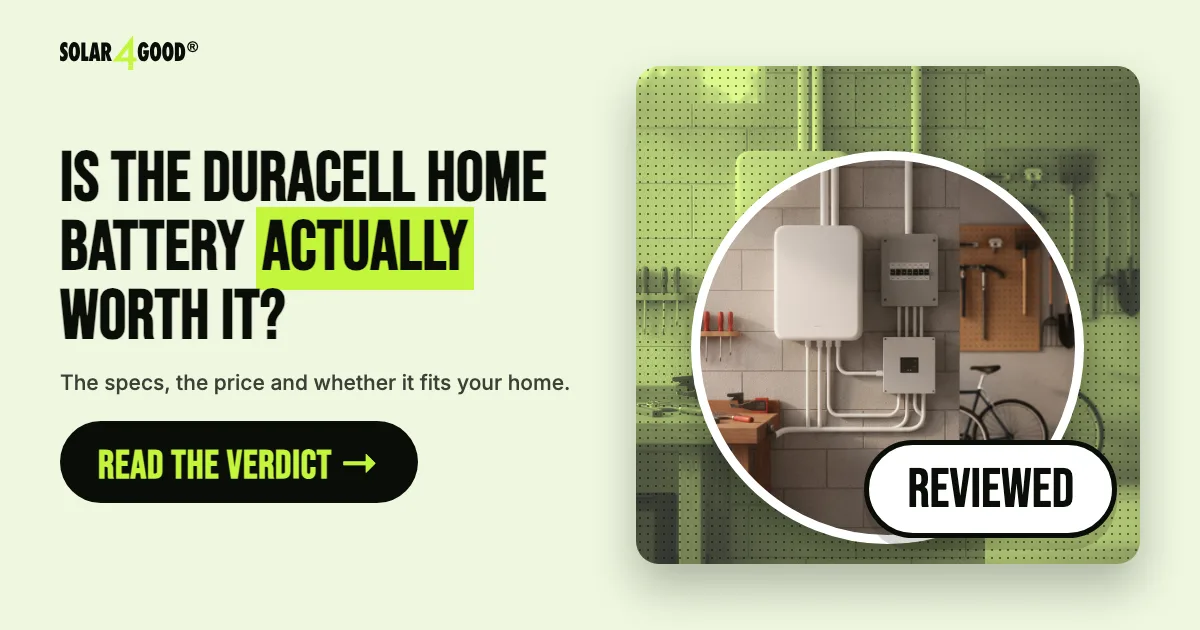
Yes. A home battery does not need panels to function. Instead of storing surplus solar, it charges from the grid during cheap off-peak hours and discharges during expensive peak hours. The hardware is identical; only the charging source changes.
Naturally, the battery still needs an inverter to convert between the grid’s AC and the battery’s DC. Most modern hybrid inverters handle both roles, which is why a battery-only install today can accept solar panels later without replacing the core equipment. In practice, that makes a battery a sensible first step toward a full system.
★★★★★ Trustpilot
“Our roof faces north so solar was never viable. Solar4Good fitted a battery that charges overnight, and our evening bills dropped straight away.”
Verified customer
02How You Actually Save Money
In short, the saving is arbitrage, not generation. Specifically, time-of-use tariffs price electricity far lower overnight than during the day. Ofgem’s standard residential rate sits around 24.67p per kWh, while off-peak windows on smart tariffs can be a fraction of that. Consequently, filling the battery at night and running the house from it by day captures the difference on every unit.
Of course, to make this work three things must line up. First, you need a smart meter. Second, you need a genuine time-of-use tariff with a meaningful off-peak rate. Third, you need a battery that charges reliably from the grid and schedules automatically. See our best Octopus tariffs guide for the options.
03Is It Worth It?
In practice, for the right home, yes. If your roof is north-facing, flat, structurally unsuitable, heavily shaded, or on a listed building, a battery unlocks savings that panels never could. Similarly, if you use a lot of electricity in the evening, the price gap works harder for you.
That said, be realistic. Without free solar generation and without export income, payback stretches longer than a combined solar-and-battery system. Ultimately, the maths depends on your usage, your tariff and the size of the battery, which is exactly what a proper site visit establishes.
04Cost and Payback
As a 2026 guide, the battery portion typically starts around £2,500, with most home systems landing roughly £3,000–£7,000 installed depending on capacity and whether a new hybrid inverter is included. Notably, eligible residential battery installations carry 0% VAT until 31 March 2027, which reduces the real cost meaningfully.
Meanwhile, on payback expect longer than a solar system. Your annual saving equals the price gap multiplied by the units you shift each day, so a bigger gap and a fuller daily cycle both shorten the timeline. For a full breakdown across capacities, see our solar battery price guide.
05Best Batteries Without Solar
Importantly, not every battery is designed for grid charging. Crucially, you want a system with strong scheduling, reliable grid-charge behaviour and a clear app. The options below all handle this well and are installed by Solar4Good.
- Tesla Powerwall 3: 13.5 kWh, 11.5 kW output, built-in hybrid inverter, excellent app and whole-home backup
- Sigenergy: modular ~5–48 kWh with AI-led scheduling, ideal if you may add panels or an EV later
- FoxESS: modular EP-series storage at a sharp price, on the Intelligent Octopus Flux approved list
- AlphaESS: modular SMILE range with a strong 10-year, 10,000-cycle whole-unit warranty on the G3
Because a battery-only system leans entirely on scheduling, the app and tariff integration matter more here than in a solar install. Our GivEnergy alternatives guide compares the wider field.
06The Catch: No Export Income
That said, one limitation deserves emphasis. Export tariffs such as the Smart Export Guarantee pay you for electricity you generate and send back to the grid. Without panels, you generate nothing, so there is no export income to earn. Meanwhile, SEG eligibility itself requires an MCS-certified generation system.
Furthermore, round-trip losses apply. A battery returns roughly 90–95% of what you put in, so a small slice of each cheap unit is lost in the cycle. Even so, when the price gap is wide, the arbitrage comfortably outweighs that loss.
07Who Is It For?
Typically, a battery without solar suits homes where panels are impossible or impractical: north-facing, flat, shaded, structurally limited, listed, or in a conservation area. Equally, it suits households with high evening demand, and anyone who wants to start now and add panels later.
By contrast, if your roof is suitable, a combined solar-and-battery system almost always pays back faster, because the generation is free and the surplus earns export income. An MCS-certified installer should assess the roof honestly before you rule it out. Explore options on our battery storage page.
Get honest advice on battery-only storage
Solar4Good will tell you straight whether a battery alone, or solar and battery together, makes better sense for your home. Call 0800 999 1454 or visit solar4good.co.uk. Read over 500+ verified five-star reviews on Trustpilot.
Solar4Good Ltd · 79 College Road, Harrow, HA1 1BD · MCS: NAP/72775/25/4 · HIES: S4G/A/1484
Frequently Asked Questions
Can you have a home battery without solar panels?
Yes. A home battery charges from the grid during cheap off-peak hours and discharges during expensive peak hours. The hardware is the same as a solar system; only the charging source changes. You need a smart meter and a time-of-use tariff to benefit.
Is battery storage without solar worth it in the UK?
For homes where panels are unsuitable, yes. The saving comes from buying electricity cheaply overnight and using it at peak times. Payback is longer than a solar-and-battery system, since there is no free generation and no export income, but the bill reduction is real.
How much does a battery cost without solar?
The battery portion typically starts around £2,500, with most home systems roughly £3,000–£7,000 installed depending on capacity and whether a hybrid inverter is included. Eligible residential installs carry 0% VAT until 31 March 2027.
Can I earn Smart Export Guarantee payments without solar?
No. SEG pays for electricity you generate and export, and eligibility requires an MCS-certified generation system such as solar panels. A battery-only home saves money on imports but earns no export income.
Can I add solar panels to a battery later?
Yes, and it is a sensible route. Most modern hybrid inverters accept panels later without replacing the core equipment. We design battery-only systems with that upgrade path in mind, so adding solar afterwards is straightforward.
Which battery is best without solar?
Look for strong scheduling, reliable grid charging and a clear app. The Tesla Powerwall 3, Sigenergy, FoxESS and AlphaESS all handle grid charging well. The right size depends on how many units you shift each evening, which a site visit establishes.

Manan co-founded Solar4Good to do solar differently, as a partner, not a salesperson. After 15 years in London finance, he treats a solar system as the financial decision it is: every customer gets an honest, numbers-first projection of cost, savings and payback, not a sales promise.