
5 Roof Types That Work Best for Solar Panels in the UK
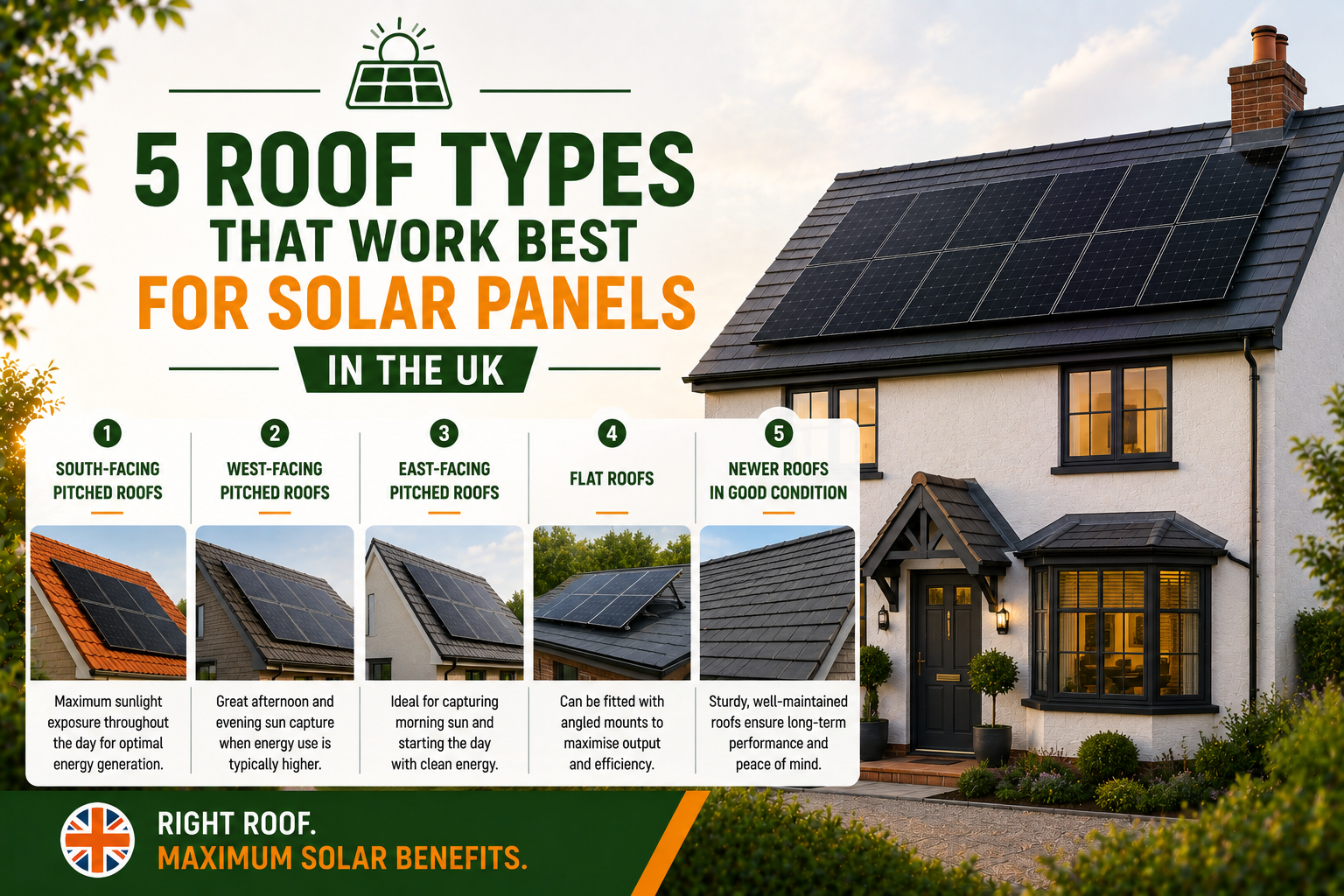

When it comes to roof types for solar panels, the good news is that most UK roofs will work — but some make installation faster, cheaper and more productive than others. Solar panels are now a familiar feature on homes and businesses across the country. More than 1.6 million UK homes are already fitted, and the UK passed two million solar installations in 2026. One of the most common questions people ask before installing is simply whether their roof is suitable.
- 1. Why does roof type matter for solar panels?
- 2. What roof characteristics make solar installations easier?
- 3. What are the 5 roof types that work best for solar panels?
- 4. How do roof material and design affect installation costs?
- 5. Which roof types are difficult or unsuitable for solar panels?
- 6. How can you tell if your roof is suitable for solar panels?
- 7. Conclusion
- 8. FAQs
The Short Version (Read This First)
What UK homeowners need to know about roof types and solar panels:
- Most UK roofs can support solar panels, but some designs make installation significantly easier and more cost-effective than others
- Concrete tile roofs are the most common and installer-friendly option — standard mounting brackets fit without specialist equipment
- Standing seam metal roofs are often the easiest to install on — clamps attach to the seams without any roof penetration
- Flat roofs work well using tilted mounting frames, though they need extra mounting structures and a little more design work
- Roof orientation often matters more than roofing material — south-facing is best, but east and west roofs still deliver around 80–90% of that output
- Thatch, asbestos and glass roofs are generally unsuitable — but alternatives such as outbuildings or ground-mounted frames can still make solar viable
- Solar4Good® surveys roofs and designs systems for all compatible types — call 0800 999 1454 or visit solar4good.co.uk for a free assessment
In reality, most roofs can support solar systems — but some roof types make installation much easier, faster and more cost-effective. Roof material, structural design, orientation and pitch all influence how a system is mounted. They also affect how efficiently it performs over time. Understanding these differences therefore helps set realistic expectations before requesting quotes, and it explains why installation costs can vary between properties even when the systems themselves look similar. This guide covers five roof types that typically work best for solar panels in the UK. It also explains why some roofs make installation simpler and more productive.
Why Does Roof Type Matter for Solar Panels?
Most UK roofs can support solar panels, but the type and structure of a roof influences how straightforward the installation is and how the system performs over time. Certain roof materials are easier for installers to work with, while others need more careful handling or specialised mounting systems.
Mounting systems
Installers attach solar panels to roofs using brackets that connect to the building’s rafters. The way these brackets go on depends largely on the roofing material. Uniform materials such as concrete tiles or metal roofs suit well-established mounting systems that fit quickly and securely. More fragile materials, such as clay tiles or irregular stone tiles, need extra care during installation to avoid cracking the roof surface.
Structural strength
Solar panels are relatively lightweight, but they still add load to the roof. A typical residential system adds around 15–20 kg per square metre, including the mounting equipment. Before work begins, installers usually assess the roof structure to confirm it can safely carry the extra weight, particularly on older buildings.
Installation complexity
Roofs with simple layouts and durable materials are generally easier and faster to work on. Large, uninterrupted surfaces let installers position panels efficiently and keep labour time down. More complex roofs — those with multiple dormers, skylights or irregular tile shapes — can need additional planning. This doesn’t prevent installation, but it may influence system design and cost.
Solar performance
Roof orientation and pitch play a major role in how much electricity a solar system can generate. In the UK, south-facing roofs typically receive the most consistent sunlight through the day. East- and west-facing roofs can still perform very well. They often produce 80–90% of the output of a south-facing system. Our guide to how many solar panels you need covers how orientation and roof space affect overall sizing.
★★★★★ Trustpilot
“From initial survey to flawless installation, Solar4Good delivered an exceptional experience. Premium panels and a Fox hybrid battery were fitted in a single day, working meticulously and leaving the site spotless. Clear explanations and no hidden fees.”
— Verified customer
What Roof Characteristics Make Solar Installations Easier?
Before focusing on specific materials, it helps to understand the practical features installers look for when assessing whether a roof suits solar panels.
Clear roof space
Solar panels work best when they sit in clean, uninterrupted rows. Roofs with large open sections therefore make it easier to position panels efficiently. Obstacles such as chimneys, skylights, dormer windows or roof vents can reduce the available area. Installers can work around these features, but they may limit panel count or call for a more customised layout.
Good orientation
Roof direction affects how much sunlight the panels receive during the day. South-facing roofs typically produce the highest output. However, east- and west-facing roofs can still generate around 80–90% of the energy of a south-facing system.
Suitable roof pitch
The angle of the roof also influences performance. In the UK, solar panels generally perform most efficiently at a tilt of around 30–40 degrees. Fortunately, most UK homes fall between 30° and 50°, which means many already sit within a suitable range.
Strong structural support
Although solar panels are relatively lightweight, they still add load to the roof. Installers therefore check that the roof structure and rafters can safely support the panels and mounting equipment. A well-maintained roof with solid support lets panels go on securely and reduces the chance of needing reinforcement. Independent guidance on home solar suitability is available from the Energy Saving Trust.
What Are the 5 Roof Types That Work Best for Solar Panels?
Ready to go Solar?
1. Concrete tile roofs
Concrete tile roofs are the most common roof type in the UK. Because the tiles are uniform in size and shape, installers can easily attach mounting brackets to the rafters using standard hook systems. This makes concrete tile roofs one of the most installer-friendly options for solar panels. The main consideration is weight — concrete tiles are heavy, so installers may check the roof structure first to confirm it can support the combined load.
2. Clay tile roofs
Clay tiles are often found on traditional or historic properties and can last 50–60 years or longer. Solar panels go on clay tile roofs using bracket systems similar to concrete installations. However, clay tiles are more fragile and can crack if stepped on incorrectly, so installers need to work more carefully and installation time can increase. Some traditional materials, such as Yorkshire stone or irregular slate, also make the job more complex because tile sizes vary.
3. Standing seam metal roofs
Standing seam metal roofs are widely considered one of the easiest roof types for solar. These roofs feature raised seams running vertically along the surface. Solar mounting clamps attach directly to these seams without drilling into the roof, which means faster installation, reduced leak risk and no roof penetration. Metal roofs also tend to last 40 years or more, which aligns well with the lifespan of solar panels.
4. Flat roofs
Flat roofs are common on commercial buildings, extensions and modern homes. Rather than fixing panels directly to the surface, installers use angled frames that tilt the panels to the best angle for sunlight — typically 30–40 degrees in the UK. Flat roofs also give flexibility in panel orientation, which helps optimise the layout. Because of the extra mounting structures involved, flat-roof installations often cost around 20% more than a standard pitched-roof job.
5. South-facing pitched roofs
Although not a roofing material, orientation is one of the most important factors affecting performance. South-facing roofs receive the most consistent sunlight and generally produce the highest output. East- and west-facing roofs still generate around 80–90% of that. Most UK roofs fall between 30° and 50° pitch, which is well within the effective range. Our guide on whether solar panels are worth it covers how orientation affects financial returns.
★★★★★ Trustpilot
“Solar4Good provided excellent service from beginning to end within two weeks. Their advice and professionalism in guiding me through the best panels and battery for now and the future were excellent.”
— Verified customer
How Do Roof Material and Design Affect Installation Costs?
The material, layout and accessibility of a roof can influence how quickly solar panels go on and what mounting equipment is needed. These factors don’t usually prevent installation, but they can affect labour time, system design and overall cost.
Labour time
Some roofing materials are easier to work with than others. Durable materials such as concrete tiles or metal roofs let mounting brackets go on quickly using standard techniques. More fragile materials, such as clay tiles, need extra care because the tiles can crack if stepped on incorrectly. Installers may need to remove and refit tiles more carefully during mounting, which adds a little to labour time.
Mounting systems
Different roof types call for different mounting systems. Pitched roofs typically use a hook-and-rail system fixed to the rafters beneath the tiles. Flat roofs use angled frames that tilt the panels toward the sun. These are often held by weighted ballast rather than drilling into the surface. That extra hardware adds materials and installation work.
Roof accessibility
Accessibility also affects cost. Steeper roofs or buildings with limited access may need additional safety equipment such as scaffolding or specialist harnesses. Roofs with complex layouts — dormers, skylights or multiple sections — can also take longer to design and install. These factors rarely make solar impractical, though. In most cases, the long-term electricity savings far outweigh small differences in installation complexity.
Which Roof Types Are Difficult or Unsuitable for Solar Panels?
Most UK roofs can take solar panels when installers design the system carefully around the building. However, a small number of roof types present safety, structural or regulatory challenges that can make installation difficult or impractical.
Thatch roofs
Thatch roofs are generally unsuitable because of fire-safety concerns and structural limitations. Solar panels need mounting brackets anchored into the roof structure. Thatch does not provide a stable surface for this. Many insurers also restrict installations on thatched properties due to perceived fire risk. For these homes, panels can sometimes go on nearby outbuildings, garages or ground-mounted frames instead.
Asbestos roofs
Roofs containing asbestos need special handling, because disturbing the material can release hazardous fibres. For safety reasons, installers usually avoid working directly on them. If a property has asbestos cement roofing sheets, the safest approach is often to remove and replace the roof before installing solar. In some commercial settings, businesses upgrade older asbestos roofs to modern metal roofing before adding a system.
Glass roofs or conservatories
Glass roofs, such as those on conservatories or atriums, are not designed to support the weight of panels or mounting systems. These structures also lack the framing needed to anchor brackets securely. However, solar panels can often go on the main roof or a nearby building, so homeowners can still benefit even if the conservatory roof itself cannot take panels.
★★★★★ Trustpilot
“We were considering solar via a local council scheme, but a friend recommended Solar4Good — and we are really glad we made the switch. A site visit was booked the next day, scaffolders were in within the week, and our system was live soon after commissioning.”
— Verified customer
How Can You Tell If Your Roof Is Suitable for Solar Panels?
Many homeowners assume their roof might not suit solar panels, but in reality most roofs can support a system when it is designed properly. The easiest way to know for certain is to have a qualified installer assess the property and explain the options.
Roof orientation and pitch
Installers first look at the direction the roof faces and its angle. South-facing roofs usually produce the most electricity, but east- and west-facing roofs still give strong output. The pitch matters too, although many UK homes already fall within a suitable range.
Structural condition of the roof
A solar system adds weight, so installers assess the condition of the roof structure and rafters. Most modern roofs cope without any structural changes, but older roofs may need a quick inspection before work proceeds.
Shading and surrounding obstacles
Nearby trees, chimneys, dormers or neighbouring buildings can cast shadows across the roof at certain times of day. Installers therefore analyse these shading patterns to decide where panels should sit for the best performance.
Available roof space
The amount of usable area determines how many panels fit. That in turn sets how much electricity the system can produce. Because these factors vary from property to property, the most reliable way to confirm suitability is a professional assessment.
💡 Did you know?
The inverter you choose works alongside your roof and panel setup to determine how efficiently solar electricity reaches your home. Our guide to the best solar inverters in the UK explains how inverter selection interacts with different roof types and system designs.
Conclusion
Most roof types in the UK can support solar panels, but some designs make installation easier and more efficient. Concrete tile roofs remain the most common and straightforward option, while standing seam metal roofs offer one of the simplest mounting solutions. Roofing material plays a role, but the most important factors are usually orientation, pitch, structural condition and the amount of usable roof space.
Because every property is different, the most reliable way to know whether solar will work well on your roof is a professional assessment. A qualified installer can evaluate the structure, check for shading, and design a system that matches both the building and the property’s electricity use.
📞 Get a free roof assessment from Solar4Good
Call us on 0800 999 1454 or visit solar4good.co.uk. We survey your roof and design a system that works for your specific building. Read over 800+ verified five-star reviews on Trustpilot and Checkatrade.
Solar4Good Ltd · 79 College Road, Harrow, HA1 1BD · MCS: NAP/72775/25/4 · HIES: S4G/A/1484
Frequently Asked Questions
Which roof type is best for solar panels?
Concrete tile roofs are among the easiest for installers to work with, while standing seam metal roofs are also highly compatible with solar mounting systems. Both allow secure, efficient installation.
Can solar panels be installed on clay tile roofs?
Yes. Solar panels can go on clay tile roofs, although installers must work carefully because the tiles are more fragile than concrete and can crack if handled incorrectly.
Do flat roofs work well for solar panels?
Yes. Flat roofs use angled mounting frames that set the panels at the best tilt for sunlight. They often cost around 20% more than a pitched-roof install because of the extra mounting structures.
Does roof direction affect solar panel performance?
Yes. South-facing roofs generally produce the most electricity, although east- and west-facing roofs can still generate around 80–90% of that output.
Are there roofs that cannot support solar panels?
Yes. Thatch, asbestos and glass roofs are generally unsuitable. However, alternatives such as nearby outbuildings or ground-mounted frames can still make solar viable for these properties.
About the Author
Manan Shah
Co-Founder of Solar4Good UK. Leads Solar4Good's commercial strategy and customer relationships, and is quoted as a clean-energy authority by some of the UK's most trusted news publications. Quoted in the Financial Times and The Times on UK solar.
📞 Book a free solar consultation
Call us on 0800 999 1454 or visit solar4good.co.uk
Read over 800+ verified five-star reviews on Trustpilot and Checkatrade
Solar4Good Ltd · 79 College Road, Harrow, HA1 1BD · MCS: NAP/72775/25/4 · HIES: S4G/A/1484