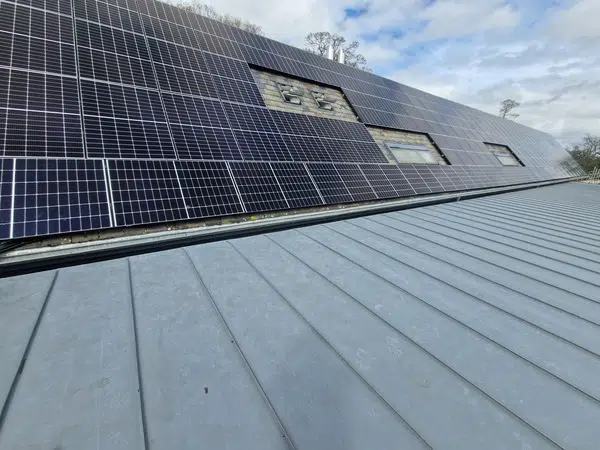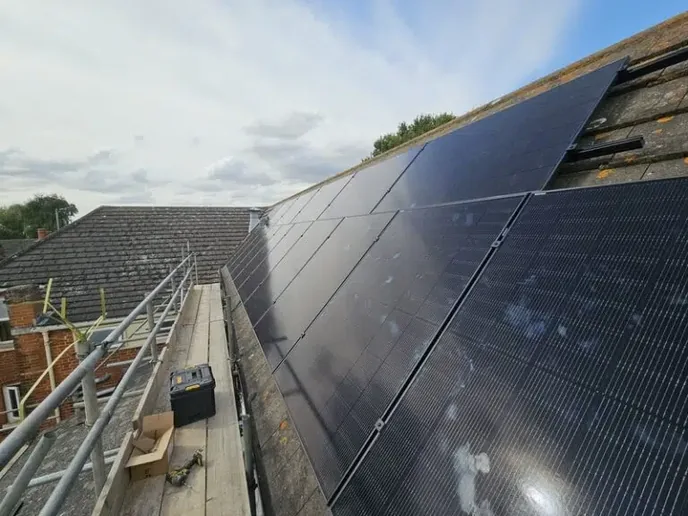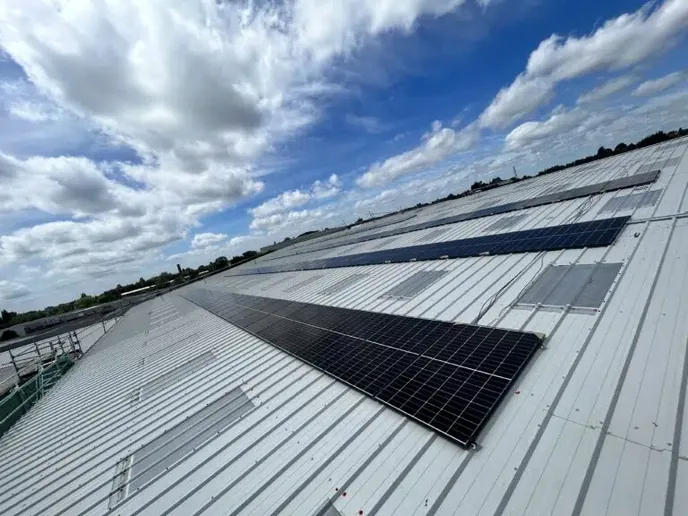






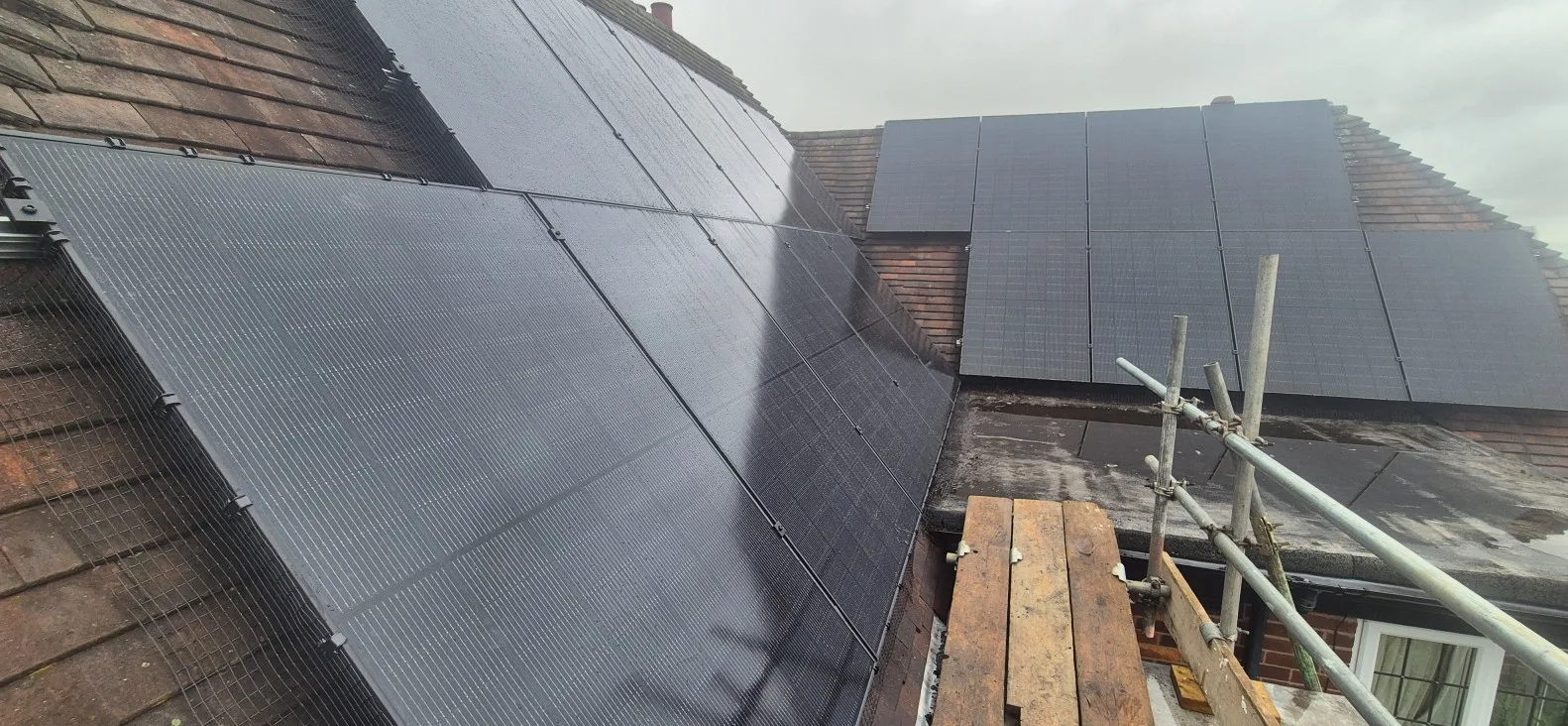
Real Solar4Good install · Slough, Berkshire
Case study · Residential · Slough

68% of the power used at home, not sold back to the grid.

Solar, battery and EV charging delivered as one managed Sigenergy system, so the panels charge the house and the car before anything is exported.

10.2 kWSystem size
20Aiko panels
~68%Self-powered
8–9 yrPayback
As featured in
The TimesFinancial TimesBBCMoneySuperMarketThe IndependentThe MirrorThe SunThe Eco ExpertsLBC The TimesFinancial TimesBBCMoneySuperMarketThe IndependentThe MirrorThe SunThe Eco ExpertsLBC
LBCThe SunThe Eco ExpertsThe MirrorThe IndependentMoneySuperMarketBBCFinancial TimesThe Times LBCThe SunThe Eco ExpertsThe MirrorThe IndependentMoneySuperMarketBBCFinancial TimesThe Times
01
The client

A family home in Slough with a car to charge as well

Daljit wanted the full set in one go: solar, battery storage and home EV charging. There is an electric vehicle in the household, which changes the arithmetic. A car is a large, flexible load that can be shifted to whenever the roof is generating, so it turns generation that would have been exported cheaply into miles that would otherwise have been bought as petrol.

02
The challenge

Use the power at home rather than selling it at 7p

Exported electricity earns about 7p a unit. The same unit used in the house saves nearly 25p, and used in the car it replaces petrol, which is worth more again. So the priority was self-consumption, not raw generation. That is harder than it sounds, because panels, battery and charger supplied as three separate products do not coordinate. Each one optimises for itself, and the surplus leaks out to the grid anyway.

03
What we did

One Sigenergy platform running all three

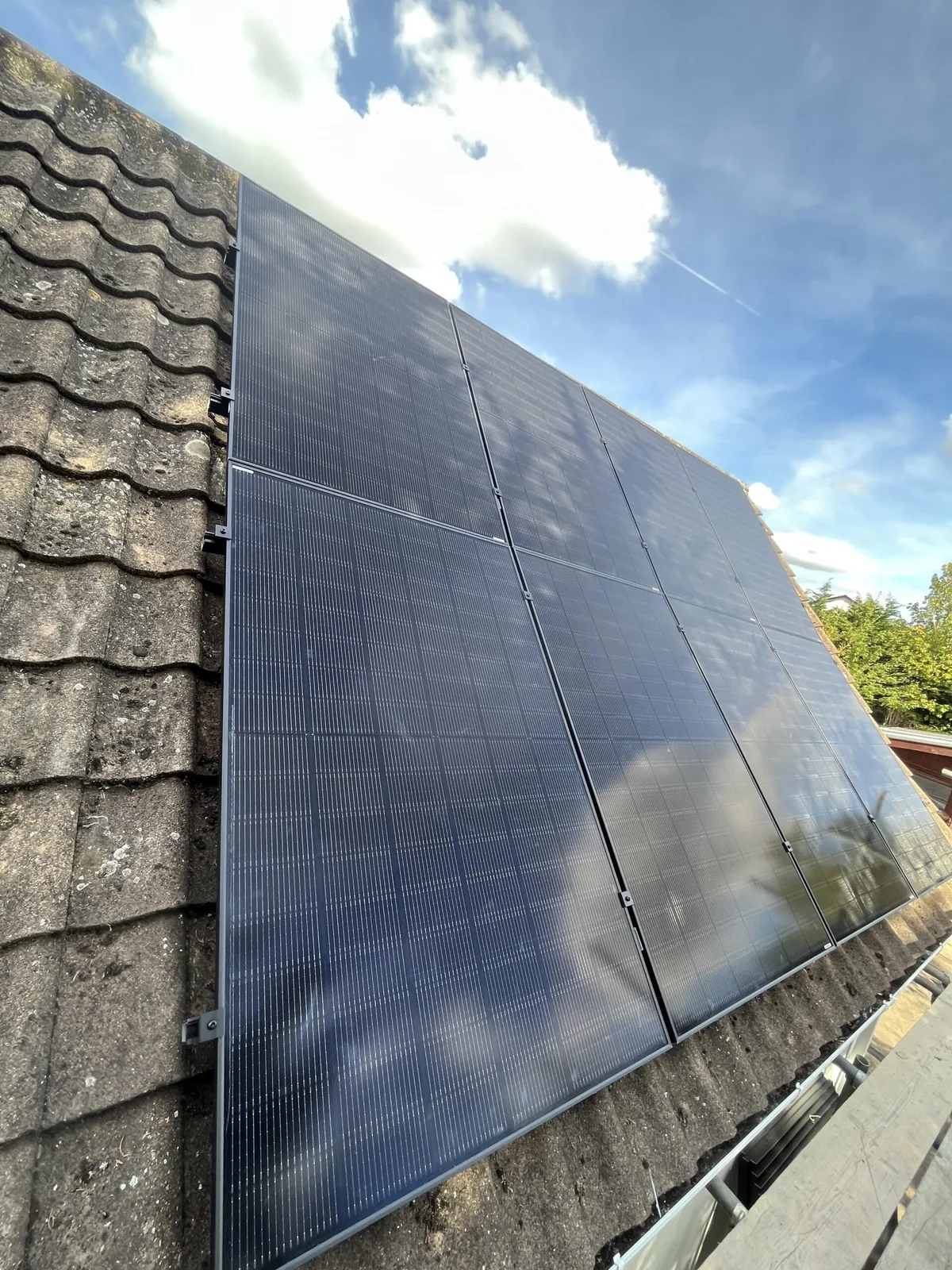
We installed the whole thing as a single managed system rather than three. Twenty Aiko 510W panels, 10.2 kWp, feed a SigenStor EC 10.0SP hybrid inverter with two SigenStor BAT 10.0 batteries, 18 kWh of usable storage. A Sigen HomeMax gateway and a Sigenergy 7kW AC charger sit on the same platform, so panels, battery and car are one system under one app. It is configured to fill the house battery and the car before exporting anything. Installed cost £15,900.

  • 20 × Aiko 510W solar panels (10.2 kWp total)
  • SigenStor EC 10.0SP hybrid inverter
  • 2 × SigenStor BAT 10.0, 18 kWh usable storage
  • Sigen HomeMax gateway and a Sigenergy 7kW AC EV charger on the same platform
  • Configured to charge the home battery and the car before exporting
04
The results

Over two thirds used at home, before counting the petrol

Daytime generation now charges both the home battery and the car, which lifts self-consumption to around 68%. The system generates about 9,690 kWh a year and saves roughly £1,850, about £154 a month, or in the region of £46,000 over 25 years, paying back in eight to nine years. That figure counts electricity only. The fuel the EV charging replaces is a separate saving on top, and is not included anywhere on this page.

Generation and saving figures on this page are estimates, modelled from the system size and a typical UK yield for the location. They are not meter readings. Generation is system size in kWp multiplied by regional specific yield. Savings count self-consumed units at the 24.67p/kWh Ofgem residential rate and exported units at 7p/kWh, over 25 years with no tariff rises applied. Carbon uses 0.21 kg CO₂ per kWh displaced, and trees are illustrative only. Your own numbers depend on your roof, your consumption and your tariff at the time of install.
By the numbers
Financial
Lifetime savings~£46k
Payback8–9 yrs
Per year~£1,850
System cost£15,900
Energy
Generated / year~9,690 kWh
Self-sufficiency~68%
Specific yield~950 kWh/kWp
Environmental
CO₂ offset (lifetime)~51k kg
Equivalent trees~2,100
CO₂ / year~2,040 kg
The kit
20 × Aiko 510W
Solar panels · 10.2 kWp total
SigenStor EC 10.0SP
Hybrid inverter
2 × SigenStor BAT 10.0
18 kWh usable storage
Good to know

Common questions about home solar and battery storage, and how they played out at Daljit’s.

How much can solar actually save on a home like this?

Daljit’s system saves around £1,850 a year, and in the region of £46,000 over its 25-year life. Your number depends on your roof, how much power you use and whether you add a battery. We model your own property and show you the real figures rather than a best case.

Can solar charge an electric car?

Yes, and it is one of the best things you can point solar at, because a car is a big load you can move to the middle of the day. Daljit’s panels, battery and charger run as one Sigenergy system and fill the house battery and the car before exporting, which took self-consumption to around 68%. The petrol that replaces is a saving on top of the electricity figures on this page.

What is the payback on a system like this?

The £15,900 installed cost here pays for itself in between eight and nine years, and after that the power the roof makes is close to free for the rest of the system’s life. We size every system so the payback stacks up before you commit to anything.

The bottom line

A Slough home now uses about 68% of what its roof makes, including charging the car, and should be roughly £46,000 better off over 25 years.

Rated 4.9 on Trustpilot · 1,000+ reviews across Trustpilot and Google

“George the sales chap was straightforward and honest, and the whole installation team were awesome, courteous and professional throughout.”

Jamie Wilson · Verified Trustpilot review

“From start to finish the whole job has been seamless. The install guys were polite, knowledgeable and efficient.”

Timothy Clarke · Verified Trustpilot review

“I wholeheartedly recommend this company for solar and battery storage installation.”

Soham Acharya · Verified Trustpilot review

More success stories

View all case studies →
Your home could be next

Want to be our next success story?

We'll show you exactly what solar could save your home. A real, numbers-first projection of cost, savings and payback, whatever your roof.

Get a quote