





A Woking family who wanted it tidy, and wanted Tesla
Douglas wanted a premium battery setup with the simplicity and brand assurance of Tesla, and he wanted the install to look like somebody had thought about it. That second part comes up more than people expect. A solar and battery system can arrive as a wall of separate boxes, and in a family home that is a real objection, not a cosmetic one.
High storage without a wall full of components
The brief was a large array and serious storage, delivered as few units as possible. Most systems need a hybrid inverter, a battery, and a gateway if you want backup during a power cut, which is three enclosures before you count isolators. The Powerwall 3 answers this directly, because it combines the hybrid inverter and the battery in one enclosure, so a twenty-two panel array can be paired with whole-home backup and still look like one considered piece of kit.
Twenty-two panels, one Powerwall, one tidy wall
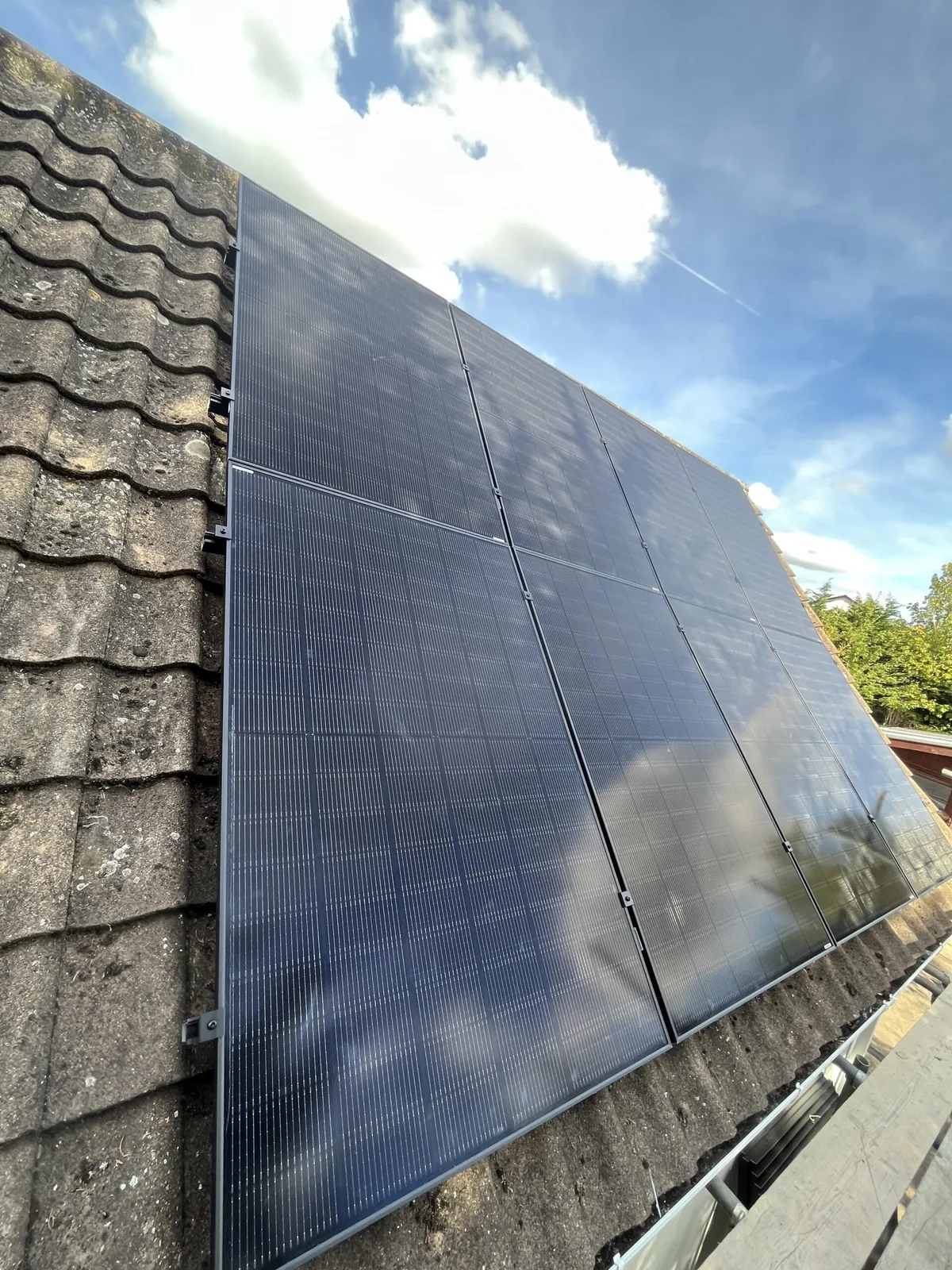
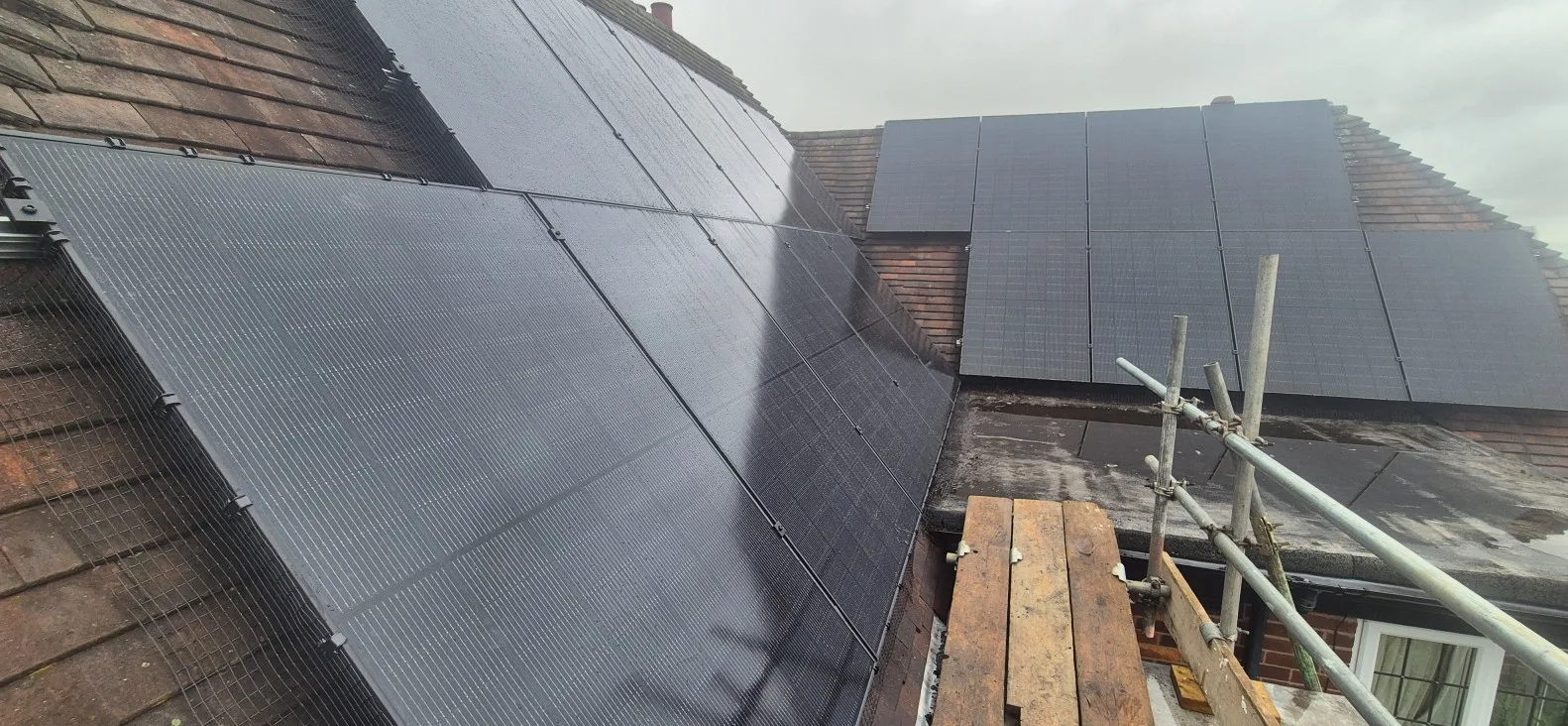
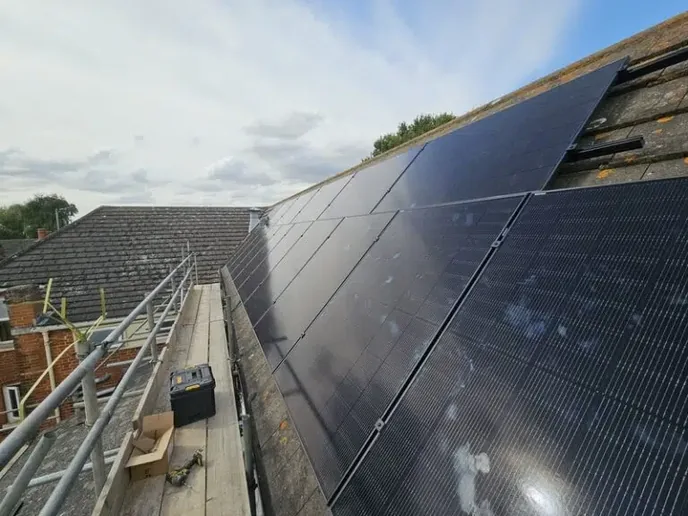
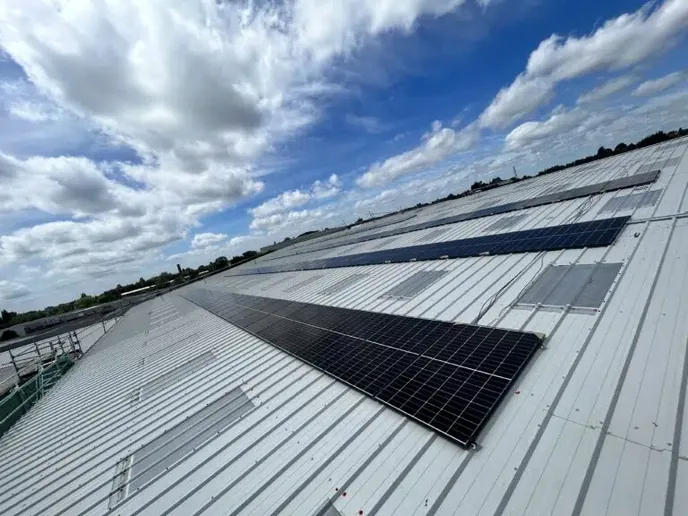
We fitted twenty-two DMEGC 450W panels, 9.9 kWp, to a single Tesla Powerwall 3 with a Tesla Gateway, giving 13.5 kWh of usable storage and power-cut protection for the whole house. Bird mesh went on all the pitched-roof panels. Monitoring and backup control run through the Tesla app. Survey to commissioning, £14,800.
- 22 × DMEGC 450W solar panels (9.9 kWp total)
- Tesla Powerwall 3 hybrid inverter and battery in one unit
- Tesla Gateway, 13.5 kWh usable · whole-home backup
- Tesla app for monitoring and backup control
- Bird mesh fitted to all pitched-roof panels
Around 9,400 kWh a year, and a house that stays on
The system generates about 9,400 kWh a year, with roughly 62% used in the house and the Powerwall covering the evening. That is around £1,690 a year, about £141 a month, and in the region of £42,000 over 25 years, paying back in eight to nine years. The part that does not show up in the savings column is the backup: when the street loses power, this house does not.
Generation and saving figures on this page are estimates, modelled from the system size and a typical UK yield for the location. They are not meter readings. Generation is system size in kWp multiplied by regional specific yield. Savings count self-consumed units at the 24.67p/kWh Ofgem residential rate and exported units at 7p/kWh, over 25 years with no tariff rises applied. Carbon uses 0.21 kg CO₂ per kWh displaced, and trees are illustrative only. Your own numbers depend on your roof, your consumption and your tariff at the time of install.