





A high-usage home on the Essex coast, watching the bills climb
Alex owns a detached family home in Dovercourt, on the Essex coast near Harwich. It is a big house and it uses a lot of electricity, which is exactly the situation where a rising unit rate hurts most. Alex wanted two things: the bills down, and enough battery storage to be worth having rather than a token few kilowatt hours.
Build it big enough to matter, and store what the house does not use
A large roof is only half the answer. The household used most of its power in the evening, after the sun had gone, so panels alone would have sent the best of the generation to the grid for 7p a unit while Alex bought it back at nearly 25p. The job was to size the array to the full usable roof and put a battery bank behind it large enough to carry the house through the evening peak, without overspending on storage that would sit half empty.
A full-roof array with 20.7 kWh behind it
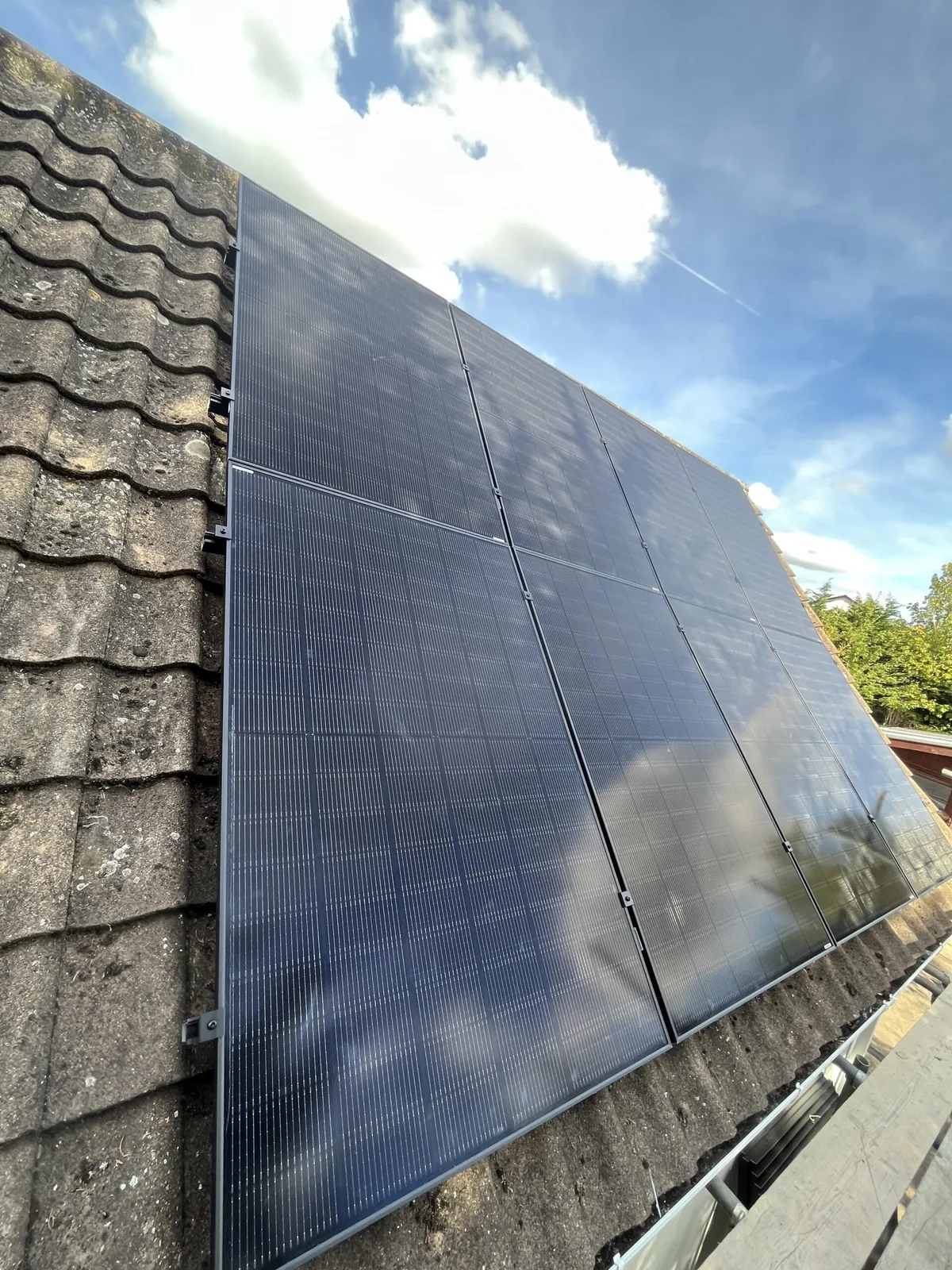
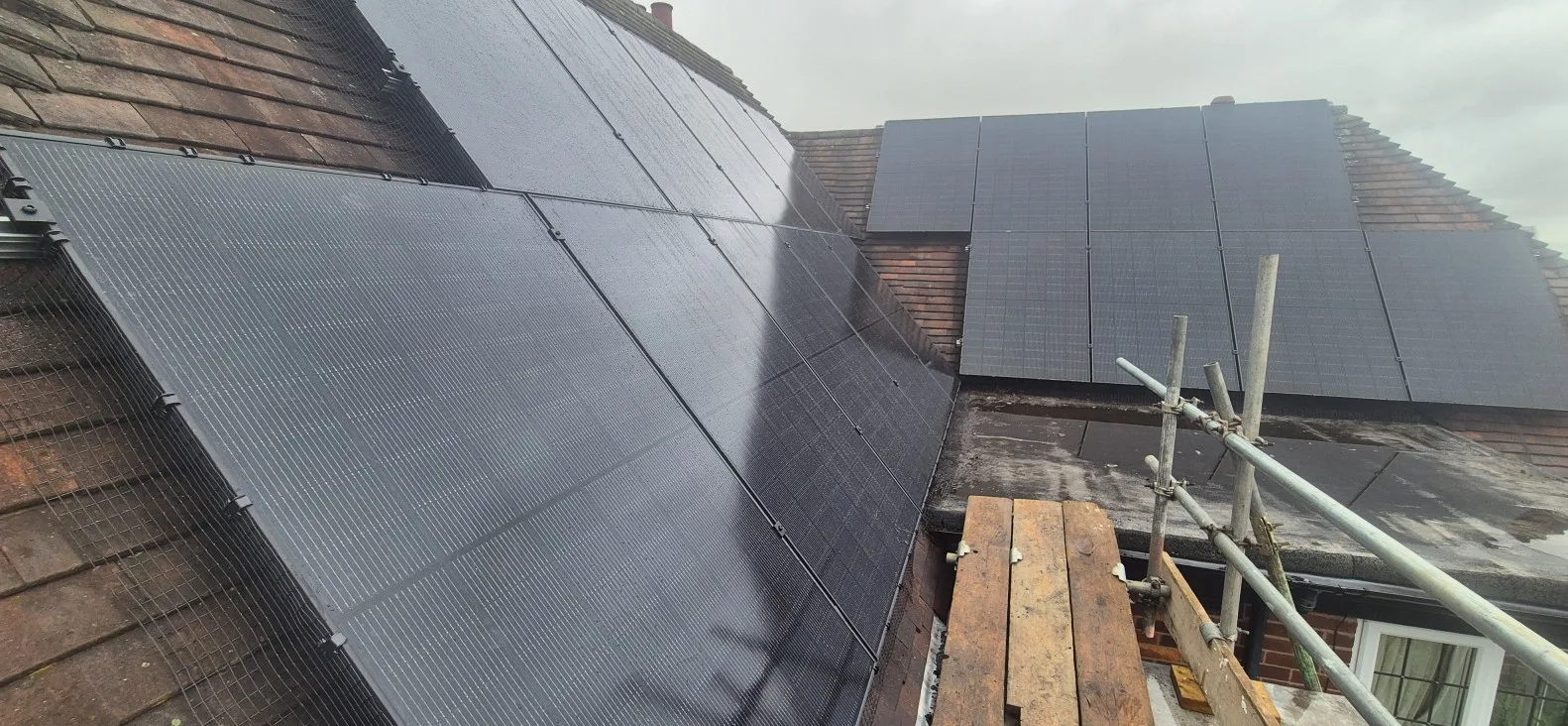
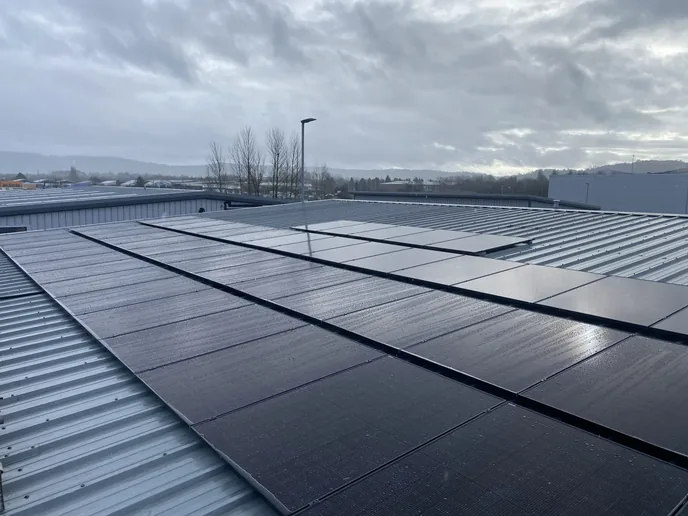
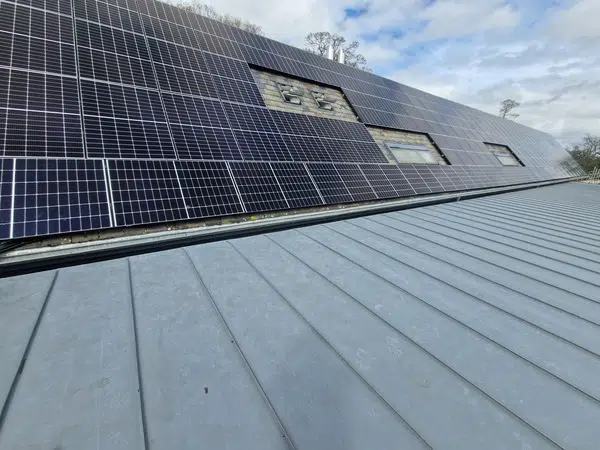
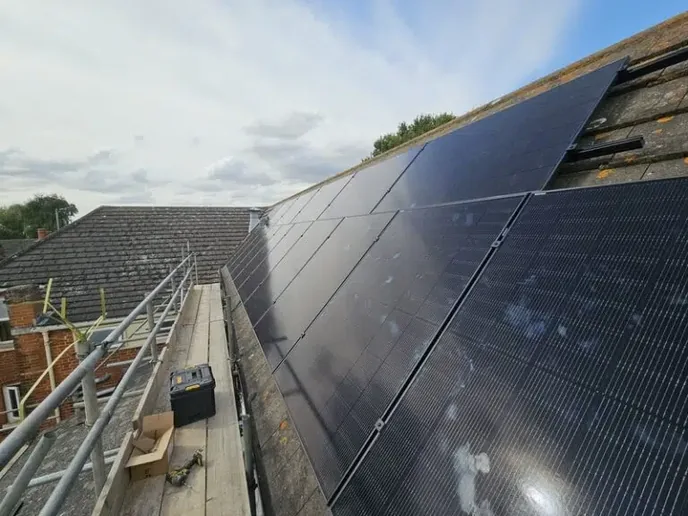
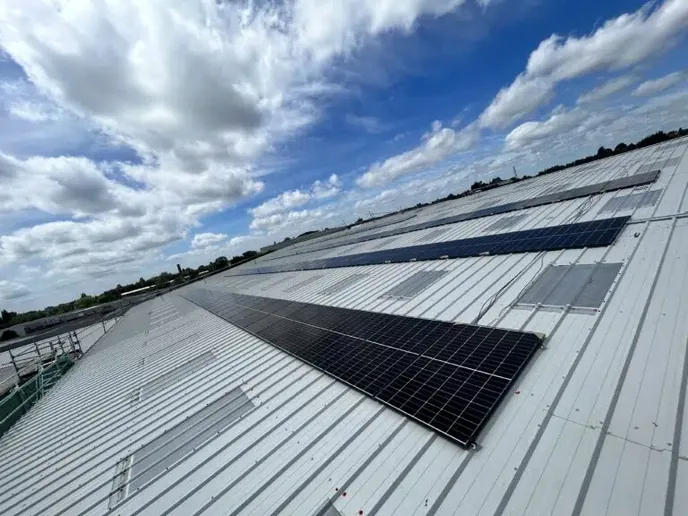
The roof had both the space and the orientation to carry a substantial array, so we used it. Twenty-six Jinko 440W panels came to 11.44 kWp, paired with a FoxESS KH10 hybrid inverter and two FoxESS EP11 batteries giving 20.7 kWh of usable storage. We ran the job end to end, from the first survey and design through to install and commissioning, for £16,000.
- 26 × Jinko 440W solar panels (11.44 kWp total)
- FoxESS KH10 hybrid inverter
- 2 × FoxESS EP11, 20.7 kWh usable storage
- Bird mesh fitted to all pitched-roof panels
- Sized and wired so an EV charger can be added later with minimal extra work
Around two thirds of the power, made on its own roof
The system generates about 10,870 kWh a year, and roughly 65% of that is used in the house rather than exported. That is about £2,000 off the bill every year, near £167 a month, and in the region of £50,000 across the system’s 25-year life. The £16,000 pays for itself in about eight years. It also keeps around 2,300 kg of CO₂ out of the air each year.
Generation and saving figures on this page are estimates, modelled from the system size and a typical UK yield for the location. They are not meter readings. Generation is system size in kWp multiplied by regional specific yield. Savings count self-consumed units at the 24.67p/kWh Ofgem residential rate and exported units at 7p/kWh, over 25 years with no tariff rises applied. Carbon uses 0.21 kg CO₂ per kWh displaced, and trees are illustrative only. Your own numbers depend on your roof, your consumption and your tariff at the time of install.