





A health centre that runs hardest in daylight
Lawrence Hill Health Centre keeps a Bristol community running. Patients through the doors from morning, lighting and equipment on all day, staff who can't down tools for a power cut. Nearly all of that demand lands in daylight hours, which is exactly when a solar roof is at its best. Rising running costs were quietly eating into a budget that should be going on care, and the centre wanted to lead on cleaner air for the community it serves. So they went looking for a system that could cut the bill for good, not just trim it.
Heavy daytime load, a split roof, and doors that can't close
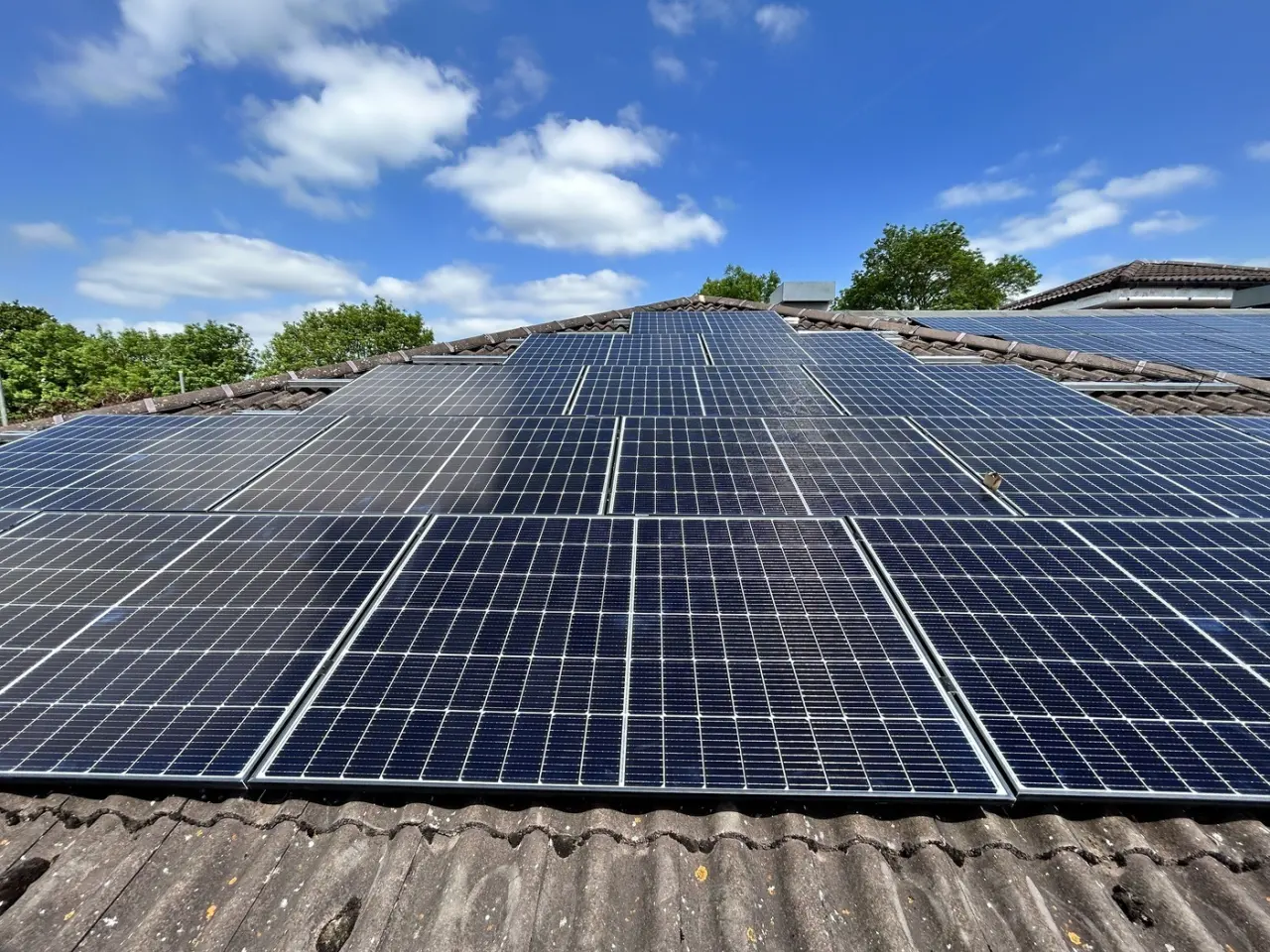
Two things made this job harder than bolting panels onto a plain south roof. First, the only usable roof space runs across two pitches, one facing south and one facing east, so a lazy layout would leave half the generation on the table. Second, this is a working healthcare site. You can't send patients home while the scaffolding goes up. The centre needed a system sized to a real, heavy daytime demand, spread sensibly across a mixed roof, and fitted without a single interruption to care.
A 45 kWp system, laid out across both pitches
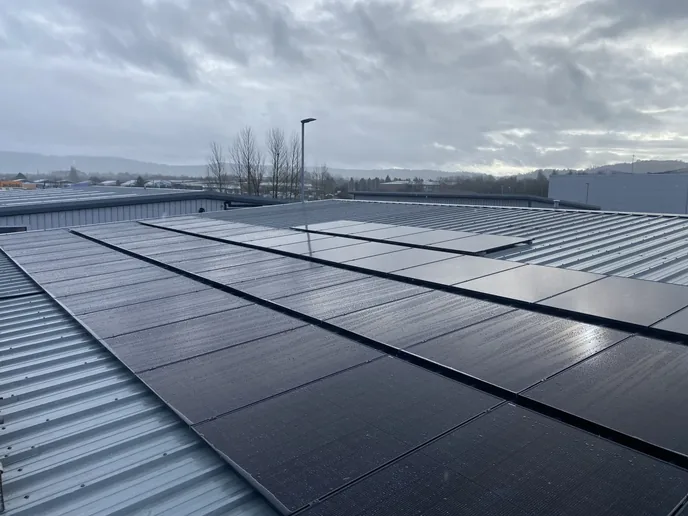
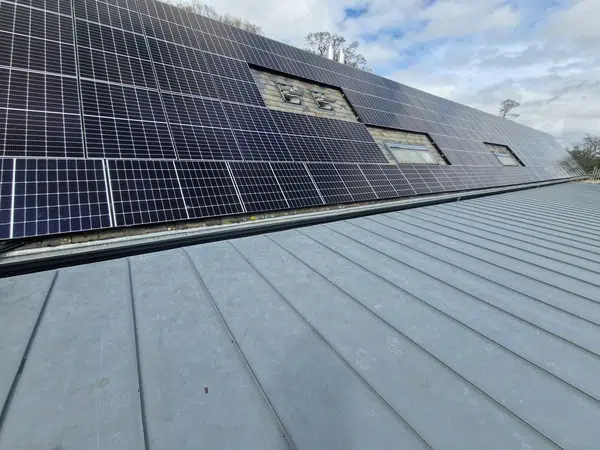
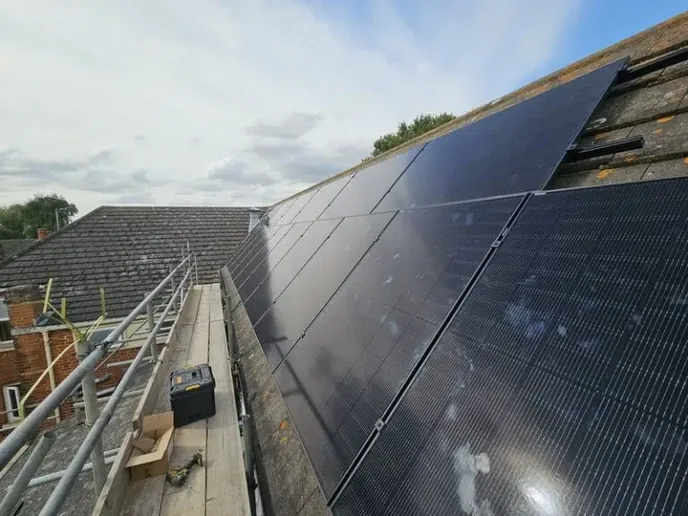
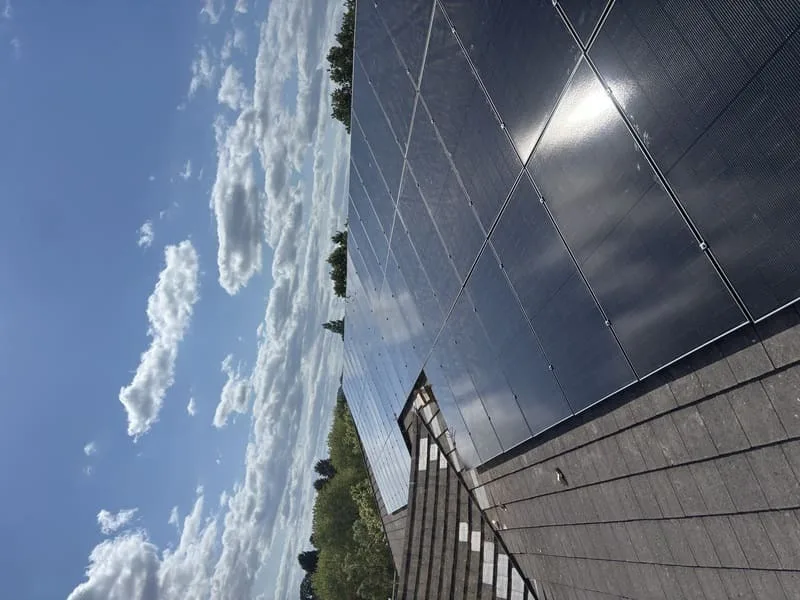
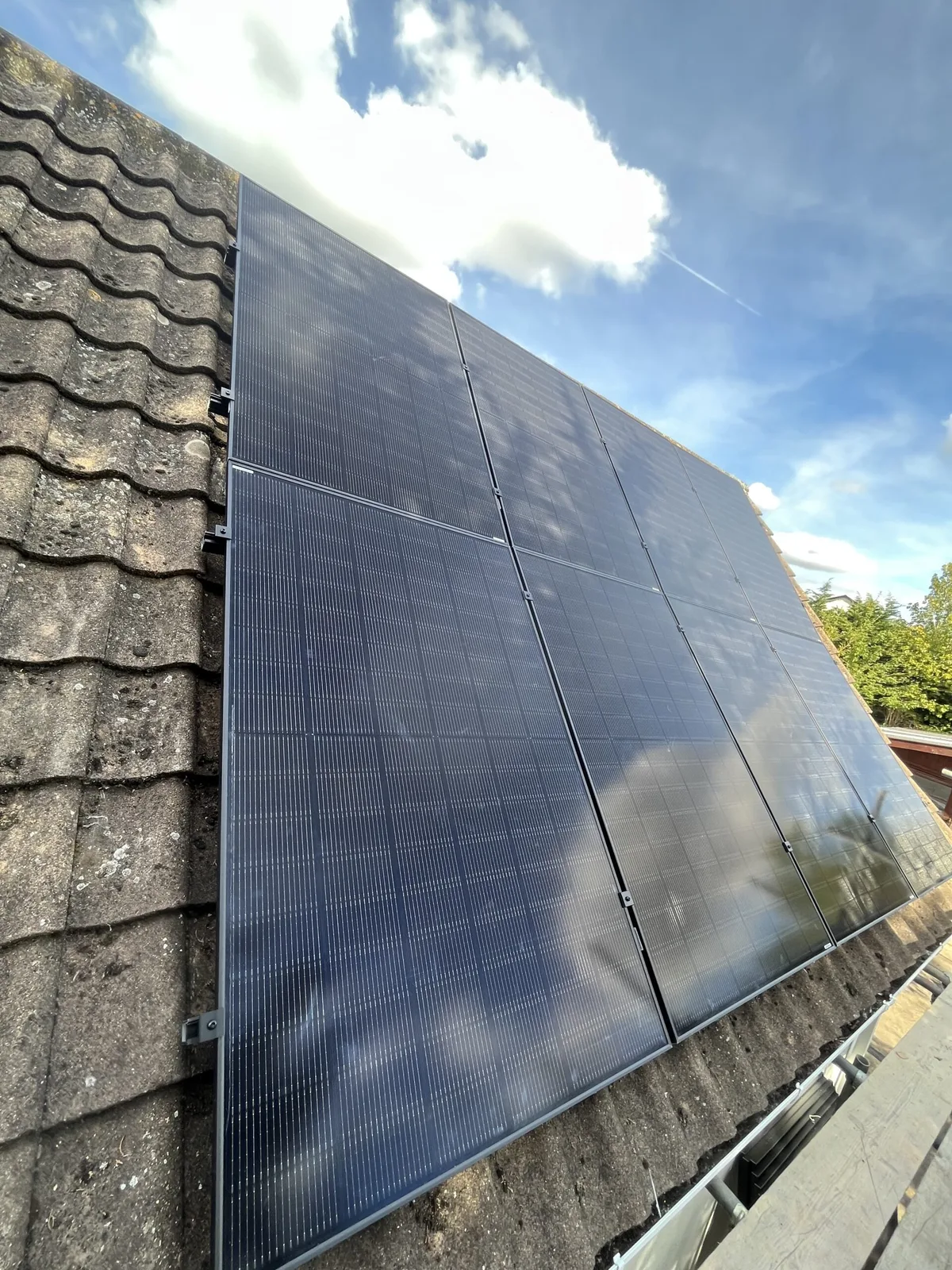
We designed the array around the roof it had to live on, not around a textbook. By putting panels on both the south and east slopes, generation spreads across the day and tracks the way the centre actually uses power, rather than spiking at noon and fading. We ran the whole job end to end, from feasibility and design through to install and commissioning, and planned every stage around live clinics so care never stopped. The total came to £45,000, with the system sized to take battery storage later.
- 100 × DMEG 450W panels (45 kWp total), Tier 1 for efficiency and durability
- 1 × Solax X3-MGA-40k-G2 (40 kW, 3-phase) inverter
- Laid across south and east pitches at a 22° angle to spread generation through the day
- Fitted around live clinics with no disruption to care, and future-proofed for battery
Around 40% of the centre's power, made on its own roof
The roof now generates 45,000 to 48,000 kWh a year, covering about 40% of everything the centre uses. In money that's roughly £7,200 to £8,000 off the bill every year, and £180,000 to £200,000 across the system's life, with the full £45,000 paid back in about five years. It also keeps 9,000 to 10,000 kg of CO₂ out of the air annually, which matters to a healthcare team measured against NHS and UK net zero targets. After payback it's decades of near-free power for a building that runs all day.
Generation and saving figures on this page are estimates, modelled from the system size and a typical UK yield. They are not meter readings. Your own figures depend on your roof, your usage and the weather in any given year, and we confirm them from a real assessment rather than a model.