








A block of flats that pays for a lot of power
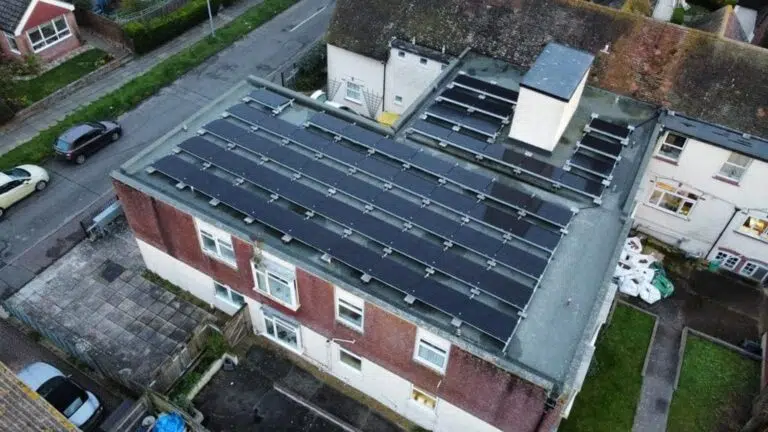
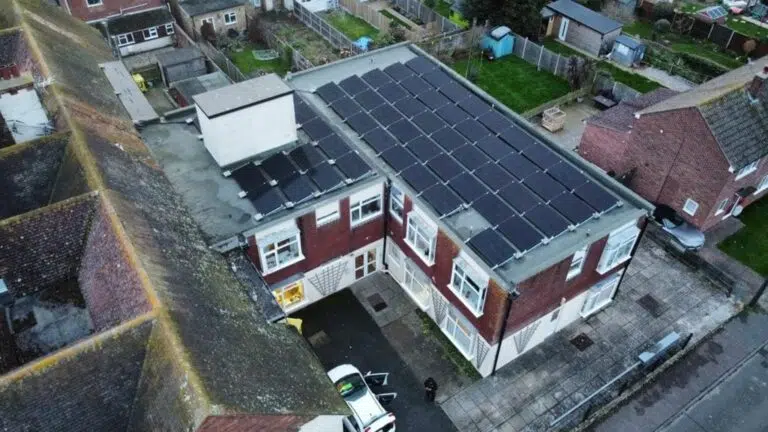
Delamer House is a multi-residential building in Walton-on-the-Naze. Several homes under one roof, and one owner carrying the electricity that keeps the whole place running. That kind of building pulls steady power all year, and every jump in the tariff lands on the same bill. The owners wanted to get off that treadmill. They also wanted to future-proof the property, cut its carbon, and give tenants a greener supply they could feel good about. The place to start was right above their heads.
High demand, a flat roof, and tenants living on site
A multi-let building has real, year-round demand, so any system had to be sized to match it, not just make a token dent. The roof is flat, which rules out the usual pitched-roof brackets and calls for a different mounting approach. And people live here. The work had to happen over an occupied building without turning tenants' lives upside down. Rising tariffs on one side, a non-standard roof and a live property on the other. That's the sort of job some installers quietly pass on.
A 24.65 kWp system, built for the roof it had
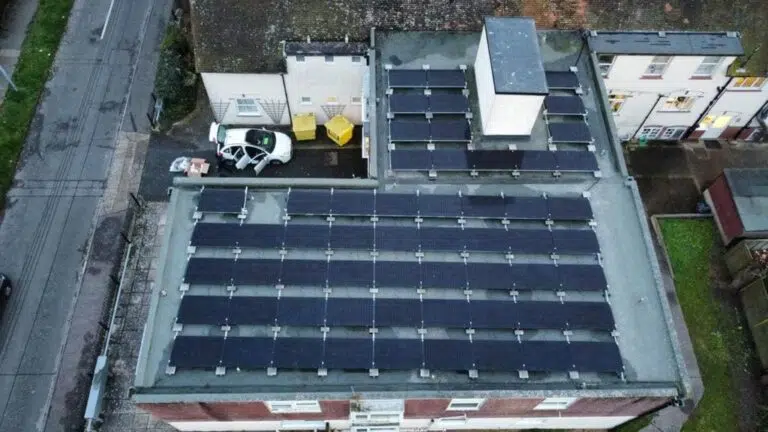
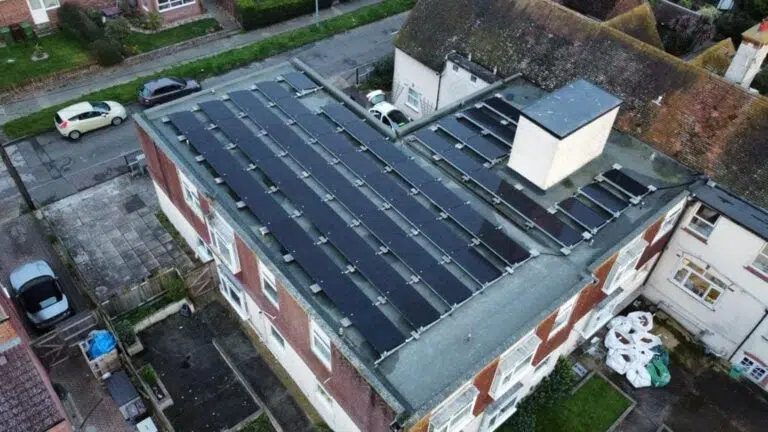
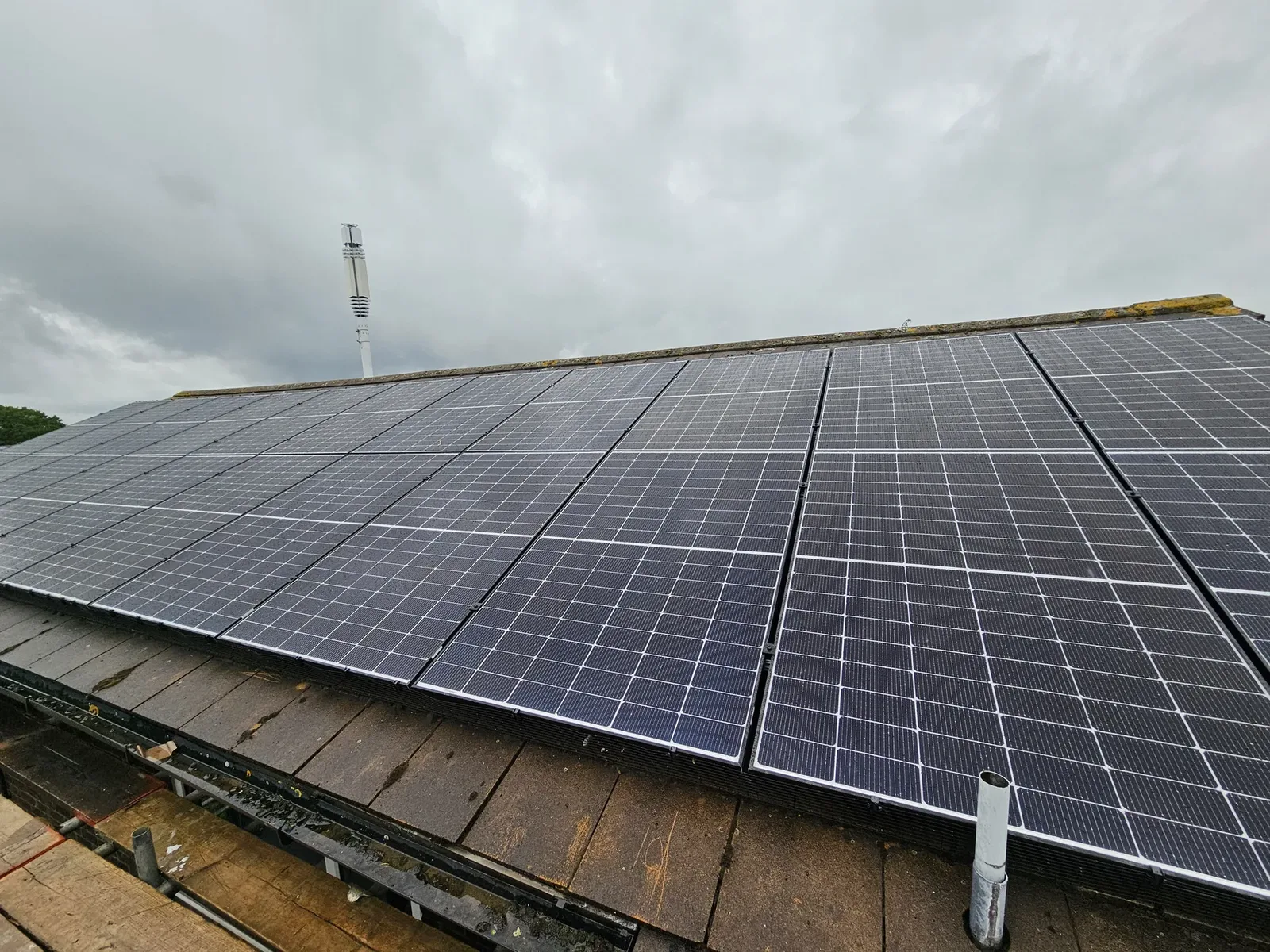
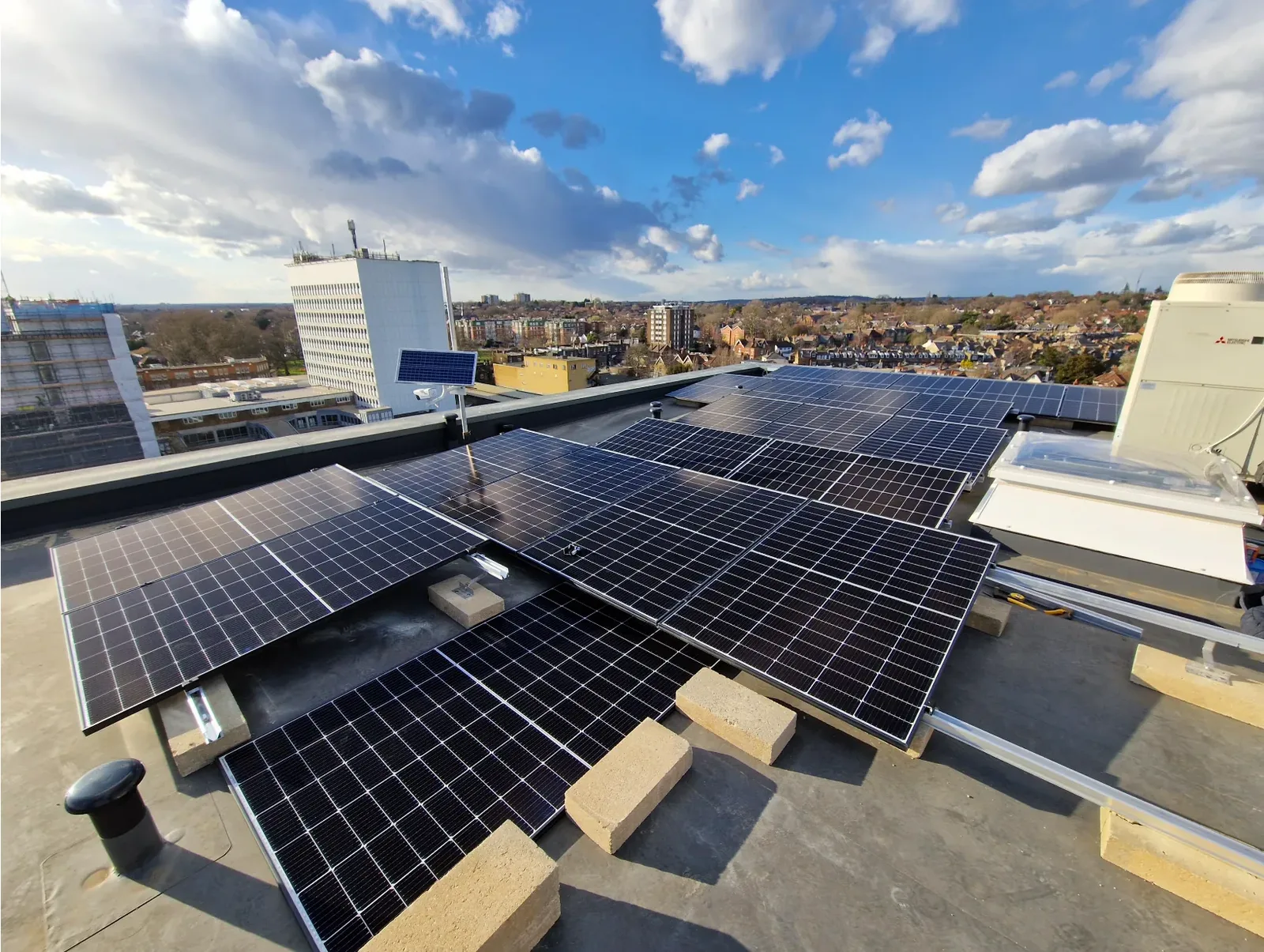
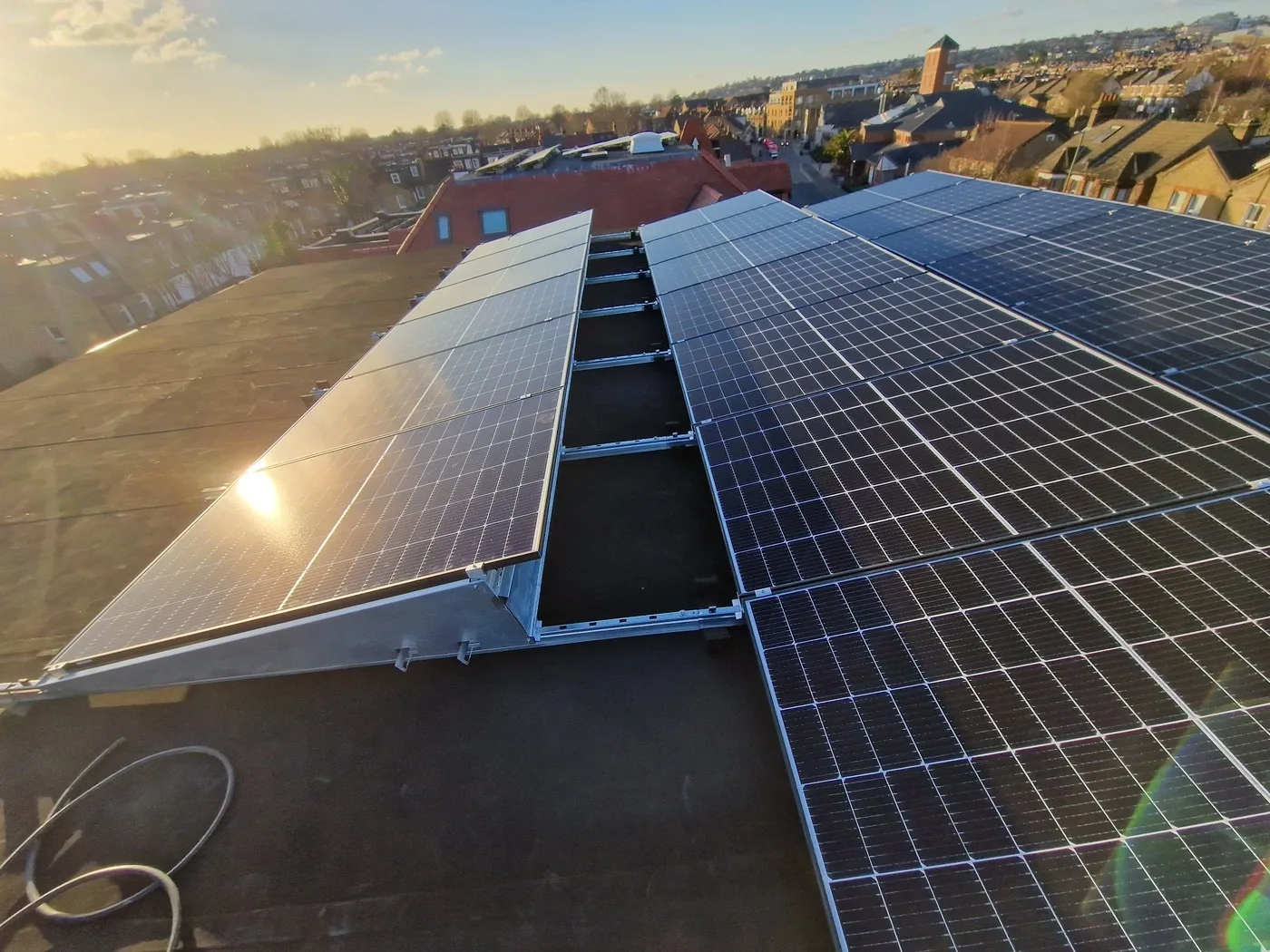
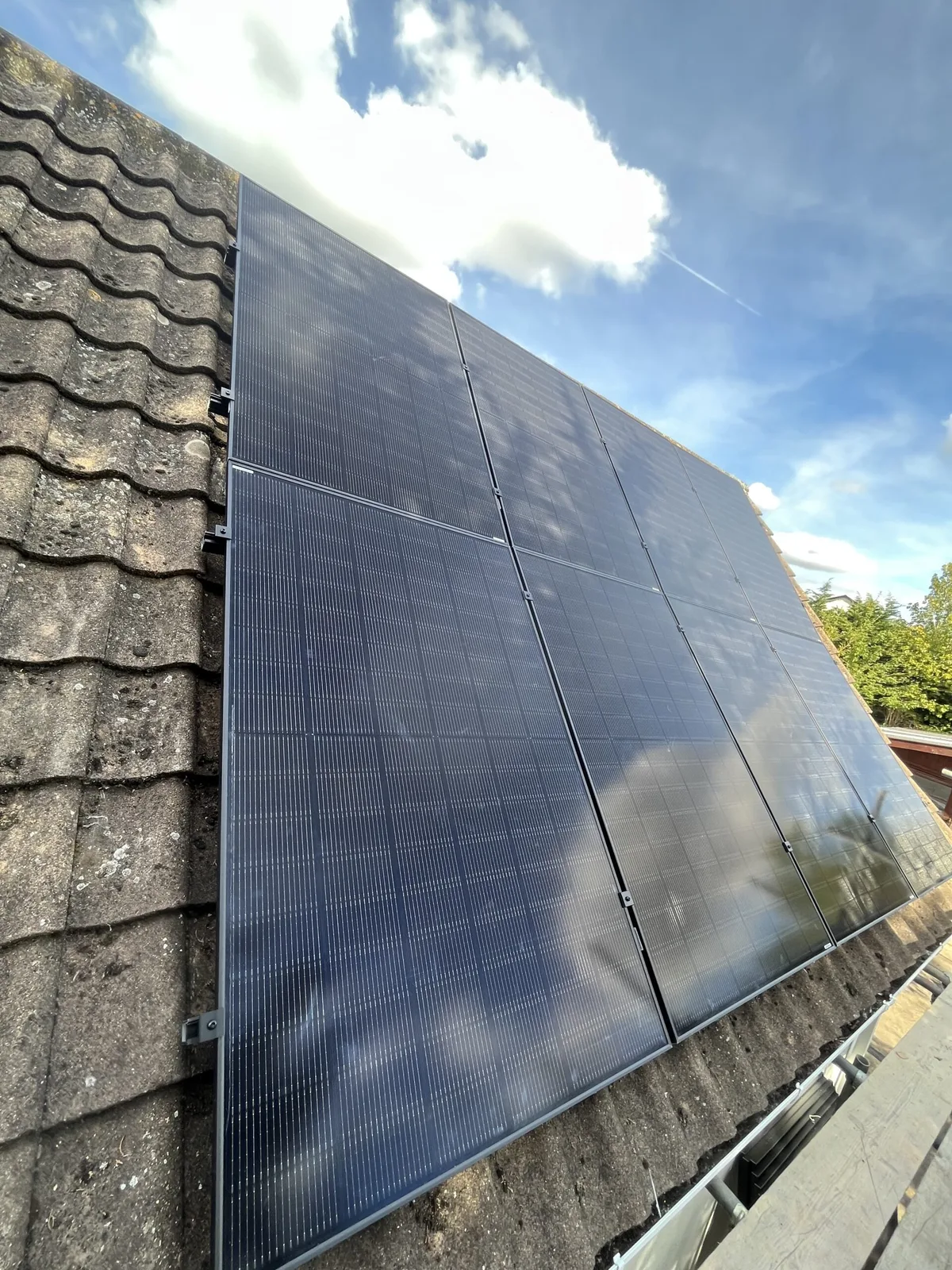
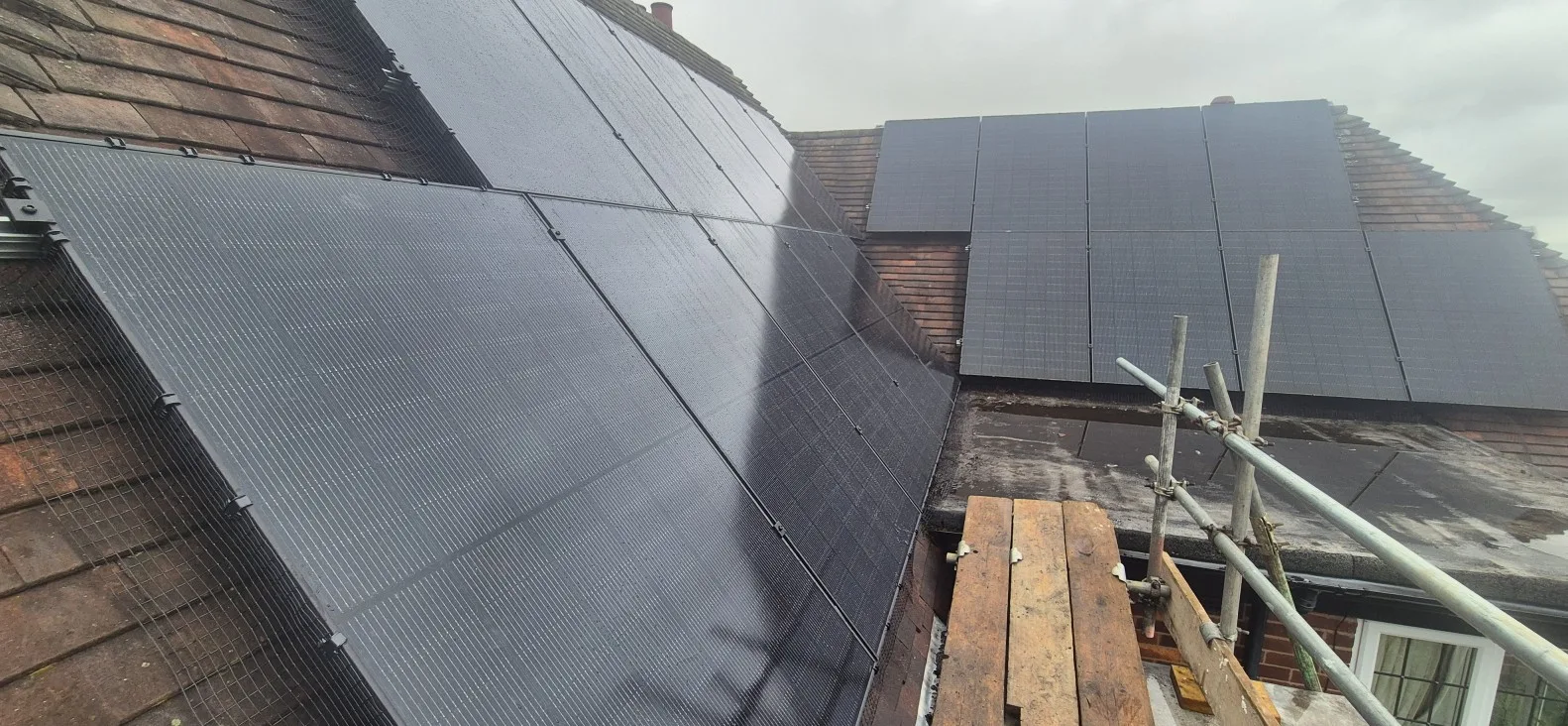
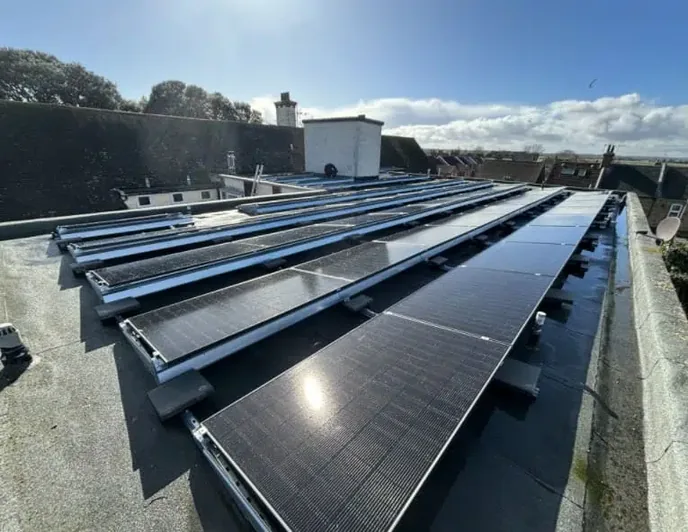
We ran the whole thing end to end, from the first feasibility study and design through to install and commissioning. The panels sit on a ballasted mounting system, weighted in place rather than drilled through the roof, so the flat roof stays watertight and the building's structure is never compromised. We laid the array out to make the most of the roof space and work around shading. The total came to £19,500, and we left room to add battery storage later.
- 58 × Jinko 425W panels (24.65 kWp total), Tier 1, picked for long-run reliability
- Solis 30kW 3-phase inverter, matched to the building's demand
- Fitted to a flat roof at a 10° south-facing tilt, on a ballasted mount
- Installed around occupied flats to UK building and electrical standards, and future-proofed for storage
Nearly half the building's power, made on its own roof
The system now generates about 27,500 kWh a year, covering roughly 42% of everything the building uses. In cash that's around £5,000 to £5,400 off the bill every year, close to £450 a month, and £125,000 to £135,000 across the system's life, with the full £19,500 paid back in five to seven years. The bills are steadier against whatever the tariffs do next, the property is worth more, and the tenants get a cleaner supply.
Generation and saving figures on this page are estimates, modelled from the system size and a typical UK yield. They are not meter readings. Your own figures depend on your roof, your usage and the weather in any given year, and we confirm them from a real assessment rather than a model.