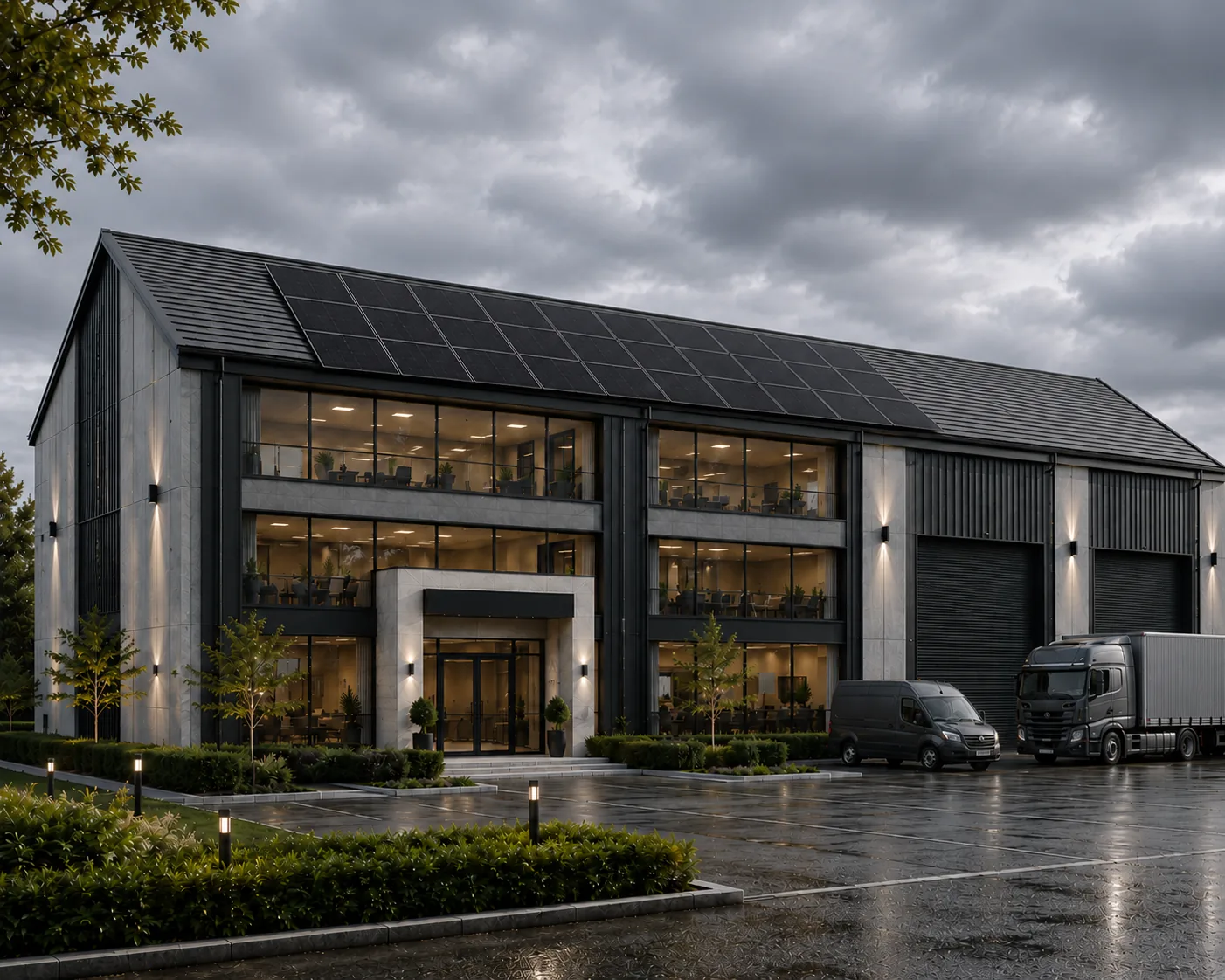
Modern UK commercial building with a full rooftop solar panel array at dusk, lit offices, and a delivery van and HGV parked outside
Solar for business · MCS-certified · UK-wide

Commercial solar panels
for UK businesses.

Fully-installed commercial solar systems for UK businesses, designed, installed and commissioned end-to-end by Solar4Good® engineers.

★★★★★ Excellent · 4.8 on Trustpilot · 1,000+ reviews · A real engineer responds within one working day
✓0.02% return rate across the 10,000+ panels we installed in the last 12 months
✓In-house MCS-certified engineers, MCS-certified by us, full workmanship warranty
✓DNO / G99 application + Annual Investment Allowance guidance handled in-house

60s. Exactly what happens after you submit: no spam, no broker, a real engineer call within one working day.

As seen on

The TimesFinancial TimesBBCMoneySuperMarketThe IndependentThe MirrorThe SunThe Eco ExpertsLBCGreenMatchThe TimesFinancial TimesBBCMoneySuperMarketThe IndependentThe MirrorThe SunThe Eco ExpertsLBCGreenMatch
Pricing, in the open

How commercial solar is priced.
What actually moves the number.

Every commercial solar system is priced individually because every commercial roof is different. Five factors decide your final number: system size, roof complexity, hardware tier, DNO outcome, and current market conditions. Below is exactly how each one moves the price, so you know what to ask any installer, not just us.

01

System size (kW)

Bigger systems share fixed costs (scaffolding, design, DNO application, project management) across more panels, so the cost per kW drops as the system grows. A 30 kW SME system has a higher per-kW cost than a 150 kW industrial install. We size to your actual demand, not the maximum the roof can hold.

02

Roof complexity

Flat ballasted roofs, pitched tile, standing-seam metal, trapezoidal industrial sheeting, and asbestos all require different mounting systems and access plans. Multi-pitch roofs, height restrictions, fragile coverings, or structural reinforcement requirements all move the number. Confirmed on site.

03

Hardware tier

Sigenergy sits at the top tier, with the best long-term reliability and the best warranty position. AlphaESS is solid middle-tier. Fox ESS, Solis, and Dyness give a tighter-budget option without compromising MCS compliance. We recommend the right tier for your business, not the highest-margin product.

04

DNO outcome (G98 / G99)

Systems under 3.68 kW per phase clear G98 automatically. Most commercial systems above that need G99 approval from your local Distribution Network Operator. The outcome, whether that is full approval, export-limited approval or upgrade-required, directly affects the inverter and battery sizing of your final system. We lodge the G99 application on your behalf.

05

Market conditions

Panel, inverter, and battery prices shift quarterly with global supply, currency, and policy. Scaffolding and labour rates move locally. We re-benchmark our pricing every quarter against actual market costs, so the quote you receive reflects today, not last year.

Typical 2026 ranges

Fully-installed price ranges,
published.

Below are typical fully-installed price ranges Solar4Good quotes for UK commercial systems in 2026. The £/kW figure drops as systems scale, because fixed costs (scaffolding, design, DNO application) spread across more panels. The “best annual bill” column shows the bill range a business should have for that system size to make sound financial sense.

System size£ / kW rangeTotal fully installedBest annual bill
30 kW£900 – £1,000£27,000 – £30,000£8,000 – £14,000
40 kW£1,000£40,000£12,000 – £18,000
50 kW£900 – £950£45,000 – £47,500£18,000 – £24,000
60 kW£900 – £950£54,000 – £57,000£24,000 – £30,000
70 kW£900 – £950£63,000 – £66,500£30,000 – £36,000
80 kW£850 – £900£68,000 – £72,000£36,000 – £42,000
100 kW£800 – £850£80,000 – £85,000£42,000 – £50,000
120 kW£750 – £800£90,000 – £96,000£54,000 – £62,000
150 kW£750 – £800£112,500 – £120,000£72,000 – £80,000

Why we publish ranges, not fixed prices

Every commercial roof is different. A 50 kW install on a clean, accessible single-pitch metal roof costs less than a 50 kW install on a heritage building with multi-pitch tile and limited access. Hardware tier moves the number too. Sigenergy sits at the top end; Fox ESS and Dyness sit at the budget end.

Publishing the range is the honest move. Fixed prices on a landing page either inflate to cover the worst case (overcharging the easy jobs) or set unrealistic expectations (undercharging the complex ones). We confirm your exact figure after a site visit, and the site visit is free whether you choose us or not.

The only way to know your precise number is a site visit. We confirm to the pound after seeing the roof.

Get a precise quote →
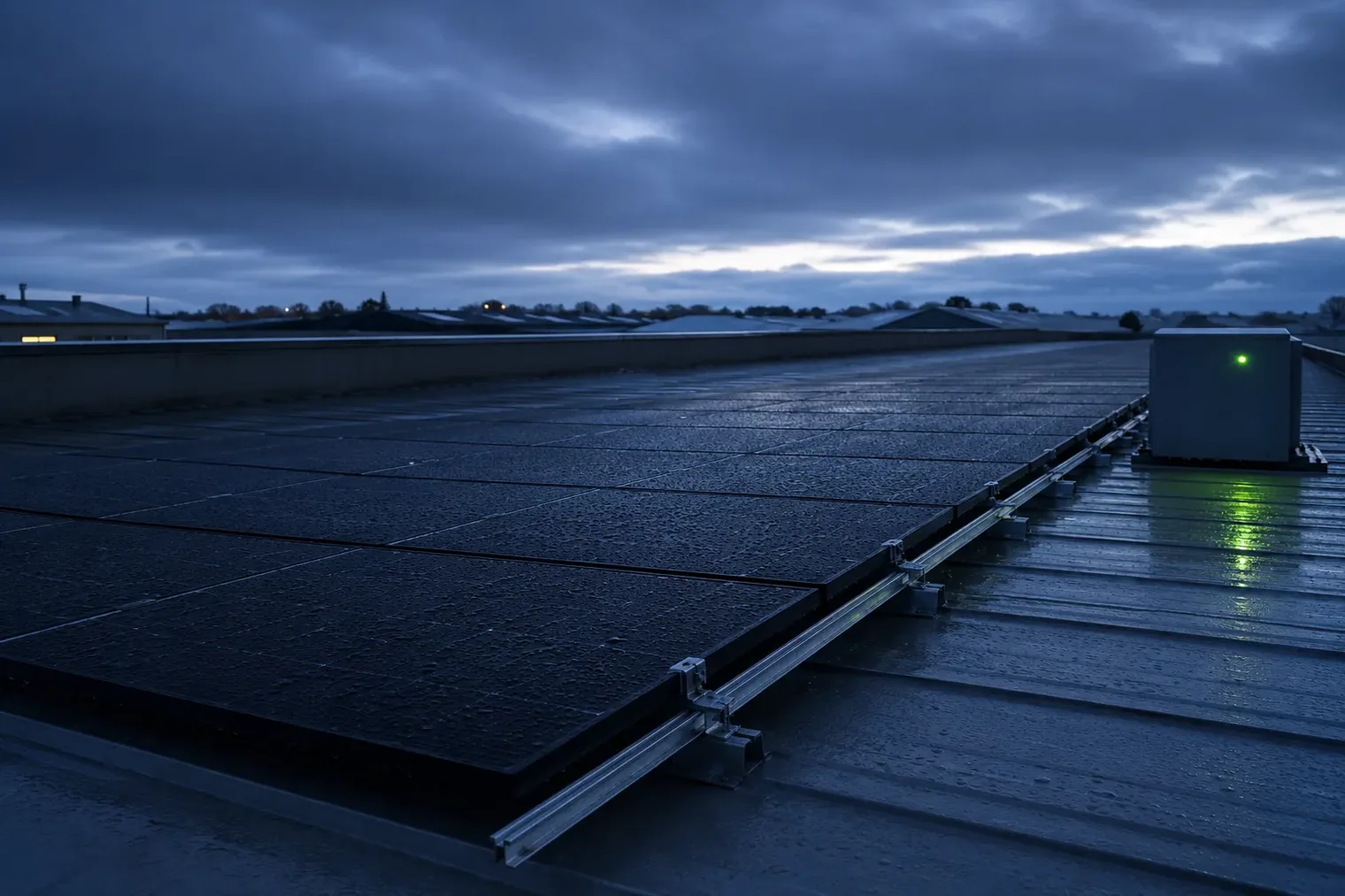
A finished run of black solar panels on the wet metal roof of a UK commercial building at dusk, with a status light glowing green on the roof sheet
The 10k:2 rule

Why our installs stay installed.

0.02%

2 returns across the 10,000+ panels we installed in the last 12 months.

We have not found another UK commercial installer publishing theirs. Ask why.

Across 10,000+ panels installed by Solar4Good in the past 12 months, we’ve had exactly 2 service-call returns. We publish this because we have not found anyone else in the UK commercial solar market publishing theirs, and it’s the single most important number in solar installation. The cheapest quote often produces the most expensive long-term outcome: panels that fail, inverters that drop offline, mounting that loosens. A 25-year roof investment is the wrong place to discover your installer cut a corner.

The 10k:2 figure is what reliability actually looks like, measured against installs, not against marketing. It’s also why we’re picky about the hardware we put on commercial roofs: Sigenergy at the top tier, AlphaESS as the solid middle, Fox ESS and Dyness for tighter budgets without compromising MCS compliance.

Accredited by

Sizing

Choose the right size
for your business.

SME · ~30 kW
Best for SME workshops, small offices, and retail with a moderate daytime load.
  • Panels64 × DMEGC Infinity RT 470 W
  • Generation~25,500 kWh/yr
  • InverterFox ESS 3-phase, 10-yr
  • BatteryFox ESS 13 kWh add-on
  • MonitoringFox ESS app
  • DNO / G99Filed by S4G
  • Best annual bill£8k – £14k
Most popular
Mid · ~50 kW
Best for medium businesses, manufacturing units, and care homes with steady daytime + early-evening demand.
  • Panels105 × DMEGC Infinity RT 470 W
  • Generation~42,000 kWh/yr
  • InverterFox ESS / Solis 3-phase, 10-yr
  • BatteryFox ESS 20 kWh / AlphaESS
  • MonitoringFox ESS or Solis app
  • DNO / G99Filed, 2–6 wks
  • Best annual bill£18k – £24k
Large · ~100 kW
Best for large warehouses, industrial sites, and multi-roof deployments.
  • Panels210 × DMEGC Infinity RT 470 W
  • Generation~84,000 kWh/yr
  • InverterFox ESS / SigenStor, 10-yr
  • BatterySigenergy, 50 kWh
  • MonitoringSigen app
  • DNO / G99Filed, 4–8 wks
  • Best annual bill£42k – £50k

Final design and hardware mix depend on roof, demand profile, hardware tier, battery configuration, and DNO outcome, confirmed after a site visit.

Annual bill not in one of these three brackets? See the full 9-row ranges table above. We install systems from 20 kW (£8k bill) up to 1 MW. Multiple sites or unusual roof type? Our commercial team handles bespoke design.

Talk to our commercial team →
Sizing calculator

What size system does
your business need?

Based on UK commercial averages and Solar4Good’s actual install data. Exact figures, including the financial breakdown, are confirmed after a site visit by an MCS-certified engineer.

Tell us about your business

Your estimate
-
-
Estimated cost (installed)-
Estimated annual saving-
Annual generation-
Bill offset-
Payback-
CO² saved / year—
Indicative only. The precise figure and payback are confirmed after a site visit.
Why businesses pick us

Because the maths
is honest.

Manan is a core leader at Solar4Good, known for his “leader without title” philosophy: leadership is earned through truth, service and customer-first thinking. With 15+ years of financial consulting experience across the UK and Europe and extensive experience educating customers about solar, he brings clarity and trust to renewable energy decisions for UK businesses. Manan has spoken at the Everything Electric Show and The Care Show, and has been featured on the BBC, Lyca Radio, Asian Voice, The Mirror, and The Independent. “Think of us less as sellers, more as partners, always learning, always serving.”

Transcript
Commercial project

Islamic Centre of Brent, 60-panel install

Family-run, UK-based, no broker, no commission-driven sales.

In-house engineers, Eddie’s team has installed 75% of all S4G jobs.

85+ commercial systems delivered, MCS-certified throughout.

Before you quote

Three things every UK
commercial buyer should know.

Most commercial solar quotes confuse buyers because three pieces of UK-specific jargon do real work in the maths. Here they are, in plain English, before you talk to anyone.

The DNO

Your local grid has to say yes

Any commercial system above 3.68 kW per phase needs a G99 application to your Distribution Network Operator (UKPN, Western Power, SSEN, etc). The DNO decides whether your local grid can take the export. Approval takes 2–8 weeks. Solar4Good lodges it for you and handles the back-and-forth. For systems where it applies, a G98 fast-track can save weeks.

Three-phase

Solar must match your supply

Almost every UK commercial building runs on a three-phase electricity supply (vs single-phase in homes). Your solar inverter must match. A residential single-phase inverter on a commercial site will work poorly, fail compliance, and likely fail at the DNO stage. Every Solar4Good commercial design specifies a three-phase inverter, whether Fox ESS, Solis or SigenStor, from day one.

The tax

Tax relief cuts the net cost

Solar panels are generally classified as special-rate plant and machinery for capital allowance purposes. Depending on the circumstances, qualifying businesses may be able to claim the Annual Investment Allowance, which may give 100% relief on qualifying expenditure up to the £1 million annual limit. For a company paying corporation tax at the 25% main rate that is £25 back for every £100 spent, so a £50k system could have a net cost of £37.5k. That example is illustrative; your accountant confirms what applies to you.

If your installer can’t answer these three questions in plain English, find a different installer. The DNO, the phase, and the tax position should never be a mystery to a UK commercial buyer.

The numbers behind it

50,000+Panels installed across the UK, all time
0.02%Return rate, last 12 months
85+Commercial systems delivered
100%MCS-certified by us on every job

MCS-certified · HIES member · TrustMark approved · Solar4Good Ltd, est. 2020

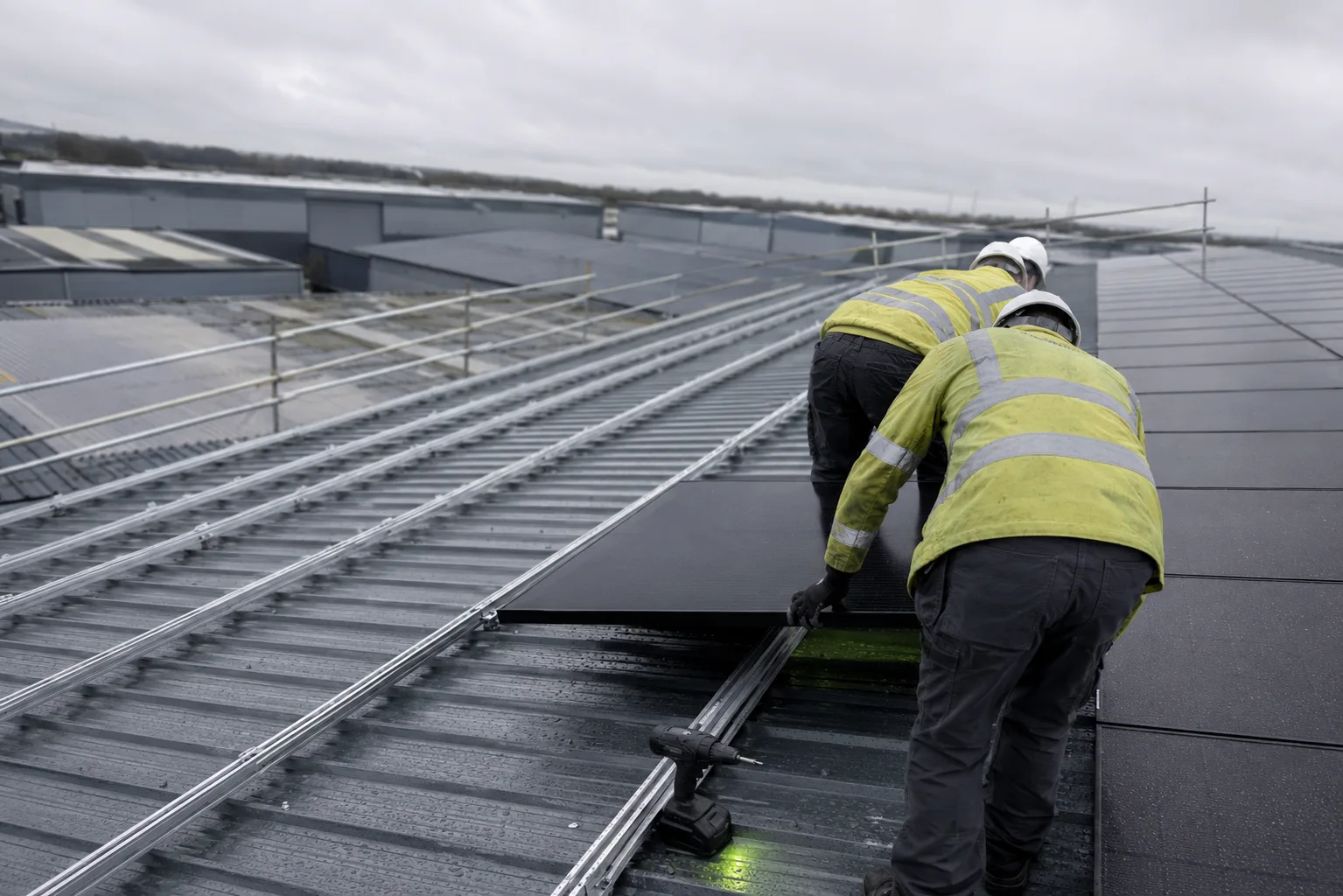
Two installers in hi-vis lowering a black solar module onto aluminium mounting rails on the wet profiled metal roof of a UK industrial unit
Site visit to handover

How a commercial solar
install actually works.

Commercial solar installation is not the same job as residential. Below are the eight stages we run every UK commercial project through, from first call to monitoring handover.

01

Site visit

A Solar4Good engineer visits, checks roof structure, electrical supply (single-phase vs three-phase, available capacity), DNO context, and inspects for asbestos, shading, and access constraints. No quote signed yet.

02

DNO / G99 application

For any system above 3.68 kW per phase we lodge the G99 application with your DNO (UKPN, Western Power, SSEN, etc). We handle the technical drawings, energy modelling, and back-and-forth. Approval: 2–8 weeks.

03

System design + fixed quote

Detailed design with panel layout, hardware specs (panel brand/wattage, inverter, battery), generation modelling in kWh, payback maths, Capital Allowances calculation, and SEG export projection. Fixed price, written, all assumptions on the page.

04

Scaffolding & access planning

For commercial roofs we plan scaffolding and access separately. Most installs are scaffolded externally so your operations continue uninterrupted. For warehouses and industrial sites we use cherry-picker or rope-access where appropriate. Method statement and CDM-compliant.

05

Install + commissioning

Installed to MCS standards and certified by us. Typical install time: 3–10 days for 30–100 kW; 10–20 days for 100–500 kW; longer for multi-roof or ground-mount. Commissioning includes inverter setup, monitoring connection, and DNO export sign-off.

06

MCS sign-off

MCS certificate issued on completion, required for SEG registration, insurance, and Capital Allowances paperwork. Solar4Good MCS registration: NAP/72775/25/4. We also issue the HIES insurance-backed workmanship warranty.

07

Monitoring + handover

Your system’s monitoring app is set up and demonstrated. Your finance team gets the Capital Allowances paperwork. Your operations team gets the kit manuals, SEG registration, and a 24/7 dashboard showing live generation, consumption, and export.

08

Ongoing support

Lifetime monitoring access. Phone, WhatsApp, and on-site engineer visits where needed. 25-year panel warranty, 10-year inverter warranty, 5-year insurance-backed workmanship warranty, all backed by Solar4Good directly, not a finance partner.

Book a free consultation →
Sector by sector

Solar panels for business,
sector by sector.

Solar panels for business work differently depending on what you run. A warehouse with large flat roofs has a different solar profile than a care home with 24/7 demand, or a farm with mixed roof and ground-mount opportunities. Below are the 14 UK sectors Solar4Good installs commercial solar PV systems across. Each has a dedicated page covering sector-specific design, planning and funding.

Proof, not promises

Commercial systems
we’ve delivered.

Twenty-two UK businesses, from surgeries and care homes to hotels, retailers, manufacturers and property groups, that cut their energy bills and accelerated their net-zero targets with Solar4Good. Below are three with full published numbers.

Healthcare · Pinner

The Pinn Medical Centre

49.2 kW · 73% bill reduction · 120 panels.

Care home · Birmingham

Limes Care Home

79.65 kW · 177 panels · multi-orientation roof.

Distribution · Greenford

Sun Mark Ltd

51.6 kW · ~58,000 kWh/yr · grid-independence.

Healthcare · Park Royal, London

Fairview Health

67% off a Park Royal pharmacy’s power bill.

Healthcare · Woodbridge

Framfield House Surgery

53 kW on a steep, awkward roof.

Care home · Colchester

Florence Care Homes

Cleaner power for a home that never switches off.

Property · Walton-on-the-Naze

Delamer House

Solar across a whole multi-let building.

Manufacturing · UK

Strata Windows

Production continued uninterrupted throughout the install.

Faith · UK

The Sacred Heart Church

Solar sensitively fitted to a place of worship.

Hospitality · Gatwick

Gatwick White House Hotel

Guest-facing sustainability, lower running costs.

Trade & industry · UK

JPF Clarke Construction

A working yard, powered by its own roof.

Healthcare · Bristol

Lawrence Hill Health Centre

24/7 clinic load, covered by daytime solar.

Property · London

The Fortune Group

A multi-unit commercial estate goes solar.

View all 22 commercial case studies →
What businesses say

Commercial clients,
in their own words.

Verified reviews from business and organisation customers on Trustpilot and Checkatrade. These are the commercial installs. Our full review wall covers every Solar4Good customer.

Read all 775+ Trustpilot reviews →
2026

Commercial solar
grants & funding.

There are very few direct cash grants for commercial solar in the UK in 2026. What does exist instead is a stack of tax reliefs and incentives, and it adds up to more than most grants would. Combined, these meaningfully reduce the true cost of a commercial solar system. The Solar4Good team handles the eligibility paperwork as part of every commercial install.

Annual Investment Allowance

The Annual Investment Allowance may provide 100% tax relief on qualifying plant and machinery expenditure, up to the applicable annual limit of £1 million. Eligibility depends on the nature of the expenditure, the business and the relevant capital allowance rules.

VAT on commercial solar

Commercial solar installations are generally subject to the standard VAT rate of 20%, unless a specific VAT relief applies. A temporary 0% rate is available for qualifying installations of energy-saving materials, including solar panels, in eligible residential accommodation such as care homes and student accommodation, and certain buildings used solely for relevant charitable purposes. That relief is currently scheduled to run until 31 March 2027, subject to HMRC’s conditions. From 1 April 2027 it is due to revert to the reduced rate of 5% (HMRC VAT Notice 708/6). Ordinary commercial premises do not qualify simply because solar panels are installed.

Smart Export Guarantee

Payment from your energy supplier for excess electricity exported to the grid. Rates vary by supplier; we identify the best fit for your install.

Business rates

The business rates treatment of solar installations depends on the property’s location, the installation and the applicable valuation rules. Certain installations may qualify for specific valuation treatment or relief, but this should not be assumed for every commercial solar system. We recommend checking the position for your property and proposed installation before proceeding.

Sector-specific schemes

Salix Finance (public sector / schools), Welsh Government, Scottish SME loan, local authority programmes. Coverage shifts; we keep a current list.

The information on this page is general guidance only and is not personalised tax advice. Capital allowances, VAT treatment, business rates and export payments depend on the installation, the property, your business structure and the applicable legislation. Financial examples are illustrative and are not guarantees of tax or energy savings. Please confirm the treatment for your circumstances with your accountant. Official guidance: HMRC VAT Notice 708/6, Ofgem Smart Export Guarantee, GOV.UK Business Rates.

Read the full grants & funding guide →
Business rates

Solar panels and business rates:
what UK businesses need to know.

The business rates treatment of solar installations depends on the property’s location, the installation and the applicable valuation rules. Certain installations may qualify for specific valuation treatment or relief, but this should not be assumed for every commercial solar system. We recommend checking the position for your property and proposed installation before proceeding.

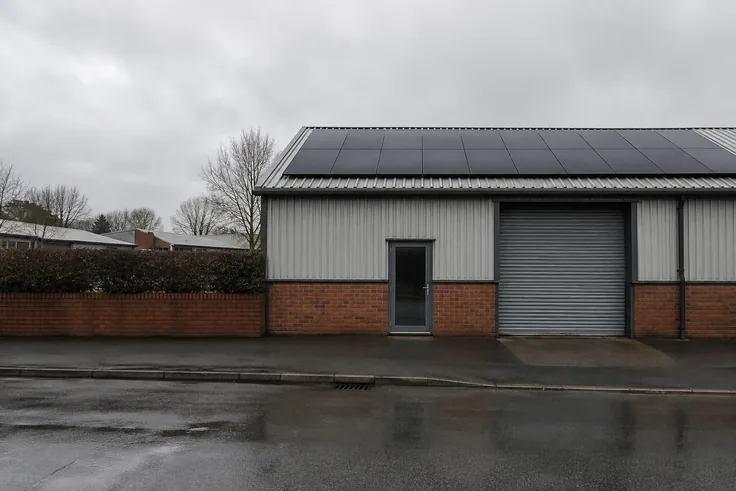
A modest British commercial unit seen from the kerb on an overcast day, with black solar panels on its shallow pitched roof above brick and profiled cladding
✓Business rates treatment depends on the property and the valuation rules; we recommend checking the position for your site
✓The Annual Investment Allowance may give 100% relief on qualifying expenditure, up to the £1 million annual limit
✓Commercial solar is generally standard-rated at 20% VAT, normally recoverable if you are VAT-registered. The temporary 0% rate applies only to qualifying residential accommodation and relevant charitable buildings, until 31 March 2027, then due to revert to 5%
✓SEG income is paid by your energy supplier on exported surplus
✓We provide the installation and asset information your accountant and valuer need

The exact tax position for your business depends on your corporation tax rate, accounting period, and capital allowance history. Your accountant confirms the position; we provide the documentation needed.

Read the full business rates & tax relief guide →
Commercial solar deep guides

Go deeper.

Good to know

Commercial solar.
Frequently asked questions.

Can’t find what you’re looking for? Talk to our team, ask us anything, no pressure.

How much do commercial solar panels cost?
£20,000 to over £250,000 fully installed, and the honest answer is that the range is that wide because the roof decides it, not the panel. Roof type, access, DNO outcome and how much power you actually use all move the number. The full 2026 ranges are published in the table above, and we confirm your exact figure after a site visit.
What is the payback period?
The payback period depends on installation cost, electricity consumption, energy prices, system performance and any income from exported electricity. Across our own commercial quotes, modelled payback is typically four to seven years, depending on how much of what you generate you use on site. Our modelling includes the export income but not capital allowances, so eligible allowances improve the return further. We can provide an estimated payback calculation based on your expected energy savings and export arrangements. Actual results will depend on your circumstances and future energy prices.
How much could commercial solar save?
The Pinn Medical Centre cut its bill by 73%. That is a real figure from a real install, not a projection. Yours will differ, because savings track your daytime demand rather than your roof size. Treat any headline number with suspicion until someone has read your half-hourly consumption data. We work from yours, not from an average.
Is my roof suitable for commercial solar panels?
Probably. We install on trapezoidal steel, standing seam, felt, concrete and flat roofs. Roof type is rarely the blocker. Age, shading and load capacity are. Every site visit includes a structural assessment, and if your roof needs work first, we’ll say so before you’ve spent anything. A site visit settles it either way.
How long do commercial solar panels last?
25 to 30 years, often longer. Both panels we fit are guaranteed to lose no more than 1% in year one, then no worse than 0.35% a year for AIKO and 0.4% for DMEGC. Those are warranty floors, not predictions: AIKO is guaranteed at 88.85% of original output at year 30, DMEGC at 87.4%. The honest part most installers skip: the panels almost never fail first, the inverter does. That’s why we back panels for 25 years, inverters for 10, and our own workmanship for 5, all through Solar4Good.
How long does it take to install commercial solar panels?
The install itself is usually days, not weeks. The waiting is the DNO. G99 approval typically runs 2 to 6 weeks for a 50 kW system and 4 to 8 weeks for 100 kW. We lodge that application the moment you sign, so the clock starts immediately rather than after the site visit.
Do businesses need planning permission?
No, not in most cases. Roof-mounted panels sitting flush to the roof are permitted development for most commercial buildings. You will need permission for listed buildings, conservation areas, and most ground-mounted arrays. We check this before you commit, and if permission is needed we tell you at the site visit rather than after you have signed.
Can my business access government support?
Depending on your business structure and installation, you may qualify for capital allowances such as the Annual Investment Allowance or other applicable first-year allowances. Eligible installations may also receive payments for exported electricity under the Smart Export Guarantee. Other grants may be available subject to scheme eligibility. On VAT: commercial solar is generally standard-rated at 20%, which a VAT-registered business can normally recover. The temporary 0% rate applies only to qualifying installations in eligible residential accommodation and buildings used solely for relevant charitable purposes, until 31 March 2027. From 1 April 2027 it is due to revert to the reduced rate of 5% (HMRC VAT Notice 708/6). Most ordinary commercial premises do not qualify.
Are commercial solar panels worth it?
If your business uses electricity during daylight hours, yes. If it doesn’t, probably not, and we’ll tell you so at the site visit. Systems run £20,000 to £250,000+ fully installed. Across our own commercial quotes, modelled payback is typically four to seven years. That already counts the export income; capital allowances come on top of it. The more power you use while the sun is up, the faster the system pays for itself.
How does commercial solar work?
Five steps. We assess the roof and your half-hourly consumption. We lodge the G99 application with your DNO, since anything above 3.68 kW per phase needs one. We design to your actual demand, not your maximum roof space. We install and commission. You start using your own power, and export the surplus under SEG.
What is commercial solar PV?
Commercial solar PV is a rooftop or ground-mounted panel system sized to a business’s own electricity demand rather than a household’s. In practice that means 30 kW to several hundred kW, a G99 connection agreement, three-phase inverters, and a design built around when your business actually uses power.
How big are commercial solar panels?
About 1.98m × 1.13m, so roughly 2.2 square metres each. That is the same physical size as a domestic panel. What differs is how many you fit and how you mount them. A 50 kW commercial system is around 115 panels, which needs roughly 250 square metres of usable roof once you allow for walkways and edge zones.
How much energy does a commercial solar panel produce?
Roughly 850 kWh per kW installed per year in the UK. A 30 kW system generates about 25,500 kWh a year, a 50 kW about 42,500, and a 100 kW about 85,000. Southern England sits at the top of that range and northern Scotland the bottom, but the gap is smaller than most people assume.
How efficient are commercial solar panels?
23% to 24%, depending on the module. The AIKO Neostar 3S 480W runs at 24.0% and the DMEGC Infinity RT 515W at 23.0%, both taken from the manufacturer datasheets and correct as at August 2026. Efficiency matters less than most buyers expect: on a large commercial roof you are limited by space, shading and how much power you use on site, not by the last percentage point of panel performance.
Which type of solar panel is best for commercial use?
Monocrystalline, in almost every case. The two panel brands we fit are AIKO and DMEGC. Bifacial panels earn their premium only on white or reflective flat roofs with an air gap beneath them. Thin-film rarely makes sense on a UK commercial roof, because the output per square metre is too low.
What are the best solar panels for commercial buildings?
The ones we actually fit, taken from our live product list: the DMEGC Infinity RT at 470W and 515W, and the AIKO Neostar at 480W and 510W. Both are monocrystalline, both are MCS-listed, and both hold their output well. We don’t put a panel on a commercial roof we wouldn’t put on our own.
How do commercial solar batteries integrate?
The battery sits between your inverter and your main board, charging on surplus generation and discharging when demand outruns supply. We fit SigenStor on most systems, Fox ESS on many, and Tesla where the site suits it. Sizing follows your evening and overnight load, not the size of the panel array.
Free download

The Commercial Solar
Buyer’s Guide 2026.

Pricing transparency, the three pieces of UK jargon that move the maths, an 8-stage install process, and 7 questions every UK commercial buyer should ask before signing. Get the PDF sent to your inbox instantly.

↓ Download the guide (PDF)

Instant PDF · 2026 edition · No spam, we don’t share your details

Ready to talk to
a real engineer.

A Solar4Good engineer will call you within one working day. No high-pressure sales. No commission-driven recommendations. We don’t share your details.

Transcript
Behind the install

Every install, done right

Watch the 60-second walkthrough. A real Solar4Good engineer reviews your details and calls you back within one working day. No sales scripts, no pressure.

Get my free commercial solar quote

Start with your postcode. It takes about thirty seconds, and a Solar4Good engineer reviews it before calling you back.

Get a quote